Electricity grid: green light to accelerate works
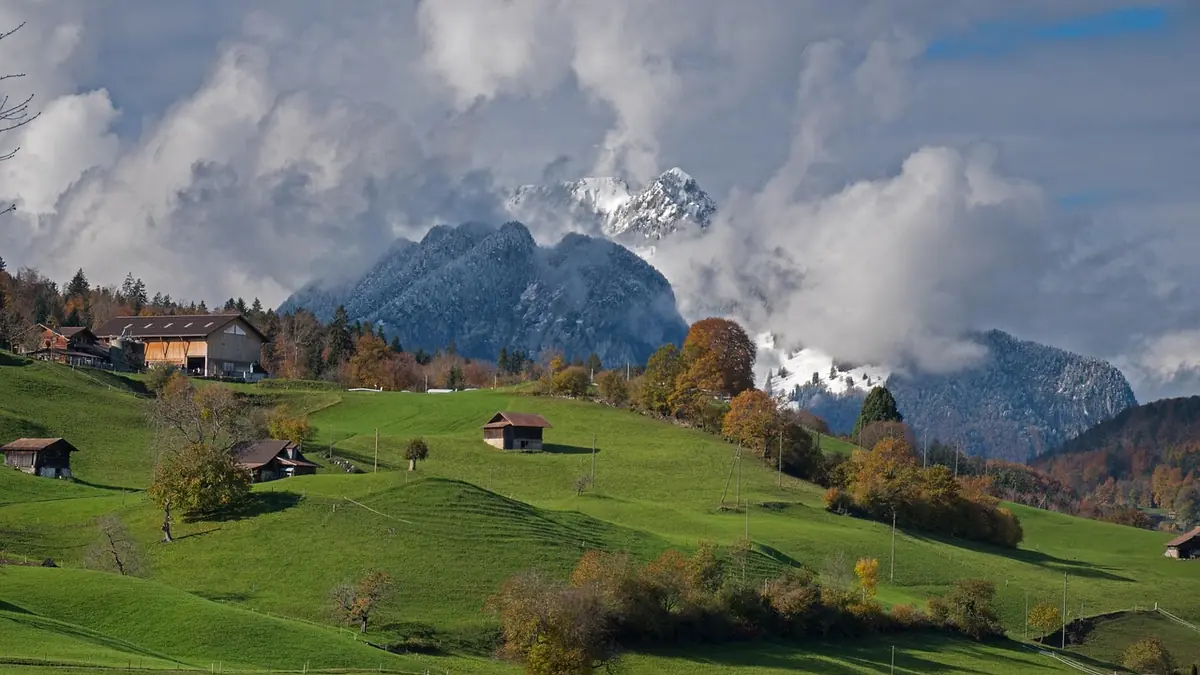
The Parliament approves the revision of the law on electrical systems to renew more than 60% of the very high voltage lines and simplify the process.
Context
In brief
- The Council of States has resolved the final difference
- The revision accelerates the expansion and transformation of networks
- Above 220 kV, a preference for overhead lines prevails
- The dossier is ready for the final votes
Key facts
- Subject → revision of the Electricity Supply Act
- Objective → to accelerate network expansion
- Network to be renewed → over 60% of extra-high voltage lines
- Threshold → 220 kV for the preference for overhead lines
- Substations → maximum 20 m2 surface area and 3 meters in height
The Council of States has tacitly agreed to the text approved by the National Council regarding the revision of the Electricity Supply Act. The two chambers have thus resolved the final difference and brought the dossier to the threshold of the final votes.
The dossier also aims to simplify network transformation and supports the energy transition. The network must be expanded to meet growing needs and renewed: over 60% of extra-high voltage lines are reaching the end of their service life. Authorizations currently take several years, while the number of projects is increasing.
When the voltage is 220 kilovolts (kV) or higher, preference will be given to overhead lines, with some exceptions. In building zones, however, lines may be buried underground.
Replacements and authorizations
Parliament has reintroduced this principle after the Federal Council had removed it from the draft following very negative feedback during the consultation. Existing high-voltage lines on the current route or in the immediate vicinity may be replaced without a sectoral plan procedure.
The rule has been extended to extra-high voltage lines along national roads and railway lines, as well as to the distribution network with a nominal voltage exceeding 36 kV. If moving the pylons requires changes to the route, legal distances from forests and watercourses may not need to be strictly maintained.
Outside of building zones, existing lines may be replaced even if they exceed limit values for noise and non-ionizing radiation, provided that exposure does not increase. Within building zones, it will remain necessary to verify adequate measures to reduce it. With few exceptions, secure and economical energy supply will take precedence over environmental protection and spatial planning, with the extension to the distribution network above 1 kV.
Transformer stations may be built more easily outside of building zones without needing to be placed directly adjacent to existing structures; the ground surface area may not exceed 20 m2 and the maximum height will be 3 meters.
The final difference concerned the costs of system services and balancing energy. The Council of States wanted to authorize the Swiss Federal Electricity Commission (ElCom) to issue directives to Swissgrid, including a possible price cap; the National Council then proposed a compromise without mentioning it, which was tacitly accepted by the Council of States.
Operational details
The most concrete change for the areas concerned concerns the distinction between replacement and new construction. A line already present along the current route or in the immediate vicinity may follow a different procedure from a new project; in these cases, the revision eliminates the sectoral plan procedure. Extending this to lines along national roads, railways and the distribution network above 36 kV broadens the scope of the works concerned.
For anyone who lives or works near a network, the practical assessment starts from three coordinates: voltage, location of the facility and nature of the intervention. The technical threshold and the zone, in fact, change the applicable rules.
Checks to perform on a project
| Check | Rule provided |
|---|---|
| Voltage equal to or above 220 kV | Overhead line preferred; undergrounding possible in the building zone |
| Building zone or outside it | Outside the zone, replacement also beyond the limits if exposure does not increase; inside the zone, measures to reduce it |
| Transformer station outside the zone | Must not be adjacent; maximum 20 m2 and 3 meters; modification or replacement if legally built and without an overriding contrary interest |
| Distribution network | Above 1 kV, secure and economical supply takes precedence, subject to exceptions; up to 36 kV, approval after construction in the building zone |
The preference for overhead power lines does not apply indiscriminately: the source allows exceptions and permits undergrounding in building zones. The same applies to exposure: outside the zone, replacement may proceed only without an increase, whereas inside the zone, adequate measures must be verified. The regulatory framework combines acceleration with conditions.
For a station already legally built outside the zone, modification or replacement remains possible if no overriding interest opposes it. The condition therefore concerns the facility's original legality and the absence of a contrary interest.
The costs chapter remains separate. The increase in the costs of system services and balancing energy has led the states to request directives from ElCom on Swissgrid, with a possible cap. The compromise accepted today does not mention that cap. To follow the economic aspect without turning the revision into a tariff forecast, the text can be read alongside costo della vita in Svizzera.
Recommended tools
For an updated estimate, use the net salary calculator and the CHF-EUR exchange comparator.
Key points
To follow a project without attributing effects to it that the source does not describe, it is advisable to use a checklist based on the review criteria. The primary objective is to understand which rule applies, not to anticipate the outcome of the authorization.
A checklist in four steps
1. Identify the project. Distinguish a line, a transformer station and another facility in the distribution network. Note whether it involves replacement, modification or new construction: the review does not treat existing works and new interventions in the same way.
2. Check the voltage. Note whether the line reaches 220 kV; verify whether the distribution network exceeds 36 kV or falls within up to 36 kV. The source links these thresholds to the preference for overhead lines, replacements extending to the network above 36 kV and approvals after construction up to 36 kV.
3. Check the zone and route. Check whether the project is inside or outside the building zone, on the current route or in the immediate vicinity. If it is an extra-high-voltage line, also check whether it may run along a national road or railway. For stations outside the zone, check the maximum surface area of 20 m2 and the height of 3 metres.
4. Check the conditions. For lines, verify whether the pylons need to be moved: in that case, the legal distances from forests and watercourses may not be observed. Outside the zone, replacement may also take place beyond the limit values for noise and non-ionizing radiation, but exposure must not increase; inside the zone, appropriate reduction measures must be sought. For a station legally constructed outside the zone, the absence of an overriding interest to the contrary is also required.
The political stage should be kept separate from the technical reading. The dossier is ready for the final votes; to follow the procedure, the operational reference indicated by the source is that step.
The economic section must also be read precisely: the compromise does not mention a maximum price cap for system services and balancing energy. This framework prevents confusing the review with an automatic change to busta paga svizzera.
To compare your disposable income, use the calcolatore stipendio.
Source: swissinfo.ch
Frequently Asked Questions
- What are the main objectives of the new law?
- The review aims to accelerate the expansion and transformation of power grids in Switzerland, ensuring the energy transition. Since more than 60% of the ultra-high-voltage lines have come to an end of life, the law simplifies the authorisation procedures, which currently take several years, to meet the country's growing energy needs.
- What changes for high voltage lines?
- For voltages equal to or greater than 220 kV, the law establishes a preference for overhead lines, subject to exceptions. In buildable areas, however, burial is possible. In addition, the sectoral plan procedure for the replacement of existing lines on the current route or nearby has been eliminated, extending this option to rail and road lines as well.
- What rules apply to transformer stations?
- Outside the buildable area, the transformer stations can now be built more easily without having to be placed in adherence. The maximum area allowed is 20 square meters, with a maximum height of 3 meters. For existing legally constructed plants, modification or replacement is permitted in the absence of overriding interests to the contrary.
Related articles
- All articles: Agreements and politics
- Reti più rapide e moderne: il Parlamento accelera la rivoluzione elettrica
- Falle di sicurezza negli impianti solari minacciano la rete
- Il Consiglio nazionale approva l'accordo con il Mercosur
- Tag der Wirtschaft: il punto di Guy Parmelin
- Prodotti elettrici difettosi: ESTI rileva un difetto su quattro