Faster and more modern grids: Parliament accelerates the electric revolution
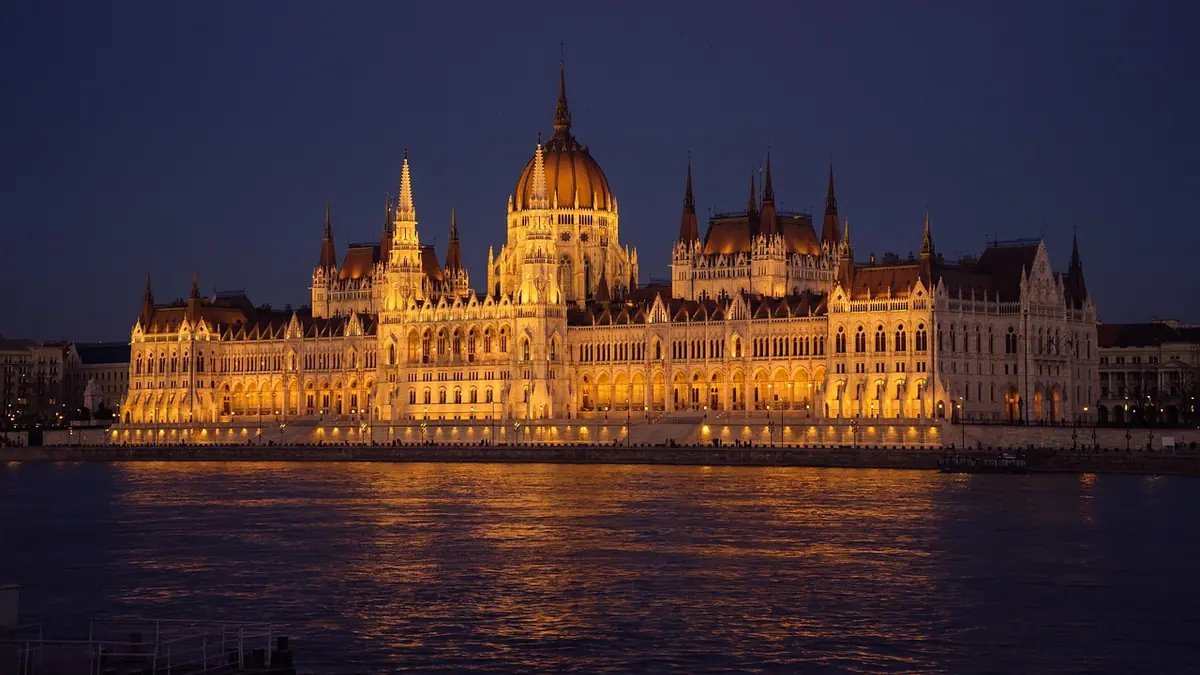
Over 60% of the very high voltage lines are close to the end of life; the threshold for overhead lines is 220 kV, while the distribution network involves voltages >36 kV and the new stations will not be able to exceed 20 m2 in surface area and 3 m in height.
Context
In brief
- Parliament and the Cantons have resolved the last divergence
- Preference for overhead lines at 220 kV, except in certain cases
- Over 60% of extra‑high‑voltage lines will reach end‑of‑life
- The dossier is ready for final votes
Key facts
- Where → Bern
- What → Revision of the Electricity Installations Act
- Objective → Accelerate grid expansion
- Threshold → 220 kV for preference of overhead lines
- Distribution network → nominal voltage above 36 kV
- Extra‑high‑voltage lines reaching end‑of‑life → over 60%
- Transformation stations → maximum 20 m² and 3 metres
- Dossier status → ready for final votes
Today, in Bern, the two chambers of Parliament reached an agreement on the revision of the Electricity Installations Act. The Cantons aligned with the National Council, clearing the last divergence. The dossier, devoted to accelerating expansion and simplifying grid transformation, is therefore ready for final votes.
A grid to be expanded and renewed
The revision aims to support the energy transition by reducing bureaucratic delays and favouring grid efficiency. The dossier gives a two‑fold reason: the grid must meet growing demand while also being renewed. Over 60% of extra‑high‑voltage lines will reach end‑of‑life, while electricity line projects proliferate and authorisations take several years.
One central point concerns overhead lines. When voltage is equal to or greater than 220 kilovolts, preference will be given to them, except in certain cases. In buildable zones, lines may instead be buried. Parliament reintroduced the principle that the Federal Council had removed from the draft after strongly negative feedback from the consultation.
On the current route or in its immediate vicinity, existing high‑voltage lines may be replaced without a sectoral planning procedure. Parliament extended the rule to extra‑high‑voltage lines along national highways and railway lines, and to distribution‑network lines with a nominal voltage above 36 kV.
If pylons need to be moved, legal distances from forests and watercourses may be disregarded. Outside buildable zones, existing lines may be replaced even beyond the limits for noise and non‑ionising radiation, provided exposure does not increase further. Inside buildable zones, suitable measures must be verified to reduce it.
Transformation stations may also be built more easily outside buildable zones. They need not be directly adjacent to that zone: the ground footprint may not exceed 20 m² and the maximum height will be 3 metres. It will also be possible to replace or modify stations lawfully constructed outside buildable zones, provided no overriding interest opposes it.
Operational details
What changes when reading a project
For those who live or work near an electrical infrastructure, the difference does not lie in a single rule, but in the type of intervention. The revision distinguishes the replacement of existing lines from the expansion of the network and distinguishes the building zone from the area outside it. This framework makes it possible to understand where the text reduces a procedural step and where, instead, it maintains checks related to exposure.
Before assessing a route
The first question is whether it concerns an existing line on the current route or in the immediate vicinity. For these replacements, the sectoral plan procedure is not required in the cases indicated by the revision. Parliament has also extended the principle to ultra-high-voltage lines along national roads and railway lines and to the distribution network with a nominal voltage above 36 kV.
The second question concerns the location. In building zones, undergrounding remains possible for lines with a voltage of 220 kV or more. Outside the building zone, existing lines may also be replaced beyond the noise and non-ionizing radiation limit values, but only if exposure does not increase further. Within the building zone, the text requires appropriate measures to reduce it to be verified. These are differences to check in the project.
| Situation to be verified | Criterion provided for by the text |
|---|---|
| Existing line on the route or in the immediate vicinity | Replacement without a sectoral plan procedure |
| Building zone | Undergrounding of 220 kV lines possible |
| Outside the building zone | Replacement beyond the limit values if exposure does not increase |
| Transformer station | Outside the building zone, even if not adjacent; maximum 20 m2 and 3 metres |
The third key is the balancing of interests. Except in certain cases, a secure and economical energy supply will prevail over territorial protection and planning. The Federal Council intended to grant this overriding interest to the transmission network; Parliament extended it to the distribution network above 1 kV. The reader must therefore keep two aspects distinct: on the one hand, the security and cost-effectiveness of supply, and on the other, the territorial and exposure conditions laid down for the various interventions.
To keep the grid issue separate from the other items of household expenditure, the general overview of costo della vita in Svizzera provides a dedicated comparison tool.
Recommended tools
For an updated estimate, use the net salary calculator and the CHF-EUR exchange comparator.
Key points
How to read the dossier on your own area
A practical review can follow four steps. This is a way to apply the distinctions contained in the revision to the project's characteristics.
Four checks
1. Classify the intervention. Check whether it concerns an existing line located on the current route or in the immediate vicinity, or a transformer substation. The simplification described by the source refers to the replacement of lines in the indicated cases and also allows stations legally built outside the building zone to be replaced or modified, when no overriding interest opposes this.
2. Identify the zone. Mark whether the location concerned is buildable or non-buildable. In the building zone, lines of 220 kV or more may be placed underground; outside the zone, an existing line may be replaced even beyond the limit values for noise and non-ionizing radiation, provided that exposure does not increase. Within the building zone, appropriate measures to reduce exposure must instead be verified.
3. Check the network and voltage. Note the indicated threshold: 220 kV for the preference for overhead lines, above 36 kV for the distribution network to which the simplification applies, and above 1 kV for the distribution network to which Parliament extended the overriding interest of a secure and economical supply. These are different reference points and must be read separately.
4. Verify the physical elements. For a transformer substation outside the building zone, check the ground area, which may not exceed 20 m2, and the maximum height of 3 meters. If the project moves the pylons, also consider the legal distances from forests and watercourses, which may not be observed.
This sequence makes it possible to move from the reform's general title to the detail affecting the individual facility: line or station, zone, voltage, exposure and dimensions. The next political step is represented by the final votes, for which the dossier is ready.
To keep the energy topic separate from other daily expenses, consult costo della vita in Svizzera. For a personal budget check, finish with calcolatore stipendio.
Source: tio.ch
Frequently Asked Questions
- What is the voltage threshold for which overhead lines are preferred according to the review?
- The threshold is 220 kV; lines equal to or greater than this voltage will have preference for aerial installation, except for exceptions, while in buildable areas they may be buried. This principle was reintroduced by Parliament after the negative consultation.
- What are the dimensional limits for new transformer stations outside the buildable zone?
- Transformer stations built outside the building area may not exceed 20 m2 of ground surface and 3 meters of maximum height; they may also be replaced or modified if no overriding interest opposes them, as required by the revision of the law on electrical systems.
- When will the revision of the law on electrical systems be finally voted on?
- The dossier is already ready for the final votes; after the agreement between the National and States in Bern, the next step is represented by the final votes of Parliament, even if the source does not indicate a precise date.
Related articles
- All articles: Agreements and politics
- Rete elettrica: via libera all'accelerazione dei lavori
- Auto elettrica: come risparmiare fino al 50%
- Difesa aerea: il Consiglio federale accelera gli investimenti
- Difesa aerea: 970 milioni dal Consiglio federale
- Eni taglia carburante effetto domino incerto in Svizzera