PATTI CHIARI Cadenazzo, traffic lights come on… and protests flare up
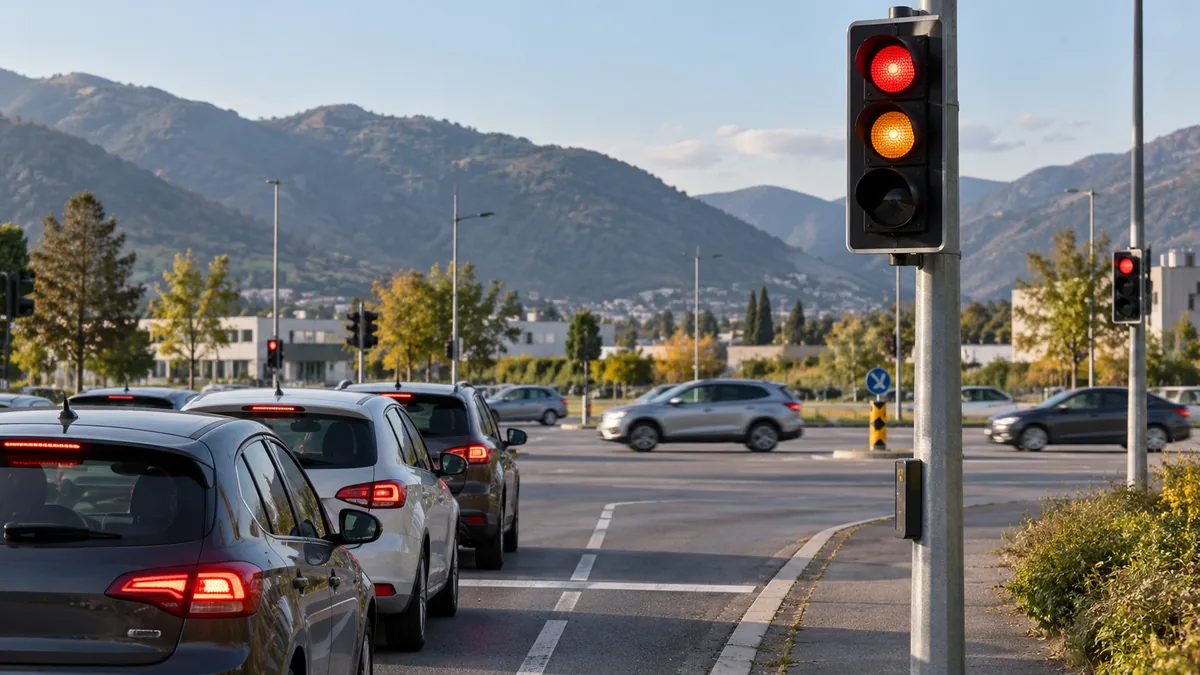
On 19 May 2019, the population of Ticino rejected, with 73% of votes against, a cantonal project which provided for traffic lights along the route between Cadenazzo and Quartino, instead of roundabouts.
Context
TL;DR
- 73% opposed to the project voted on May 19, 2019
- First traffic lights in Cadenazzo on August 29 last
- USTRA estimates a 30% saving in 2028
Key facts
- Vote → 73% of votes against
- Route → Cadenazzo-Quartino, Piano di Magadino
- Project → FEDRO
- Overall cost → approximately 40 million francs
- Deadline indicated → end 2027 for the progressive replacement
- Estimate → approximately 30% at peak times in 2028
On 19 May 2019, the population of Ticino rejected, with 73% of votes against, a cantonal project which provided for traffic lights along the route between Cadenazzo and Quartino, instead of roundabouts. Seven years later, on August 29th, the first systems were installed in Cadenazzo.
The program concerns the Magadino Plan. Further installations are planned: by the end of 2027, the roundabouts between Cadenazzo and Quartino will be gradually replaced by traffic lights. The initiative was born from a study and a decision by FEDRO, the Federal Roads Office. In 2020, the road became federal property; until then it was cantonal.
Investment and objectives
The total expected expenditure amounts to approximately 40 million francs: eight million will be allocated to traffic lights and the remaining 32 million to the improvement of the entire road network. For the FEDRO, the objectives are to make traffic more fluid and increase safety on a road traveled by almost 30,000 vehicles a day, which has always been among the busiest in the Canton of Ticino.
The first phase, however, produced negative reactions. In September, in the weeks following the installation in Cadenazzo, numerous motorists reported queues and longer journey times. In some cases, they reported, the times doubled or tripled.
The traffic lights located in front of the Cadenazzo roundabout, the only one destined not to be eliminated, also remain at the center of the debate, as well as the requirement to turn right leaving via Stradonino, which connects Gudo to Cadenazzo. Patti Chiari's crew documented the complex maneuvers required by buses and trucks, which obstruct the flow of traffic.
The protests led Claudio Isabella, grand councilor of the Centre, and seven other parliamentarians from different parties to question the cantonal government. Simone Gianini, liberal national councilor, instead asked Bern for explanations. The Federal Council responded that it is premature to draw conclusions and that the effectiveness will be assessed after the conclusion of the work.
Operational details
What to measure before judging
For a cross-border commuter traveling the Cadenazzo-Quartino route, the practical question is whether the time lost in the first weeks represents the outcome of the project or a settling-in phase. The source describes both situations, but at different times. Confusing the September protest with the forecast for 2028 would make the picture simpler than it is.
Four moments, four interpretations
| Moment | Reported data | Cautious interpretation |
|---|---|---|
| First days | Accidents, sensor malfunctions that were later corrected, and optimization work | Problematic phase |
| September | Queues and travel times reported as doubled or tripled in some cases | Disruption reported by motorists |
| Early October | Travel times practically the same as those in the same period the previous year, according to USTRA | Stabilized situation |
| 2028 | Estimated savings of about 30% during peak hours | Expected result once the project is completed |
The transition from one row to the next is the central point for those who use the road to get to work. USTRA acknowledged that the first days in the Cadenazzo area were problematic, but also reported that by early October the situation had already stabilized. The comparison with the same period the previous year does not erase the queues reported in September; it does, however, show that the initial figure is not presented as definitive.
For a cross-border commuter, the 30% estimate therefore does not represent time already saved. It is a forecast linked to the completion of the intervention and peak hours. Likewise, reports of doubling and tripling do not automatically describe the final outcome: the source places them in the weeks following the initial installation.
The cause of the disruption is also described in a nuanced way. Italo Broggini, head of the USTRA project, cited accidents, malfunctions of the new sensors, and optimization work. The presence of multiple factors makes it unwise to judge the entire project based on a single incident.
The response of the Federal Council points in the same direction: it is still too early to assess the actual effectiveness of the entire project. For those crossing the Magadino Plain, the distinction between observed data, a stabilized phase, and a future estimate offers a concrete way to interpret any delays without turning a forecast into a guarantee.
Key points
How to follow the transition phase
Those who cross the Magadino Plain for work can read the timeline operationally, without anticipating the final outcome. The soundest procedure is to separate the section travelled, the date of the experience and the data used for comparison.
Four steps
1. Identify the route segment. Check whether your route includes Cadenazzo-Quartino, the Cadenazzo area or the via Stradonino exit, connecting Gudo and Cadenazzo. These are the points mentioned in Patti chiari's reconstruction.
2. Place the episode on the timeline. On August 29 last year, the first traffic lights were installed in Cadenazzo; in September, reports of queues and longer travel times emerged; at the beginning of October, USTRA reported stabilization. Separating these phases avoids improper comparisons.
3. Compare the time with the benchmark used by USTRA. The comparison published by the Federal Roads Office concerns the travel time for the route during the same period of the previous year. The forecast of around 30% instead concerns peak hours in 2028, when the project will be completed.
4. Keep the expected result distinct from the verified result. The replacement of the roundabouts will continue progressively through the end of 2027. Only after the works are completed, according to the Federal Council's response, will it be possible to assess the actual effectiveness of the project as a whole.
For those travelling by car, the observation must also include the configuration indicated in front of the Cadenazzo roundabout, the only one that will not be dismantled. If the route involves via Stradonino, the obligation to turn right must be taken into account; the program documented that buses and trucks may be forced into laborious maneuvers. However, this data does not justify automatically extending that pattern to every vehicle or every day.
This framework enables the cross-border commuter to read the project in phases: concrete experience, stabilization communicated by USTRA and final forecast. There is no need to choose today between promise and protest; one needs to know which data is being observed and what deadline it refers to. The 30% estimate remains tied to 2028, while assessments of effectiveness await the end of the works.
To compare waiting times at the crossings used on the cross-border journey, consult storico traffico/code ai valichi.
Source: rsi.ch
Frequently Asked Questions
- Why were traffic lights installed in Cadenazzo?
- The traffic lights were installed to replace the roundabouts along the Cadenazzo-Quartino section, with the aim of smoothing traffic and ensuring more safety on a road that registers almost 30,000 vehicles a day.
- What were the reactions of the drivers?
- Numerous motorists reported longer queues and travel times, in some cases doubled or tripled, in the weeks following the installation of traffic lights in Cadenazzo.
- What is the USTRA's position?
- The USTRA acknowledged that the first days in the Cadenazzo sector were problematic, but reported that by the beginning of October the situation was already stabilized. The goal is 30% savings at peak times in 2028.
Related articles
- All articles: Taxes
- Traffico Cadenazzo-Quartino: da fine agosto si attivano i semafori intelligenti
- Semafori a Cadenazzo: il punto del Consiglio federale sul traffico
- Semafori contro il traffico parassitario: la strategia dei Grigioni funziona
- 120 nuovi semafori per il traffico svizzero
- A13 Cadenazzo: Lavori e impatto Frontalieri | Frontaliere