Medicines: mandatory stockpiles under pressure in Switzerland
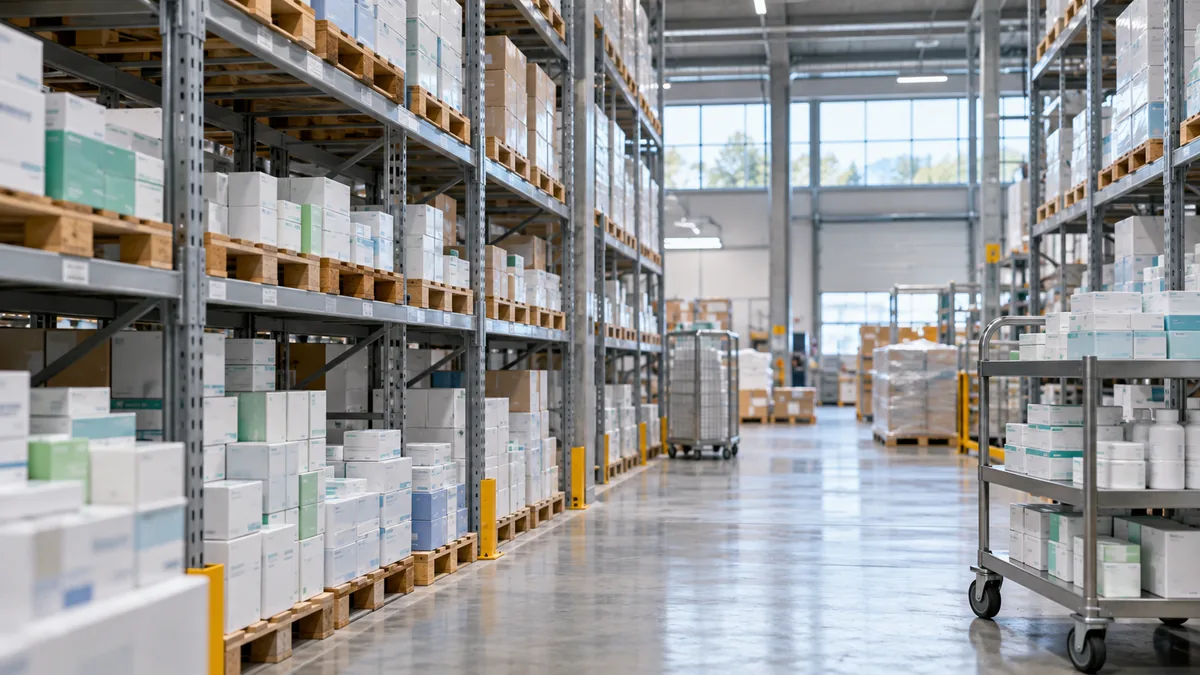
There has been a shortage of antibiotics and painkillers in Switzerland for years.
Context
TL;DR
- Switzerland has been short of antibiotics and painkillers for years.
- Since 2022, stocks have been released more than 100 times a year.
- Reserves, costs and supply were discussed in Burgdorf.
- Producers of active ingredients are concentrated in Asia.
Key facts
What → mandatory medicine reserves Where → Burgdorf 2018 → 17 releases of the reserves From 2022 → more than 100 releases per year Warehouse → as large as five football fields and 15 meters high Authorization → necessary for the mandatory reserve portion
The debate and the reserves
On Wednesday, in Burgdorf, the discussion also involved the people responsible for the mandatory reserves. The meeting served to describe the concrete situation, the challenges and the possible measures while Parliament examines the initiative «Yes to secure medical supply» together with the government counterproposal.
The starting point is the shortage of medicines, which has concerned Switzerland for years. The examples cited include antibiotics and painkillers. The warehouse described during the meeting stores millions of boxes of medicines; the facility occupies an area equivalent to five football fields and reaches 15 meters in height. A limited fraction of these packages constitutes the so-called mandatory reserves, that is, reserves intended to address situations of severe shortage.
Bernhard Megert, director of Alloga, explained the distinction between the packages available for the market and those subject to Confederation control:
«Of 10’000 packages of a medicine present in the warehouse, 3’000 constitute the mandatory reserve: the other 7’000 can be freely placed on the market, while authorization from the Confederation is required for those reserved».
The example shows that the physical presence of medicines in storage does not mean that all packages have the same status. The portion not included in the mandatory reserve can be freely placed on the market; federal authorization is required for the restricted share.
In recent years, recourse to this authorization has become more frequent. In 2018, the mandatory reserves were released on 17 occasions; from 2022 onward, the threshold of 100 annual releases was exceeded every year. These figures, presented in Burgdorf, describe the growing pressure on the reserve system.
Operational details
The comparison between releases and costs
The comparison first examines developments over time. In 2018, 17 releases of compulsory stocks were recorded; from 2022 onward, the figure exceeded 100 per year.
| Period | Number of releases |
|---|---|
| 2018 | 17 |
| From 2022 onward | more than 100 per year |
The comparison shows a much higher frequency than the 2018 figure, but does not provide the precise number for each subsequent year. Therefore, the source does not allow a detailed annual average or percentage increase to be calculated. The documented figure remains the increase from 17 releases in 2018 to a threshold above 100 in the years from 2022 onward.
For Peter Huber, the increase is attributable to the pandemic and armed conflicts. Huber chairs Helvecura, the cooperative responsible for coordinating the establishment of compulsory stocks. In his view, however, the reserves have always been sufficient. The data and this assessment therefore refer to two distinct aspects: the number of authorizations to release stocks and the adequacy of the available reserves.
The issue identified by Huber concerns financing. The comparison with other products makes the disparity contested by the sector clear:
| Products mentioned | Treatment of stock costs |
|---|---|
| Petrol, animal feed and food products | The costs are borne by consumers |
| Medicines | Prices are regulated and the same mechanism is not possible |
For medicines, therefore, the sector does not accept that the costs of the reserves should be treated differently from those of petrol, animal feed or food products. The amount at stake is stated as a few million francs, without a more precise figure. Roland Pfister, Delegate for Economic Supply of the Country, said he understood the request. The Confederation is working to find a solution for financing the compulsory stocks.
Key points
Dependence on Asia for older medicines
The other issue concerns older medicines, those whose patents have expired. Urs B. Kientsch, a militia officer with the country's economic supply organization, identifies dependence on Asia as a separate issue from financing the reserves. Active ingredient manufacturers are concentrated there. The text therefore identifies the area where production is concentrated, but does not quantify the share of active ingredients involved.
The solution indicated by Kientsch is to encourage active ingredient manufacturers to return to Europe in order to supply the local market. For this to happen, in his assessment, policymakers must create favorable framework conditions. The source does not specify which conditions should be introduced, nor does it indicate any measure already decided or a timeline for the manufacturers' return.
There are also precise information gaps regarding financing. The amount is described only as a few million francs, and no breakdown of the costs is provided. Likewise, the figure for releases since 2022 is expressed as a threshold of more than 100 times a year, without the exact number for each year. There is therefore no basis for estimating a precise total for the period or comparing individual medicines.
The report also distinguishes between drug shortages and the availability of reserves: shortages have concerned Switzerland for years, while Huber states that the reserves have always been sufficient. The increase in authorizations is not presented as evidence that the stocks have been depleted. Rather, the documented discussion concerns how to finance them and dependence on foreign countries for certain medicines.
On the political level, Parliament is discussing the “Yes to Security of Medical Supply” initiative and the government's counterproposal. The Confederation says it is working on a solution for financing, but the text does not report a final decision. Both the economic issue of the reserves and the industrial issue linked to active ingredients concentrated in Asia therefore remain unresolved.
Source: rsi.ch
Frequently Asked Questions
- How long has the shortage of medicines been a concern in Switzerland?
- The source indicates that the shortage has been worrying Switzerland for years and mentions antibiotics and painkillers. Parliament is discussing the initiative “Yes to the security of medical supply” and the government’s counterproposal. In Burgdorf, on Wednesday, the people responsible for mandatory stocks also spoke to explain the concrete situation, the challenges and possible measures.
- How many times have the mandatory reserves been released?
- In 2018, mandatory stocks were released 17 times. From 2022 onward, they were released more than 100 times a year. The source does not indicate the precise figure for each subsequent year and therefore does not make it possible to establish a detailed annual average. The documented comparison is between the 17 releases in 2018 and a threshold above 100 in the years from 2022 onward.
- How do mandatory reserves of medicines work?
- Mandatory stocks are part of the reserves kept to deal with situations of severe shortage. In the example illustrated by Bernhard Megert, out of 10'000 packages, 7'000 can be freely placed on the market, while 3'000 belong to the mandatory stock and require authorization from the Confederation. The source also specifies that only a small part of the millions of boxes present falls into this category.
- Why is inventory financing a problem?
- According to Peter Huber, the problem concerns financing, while the reserves have always been sufficient. For gasoline, animal feed and food products, the costs of maintaining the stocks are borne by consumers. For medicines, whose prices are regulated, this mechanism is not possible. The sector speaks of unequal treatment; several million francs are at stake.
- What is the issue related to pharmaceutical production?
- Urs B. Kientsch points to dependence on Asia for older medicines whose patents have expired, because the producers of active ingredients are concentrated there. The solution indicated is to encourage active-ingredient producers to return to Europe in order to supply the local market. The source adds that policymakers should create good framework conditions, without specifying which measures.