Zurich Airport: withdrawals from kerosene reserves
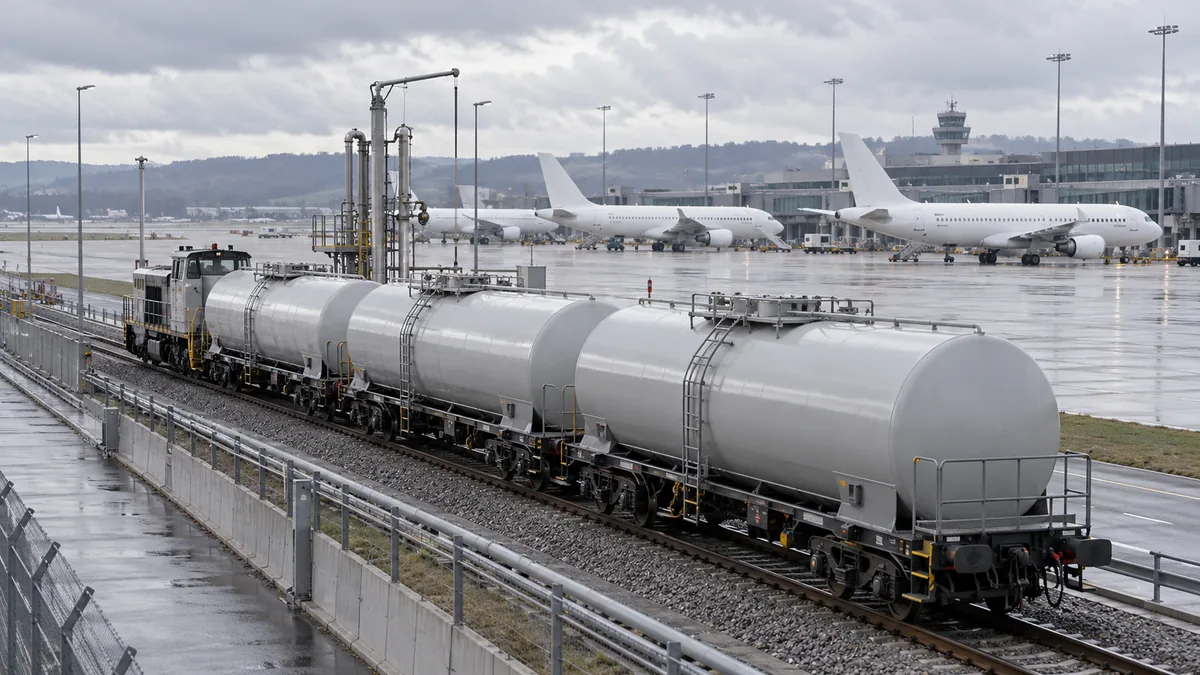
30'000 m³ of reserves can be used Authorized withdrawals from October 15 to November 1 The authorized quota is 6,5% of the available amount The supply
Context
TL;DR
- 30'000 m³ of reserves can be used
- Authorized withdrawals from October 15 to November 1st
- The authorized quota is 6,5% of the available amount
- Swiss supply remains guaranteed
Key facts
- Location → Zurich-Kloten Airport
- Volume → 30'000 cubic metres
- Period → from October 15 to November 1
- Quota → 6,5% of what is available
- Kerosene management → UBAG
30'000 cubic metres of kerosene may be withdrawn from mandatory reserves. The country's Delegate for Economic Supply authorized its use on Thursday from October 15 to November 1. The quantity corresponds to 6,5% of what is available.
The intervention is linked to interruptions and considerable delays in international rail transport, especially from Germany. The reported risk is that Zurich Airport could run short of kerosene. The Confederation explains that trains are also failing to keep to schedule because large quantities of goods have been transferred to rail after river transport became impossible due to the low water level of the Rhine.
What is guaranteed and what is under pressure
The same communication specifies that Swiss supplies of petrol, diesel and heating oil have deteriorated compared with the previous week, but remain guaranteed. For people living in Switzerland, the wording therefore distinguishes between a deterioration in the situation and an interruption in availability: the note does not announce that these products have run out.
Asked about this, Zurich-Kloten Airport stated that, for now, departing aircraft are not subject to refuelling restrictions. UBAG manages the kerosene and deals with a total of nine external suppliers, including Socar, BP and Shell. All the fuel arrives at the airport by rail.
The airport management is not commenting on shortages at international level and refers to the airlines regarding refuelling flights bound for Frankfurt. Germany's main airport, which serves as a hub for Lufthansa, Swiss's parent company, is also experiencing difficulties. Lufthansa does not anticipate cancellations, but has invited crews bound for Frankfurt to depart with fuller tanks.
Operational details
The operational bottleneck is transport
The decision on reserves must be read together with one fact: all of the kerosene for Zurich-Kloten reaches the airport by rail. For this reason, disruptions to rail traffic directly affect the airport's fuel supply. The source links the difficulty to international delays, particularly from Germany, and to the diversion to rail of large quantities of goods that could no longer travel by river.
A proper reading avoids confusing three different elements: the availability of reserves, the punctuality of trains and the status of aircraft refuelling. The communication presents them in the same episode, but does not describe them in the same way.
The data to distinguish
| Area | Stated status | Practical interpretation |
|---|---|---|
| Mandatory reserves | 30'000 m³, equal to 6,5% of the available amount | Measure limited to the period indicated |
| Rail transport | Disruptions and delays, especially from Germany | Arrival route for all kerosene |
| Refuelling at Zurich-Kloten | No restrictions currently in force | Situation of departing aircraft |
| Energy products in Switzerland | Worse than the previous week, but guaranteed | Gasoline, diesel and heating oil |
| Frankfurt | Difficult situation and no cancellations expected by Lufthansa | Operational reference for airlines |
The relationship between the Rhine and rail is the most relevant point for understanding the origin of the logistical pressure. The river's low water level made it impossible to transport large quantities by river; those goods were transferred to rail, while the trains are not keeping to schedule. Zurich Airport is therefore exposed to a delivery problem, despite no declared restrictions on refuelling departing aircraft.
For the Swiss market, the message remains cautious: the availability of gasoline, diesel and heating oil has worsened, but the Confederation still describes it as guaranteed. For travellers, however, the source distinguishes Zurich from Frankfurt: the Swiss airport reports no restrictions, while for Frankfurt the airlines are the point of reference, and Lufthansa recommends fuller fuel tanks for crews.
Key points
How to navigate
To turn the news into a concrete check, the first step is to establish which situation is being observed: a flight departing from Zurich-Kloten, a flight bound for Frankfurt or the supply of petrol, diesel and heating oil in Switzerland. These are areas linked by logistics, but the source provides different information for each.
Four practical checks
1. For a flight departing from Zurich-Kloten, the airport's communication indicates that, for now, departing aircraft can be refueled without restrictions.
2. For a destination in Frankfurt, the airport management refers passengers to the airlines. Lufthansa does not expect cancellations, but has recommended that crews heading to the German city depart with fuller tanks.
3. If the interest concerns consumption in Switzerland, the three products mentioned in the note must be distinguished: petrol, diesel and heating oil. Their availability has worsened compared with the previous week, but remains guaranteed.
4. If one wants to track the duration of the measure concerning stocks, the dates to note are October 15 and November 1. The authorized volume is 30'000 cubic meters, equal to 6,5% of what is available.
The data on the full supply chain completes the operational picture. UBAG manages kerosene and turns to nine external suppliers, including Socar, BP and Shell; all the fuel reaches the airport by rail. International delays, especially from Germany, and the low level of the Rhine explain why transport punctuality is the point to monitor.
The source does not describe a general stoppage of flights from Zurich. Instead, it distinguishes between refueling currently without restrictions at the airport, difficulties in Frankfurt and Swiss energy supply that is still guaranteed. To connect this topic to everyday expenses, consult costo della vita in Svizzera.
Source: rsi.ch
Frequently Asked Questions
- How much kerosene stock can be used in Zurich?
- The Delegate for National Economic Supply has authorized the use of 30'000 cubic metres of mandatory reserves from October 15 to November 1st. The quota represents 6,5% of what is available. The measure was adopted following interruptions and significant delays in international rail transport, particularly from Germany, which are fuelling the risk of a kerosene shortage in Zurich.
- Are gasoline and heating oil still available in Switzerland?
- The Confederation's note says that the supply of petrol, diesel and heating oil in Switzerland has worsened compared with the previous week, but remains guaranteed. The source does not report a general interruption in supply; instead, it points to a deterioration in the situation while international rail transport is failing to meet schedules.
- Are there already restrictions on aircraft refueling in Zurich?
- Zurich-Kloten clarified that there are currently no restrictions in force on refuelling departing aircraft. Kerosene management is entrusted to UBAG, which uses nine external suppliers, including Socar, BP and Shell. All the fuel reaches the airport by rail. The clarification concerns departing aircraft.
- What is happening to flights bound for Frankfurt?
- For refuelling flights bound for Frankfurt, Zurich-Kloten management refers the matter to the airlines and declines to comment on any international shortages. Frankfurt Airport is experiencing difficulties; Lufthansa, the parent company of Swiss, does not anticipate flight cancellations but has recommended that crews bound there depart with fuller tanks.