Füglistaler admits mistakes in railway expansion
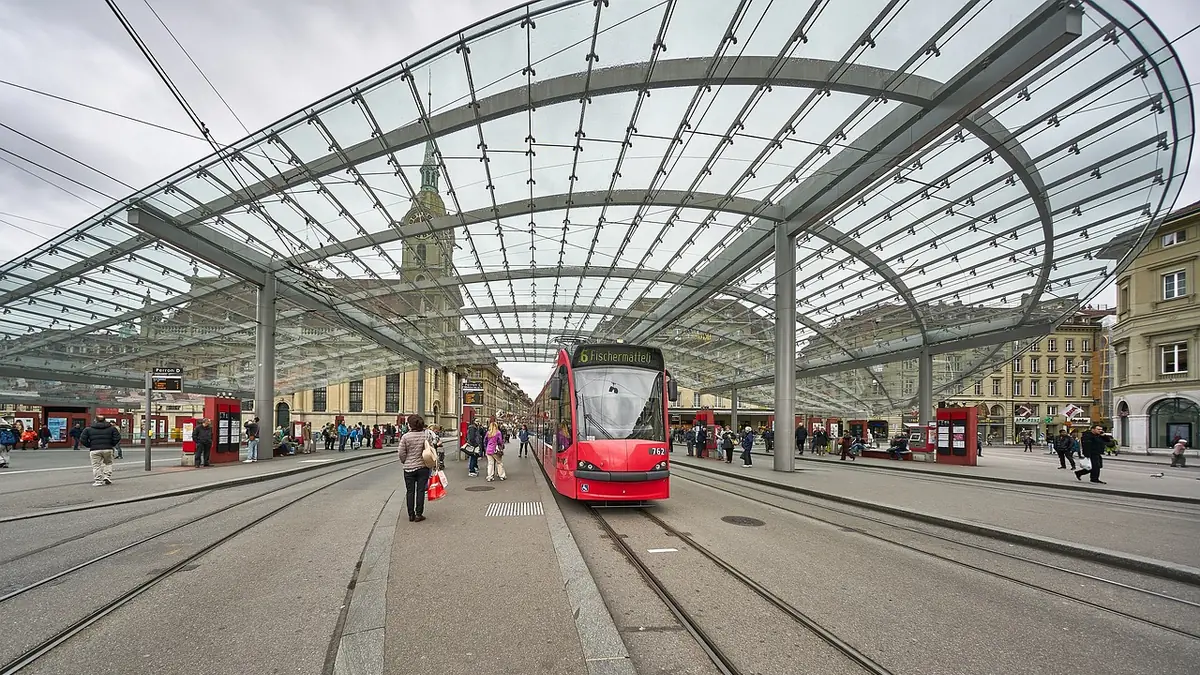
The former director of the UFT criticizes excessive planning: over 100 billion in projects against 20 billion available. Consultation by 9 October.
Context
In brief
- Füglistaler admits errors in railway expansion
- The Basel S-Bahn is the cited case
- The consultation on Transport '45 ends on October 9
- Over 100 billion francs in projects against 20 billion available
Key facts
- Protagonist → Peter Füglistaler, former director of the FOT
- Location → Bern
- Cited project → Basel S-Bahn
- Program → Transport '45
- Deadline → October 9
- Projects → over 100 billion francs
- Realistically available resources → 20 billion francs
Peter Füglistaler, former director of the Federal Office of Transport (FOT), admitted in an interview published today by the Basler Zeitung that he made mistakes in the expansion of the Swiss railway network. His self-criticism concerns the relationship between planning and implementation: in his view, Switzerland plans, but hardly builds anymore.
The example of the Basel S-Bahn
The case cited is the Basel S-Bahn. Füglistaler considers it over-engineered, without a clear timeline or financial horizon. The search for the perfect solution slowed down the implementation: the system, according to his reconstruction, lost sight of when to start building.
«In Switzerland, we hardly build anymore; we only plan.»
The former director acknowledged that he did not dare to stop the planning. According to him, such an intervention would have triggered a reaction from the Basel governments to the Federal Council. This passage highlights the complexity of the interaction between the Confederation, the Cantons, and the SBB. Füglistaler admitted to having been part of this system.
The position is not new. In 2024, interviewed by the Neue Zürcher Zeitung, he had already expressed reservations about the development of public transport in Basel and Lucerne, while acknowledging its necessity. On that occasion, he advocated for a gradual implementation rather than the systematic pursuit of the perfect solution.
The statements are part of the debate on the strengthening of infrastructure under Transport '45. The consultation on the Federal Council's proposal, which aims to define project priorities, will continue until October 9. Füglistaler pointed out a clear imbalance: against projects totaling over 100 billion francs, the realistically available resources are 20 billion. For this reason, according to him, drastic cuts will be necessary. The topic therefore also concerns the public transport network and its expansion.
Operational details
The choice between perfection and implementation
The practical issue emerging from Füglistaler's words is a problem of selection. If the value of the projects greatly exceeds the resources realistically available, the discussion cannot stop at the question of whether a project is desirable: it must establish which priorities are included in the program. This is exactly the function attributed to the Federal Council's proposal as part of Transport '45.
For those following mezzi pubblici, the difference between the two approaches is tangible. The source links the pursuit of the perfect solution to excessive planning and a slowdown in implementation. Gradual implementation, on the other hand, is the path Füglistaler had already indicated in 2024 for Basel and Lucerne, while acknowledging the need to develop public transport.
| Approach | Practical reading based on the source |
|---|---|
| Pursuit of the perfect solution | May prolong planning and delay construction |
| Gradual implementation | Makes it possible to proceed in stages, without waiting for a definitive solution |
| Project priorities | Leads to choosing the interventions to include in the Transport '45 debate |
| Available resources | Are indicated as 20 billion francs, against projects worth over 100 billion |
A dossier spanning multiple levels
The example of Basel also shows why the dossier is not merely local. Füglistaler described the interaction between the Confederation, the cantons and FFS as complex, recalling that a possible halt to planning could have triggered a reaction from the Basel governments at the Federal Council. Cantonal positions and the federal debate are therefore linked in the same affair.
For residents, the useful way to read this is to distinguish three moments: project planning, the definition of priorities and construction. The former UFT director's criticism concerns precisely the transition from the first to the third. The relationship between over 100 billion in projects and 20 billion in resources makes it clear why, according to Füglistaler, it is not enough to add new plans: it is also necessary to make decisions and cut drastically.
Recommended tools
For an updated estimate, use the net salary calculator and the CHF-EUR exchange comparator.
Key points
How to follow the dossier without confusing levels and decisions
Given the available data, the most concrete way to get oriented is to read the consultation as an exercise in setting priorities, not as the announcement of a single project. A reading guide can follow five steps.
1. Start with the scope: the dossier concerns the expansion of infrastructure within Trasporti '45, based on a proposal by the Federal Council. 2. Set the deadline: the date indicated by the source is 9 October. This is the date until which the consultation on project priorities will continue. 3. Separate the figures: more than 100 billion francs represent the projects under consideration, while 20 billion are the realistically available resources indicated by Füglistaler. 4. Compare the models: check whether the reasoning follows the search for the perfect solution or a gradual implementation, the approach supported by the former director in 2024. 5. Keep the levels distinct: the source refers to the interaction between the Confederation, the cantons and FFS. Attributing the entire process to a single entity would oversimplify the picture described.
The check to carry out on communications
When the dossier is presented, it is worth asking whether the discussion concerns planning, priorities or construction. Füglistaler's criticism stems precisely from the distance between these steps. Similarly, a figure referring to the total value of the projects should not be confused with the realistically available resources: the comparison between the two amounts is why the former director speaks of drastic cuts.
The source does not indicate which projects would be reduced or excluded. Therefore, until 9 October, the verifiable data point to follow is the evolution of the consultation and the priorities that the Federal Council's proposal intends to define. The reference remains national, but the example of Basel and the references to Lucerne show how the debate also affects the cantons.
To explore the topic of mobility and find your way among the mezzi pubblici, use the dedicated tool.
Source: tio.ch
Frequently Asked Questions
- What mistakes did the former director of the UFT admit?
- Peter Füglistaler acknowledged a fundamental error in managing the expansion of the Swiss rail network, arguing that the system has focused too much on planning at the expense of practical implementation. According to the former director, the search for the 'perfect solution', as in the case of the S-Bahn in Basel, has slowed down work, leading to a situation in which much is planned but little is built. Füglistaler admitted that he had been part of this complex system of interaction between the Confederation, the Cantons and the SBB.
- What is the financial imbalance in the Transport '45 programme?
- The debate on upgrading infrastructure highlights a clear disproportion between ambitions and actual resources. For projects with a total value of more than CHF 100 billion, the realistically available resources amount to about CHF 20 billion. This discrepancy makes it necessary, according to Füglistaler, to make drastic cuts and precisely define the priorities within the framework of the ongoing consultation.
- What is the deadline for consultation on the Transport '45 programme?
- The consultation on the Federal Council's proposal, aimed at establishing priorities among the many infrastructure projects, will end on 9 October. This step is considered crucial to select the interventions to be carried out, overcoming the logic of infinite planning and moving towards a gradual realization of the works, an approach already desired by Füglistaler in 2024 for the railway networks of Basel and Lucerne.