Civil protection: Bern plans to deploy civilian service personnel
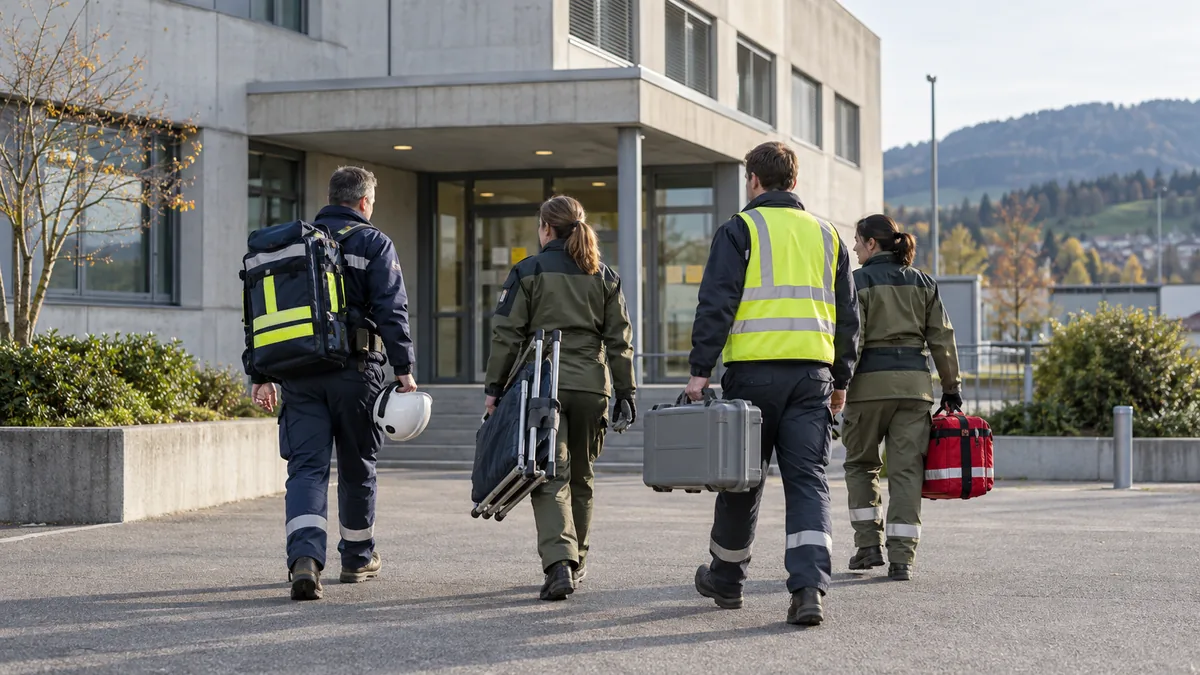
The Federal Council approved the ordinance amendments that will allow, from January, persons required to perform civilian service to be deployed in cantonal civil protection organizations.
Context
TL;DR
- Starting in January, civilian service personnel will be able to serve in civil protection
- The Federal Council amends the implementing ordinances
- As of January 1, 2025, civil protection had 57'000 personnel
- The target set for civil protection is 72'000 personnel
Key facts
- Decision: Federal Council
- Addressees: cantonal civil protection organizations
- Condition: deployment when regular personnel are insufficient
- Civil protection figures: 57'000 personnel against a target of 72'000
- Outlook: approximately 4'500 recruits per year and 50'000 personnel by 2030 if the trend does not change
The Federal Council approved the ordinance amendments that will allow, from January, persons required to perform civilian service to be deployed in cantonal civil protection organizations. The measure is intended to fill cantonal gaps when regular personnel are insufficient.
The source reports that the measures had been presented and sent out for consultation in November 2025. The stated aim is to strengthen civil protection personnel, also referred to in the text by the abbreviation PC.
The government's decision
The figure reported for January 1, 2025, is 57'000 active personnel, against a target set at 72'000. The source also indicates annual recruitment of approximately 4'500 people and notes that, if the trend does not change, the stated recruitment would bring the number of personnel to 50'000 by 2030. The use of civilian service personnel is therefore included in a measure linked to shortages in civil protection at the cantonal level.
Following Parliament's approval, in March last year, of the partial revision of the Population and Civil Protection Act (LPPC), the Federal Council adjusted the ordinances concerned. According to the note, the changes are primarily organizational and administrative in nature and concern the Cantons first and foremost.
Operational details
The numerical gap indicated by the source
The comparison between the two main values produces a difference of 15'000 personnel: 72'000, the target set, minus 57'000 actual personnel recorded as of January 1, 2025. This is an arithmetic calculation based on the reported data, not a new figure communicated by the Federal Council.
| Indicator | Reported data |
|---|---|
| Actual personnel as of January 1, 2025 | 57'000 |
| Target set | 72'000 |
| Annual recruitment | approximately 4'500 personnel |
| Projection indicated | 50'000 personnel by 2030, if the trend does not change |
The overview compares a snapshot, that of January 1, 2025, with a numerical target and a conditional projection. The source does not present the figure of 50'000 as a result already achieved: it links it to the assumption that the trend remains unchanged. The recruitment of approximately 4'500 personnel is also indicated as an annual figure, without further details on its composition.
From cantonal shortages to the deployment of civilian service personnel
The source places the deployment of civilian service personnel in cases where regular personnel are insufficient; it does not present it as a general measure unrelated to cantonal shortages. To make this transition possible, civil protection organizations will be recognized as institutions where civilian service can be performed.
The project also supplements the decision with operational rules: deployment procedures, the rights and duties of civilian service personnel, and allocation criteria. The stated priority is residence and language, according to the same criterion provided for personnel. The territorial dimension is therefore explicitly present both in the place where the shortage is identified and in the order of allocation described by the source.
The text also provides criteria for calculating the authorized staffing level and mechanisms for addressing shortages. These are elements of the approved rules, not a description of operational results already measured in the cantons.
Key points
From the revision of the LPPC to the ordinances
The federal measure comes after two steps indicated in the source. The measures had been presented and submitted for consultation in November 2025; in March last year, Parliament had approved the partial revision of the LPPC. The Federal Council adapted the ordinances to implement those changes.
The package includes the ordinances relating to civil protection, civilian service, the processing of civilian service data, military information systems and DDPS information systems. According to the note, the measures are primarily organizational and administrative in nature and mainly affect the cantons.
What is regulated
The most concrete part of the project concerns how civilian service personnel may be deployed. The procedures must be defined together with the rights and duties of persons required to perform civilian service. Priority assignment based on place of residence and language is indicated as a rule analogous to that used for military personnel.
The framework also establishes the criteria for calculating the authorized strength, provides mechanisms for addressing shortages and provides for a reduction in basic training for civil protection volunteers. Overall, these provisions outline an administrative intervention that goes beyond merely enabling civilian service personnel to be deployed in cantonal organizations.
The limits of the available data
The source does not quantify how many civilian service personnel will be deployed, does not distribute the assignments among the individual cantons and does not indicate a duration for the assignments. Nor does it report any results following the start of the measure. Therefore, the figure of 50'000 military personnel by 2030 remains, in the text, a projection tied to the condition that the trend does not change; it is not presented as a certain outcome.
The documented picture is limited: a decision by the Federal Council, a partial revision approved by Parliament and a set of changes aimed primarily at cantonal organization. The source contains no individual statements by members of the government or cantonal authorities, nor any additional figures on implementation.
Source: tio.ch
Frequently Asked Questions
- From when will civil service personnel be able to be deployed in civil protection?
- Starting in January, people required to perform civilian service may be deployed in cantonal civil protection organizations. The deployment is intended to fill cantonal shortfalls when the regular personnel are insufficient. The Federal Council approved the measure through amendments to ordinances, after the measures had been presented and sent for consultation in November 2025.
- What is the situation regarding civil protection personnel?
- As of January 1, 2025, civil protection personnel numbered 57'000, while the target set was 72'000. The source indicates annual recruitment of approximately 4'500 personnel and reports that, if the trend does not change, the number would fall to 50'000 personnel by 2030. This is a projection, not an already achieved result.
- How will the civil service members be assigned?
- The project provides for detailed deployment procedures and defines the rights and duties of civilian service personnel. Assignments must be made primarily on the basis of residence and language, as for the members. Civil protection organizations will be recognized as civilian service placement institutions. The source does not go into detail about the individual assignments.
- Which ordinances have been adapted?
- To implement the revision, the Federal Council adapted the ordinances on civil protection, civilian service, the processing of civilian service data, military information systems, and DDPS information systems. The source specifies that the amendments are mainly organizational and administrative and primarily concern the Cantons.
Related articles
- All articles: Jobs and employment
- Protezione civile nel Canton Lucerna: requisiti e indennità
- Protezione civile: 9 giorni tra Ticino e Como
- Votazioni federali giugno 2026 servizio civile iniziativa 10 milioni
- Protezione civile canton Berna: requisiti e indennità
- Consiglio federale approva giornata informativa per donne