Swiss franc decline: signals to watch through November (cross-border guide)
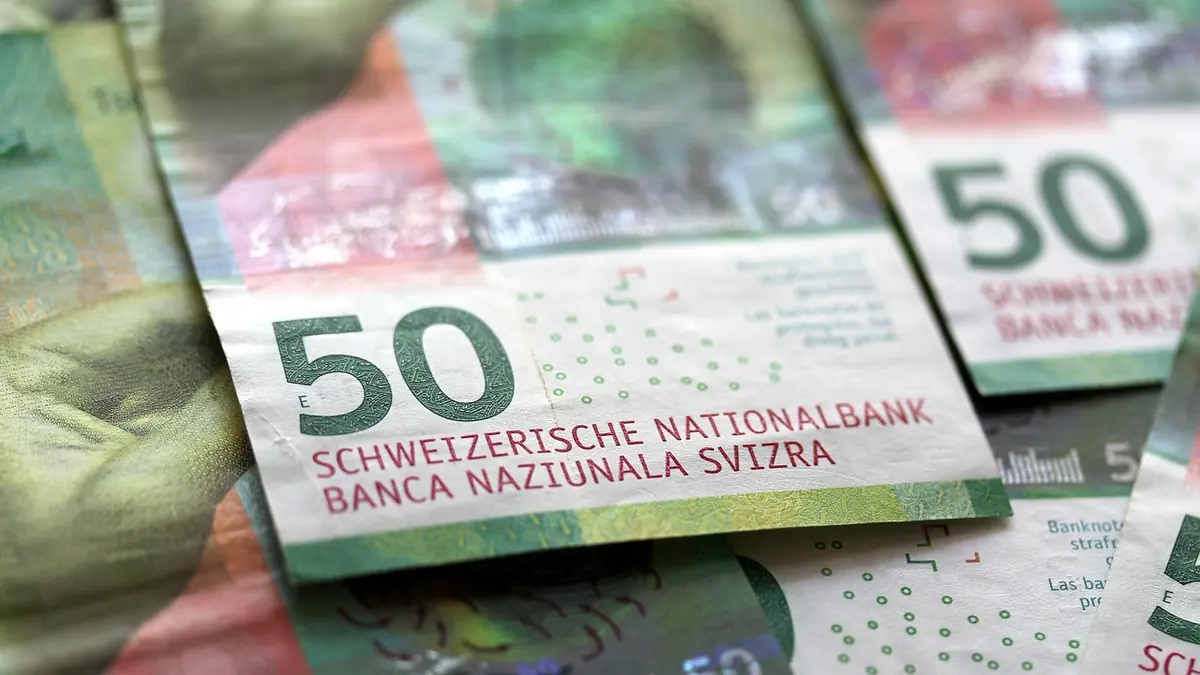
The Swiss franc has fallen about 5% from its spring 2026 highs, equal to the decline in 2023 and less than >6% in 2024; the seasonal window runs from late September to early November.
Context
In brief
- The franc has lost about 5% from the highs of spring 2026
- In 2023, the decline had reached similar levels
- In 2024, the correction had exceeded 6%
- The seasonal window runs from late September to early November
Key facts
- Comparison period → last five years
- Peak → spring 2026
- Franc's loss → about 5% against the euro
- 2024 correction → over 6%
- Seasonal window → late September-early November
From the highs reached in the first part of 2026, the Swiss franc has lost ground against the euro. After months of weakness, the Swiss currency faces a precise question: can the decline continue, or is the market approaching a turning point?
For those working in Switzerland and regularly converting their salary into euros, the movement has a direct effect on the amount received in the single currency. When the franc is weaker, the same salary yields fewer euros. The comparatore CHF/EUR makes it possible to track the relationship between the two currencies, keeping the observed data distinct from the hypothesis about the future.
A loss already seen in recent years
The analysis of the declines recorded by the franc over the last five years measures the currency's distance from previous highs. The movement that began after the peak of spring 2026 has led to a loss of about 5% against the euro.
The figure is not presented as exceptional in historical terms. In 2023, the decline had reached similar levels; in 2024, however, the correction had exceeded 6%. The comparison serves to place the current fluctuation within a sequence of movements already observed, without automatically turning it into a forecast.
The figure becomes interesting precisely because the franc is in an area where, in recent years, several periods of weakness have begun to lose momentum. The wording remains cautious: this does not mean that the low has already been reached, but it indicates that a significant part of the downward movement may be behind us.
A second signal comes from the seasonality of the exchange rate between the Swiss franc and the euro. The analysis conducted with Forecaster on the average behavior of the last ten years highlights a particular dynamic between the end of September and the beginning of November. The source identifies that window, together with statistical signals and institutional investors' positioning, as a period to monitor in the coming weeks. No certain outcome is indicated: the question remains open between a continuation of the decline and a possible turning point.
Operational details
How to read the signal for those who convert their salary
The useful data for someone who receives a salary in francs and converts it into euros is not an isolated percentage, but the sequence in which the analysis is presented. The text does not provide a euro amount for a single conversion: the 5% should therefore be read as a measure of the exchange-rate movement, not as an identical result for every salary. To make the comparison practical, busta paga svizzera can be the starting point for determining the amount in francs to monitor.
| Reference | Reported data |
|---|---|
| Highs in the first part of 2026 | Starting point of the decline |
| Movement after the spring 2026 peak | About 5% lower against the euro |
| 2023 | Decline to similar levels |
| 2024 | Correction of over 6% |
The historical comparison puts two opposite readings into perspective. On the one hand, the current decline is not described as an exceptional movement: declines of a similar magnitude have already appeared over the last five years. On the other hand, the fact that the correction has already reached about 5% does not prove that the decline is over.
Three scenarios to distinguish
In the first scenario, weakness continues in the coming weeks. For someone converting their salary, the weaker franc continues to translate into fewer euros for the same salary. In the second, the decline loses momentum. This possibility is compatible with the observation that several periods of weakness in recent years began to slow in a similar area.
The third scenario is waiting. Statistical signals and institutional investors' positioning make the coming weeks relevant, but the source does not present these elements as a guarantee of a reversal. The practical point is to keep the historical data and the interpretation separate: the comparison with 2023 and 2024 helps interpret the movement, but does not by itself establish what the exchange rate's next step will be.
Useful tools to protect your net income
To reduce FX leakage, compare CHF-EUR exchange options and banks for cross-border workers.
Key points
Simple monitoring for the coming weeks
The question about the turning point is not resolved by a single data point. However, the analysis can be followed through a four-step process, using only the references indicated.
1. Use as a reference the highs reached in the first part of 2026 and the peak of spring 2026, after which the observed movement began.
2. Measure the distance from the previous highs and note the figure indicated by the analysis: the franc has lost approximately 5% against the euro. This percentage describes the exchange rate, not a personal conversion that has already been calculated.
3. Reconstruct the comparison with the last five years. 2023 offers a reference with similar decline levels; 2024 shows a correction that exceeded 6%. These are points of comparison, not targets to reach.
4. Follow the window between the end of September and the beginning of November. Seasonality was analyzed with Forecaster based on the franc’s average behavior over the last ten years, but the text signals only a particular dynamic and does not indicate a certain outcome.
During the regular conversion of your salary, it is advisable to maintain the same basis of observation: salary in francs, relationship with the euro, and distance from the indicated highs. In this way, the comparison remains readable even if the decline were to continue or begin to lose strength.
The caution concerns above all the low point. The analysis does not say that it has already been reached; it only maintains that a significant part of the downward movement could be behind us. To connect the reading of the exchange rate to your salary in francs, use calcolatore stipendio.
Source: tio.ch
Frequently Asked Questions
- How much has the Swiss franc lost against the euro from the 2026 spring highs?
- According to the analysis, the franc lost about 5% against the euro after the spring 2026 peak. This level is similar to that recorded in 2023, while in 2024 the correction had exceeded 6%. The figure indicates the extent of the exchange movement, not a fixed amount in euros.
- What is the seasonal window indicated by the analysis and why is it relevant for who converts the salary?
- The analysis carried out with Forecaster over the last ten years highlights a particular dynamic between the end of September and the beginning of November. This period is to be monitored because, in previous years, several phases of weakness of the franc have begun to lose strength in this interval, although a certain outcome is not expected.
- How can you use the 5% loss figure to understand the impact on your salary in euros?
- 5% represents the change in the CHF/EUR exchange rate, not an already calculated euro figure. To see the effect on salary, take your salary in francs and multiply it by the current rate; if the franc is worth 5% less, you will get about 5% less than the reference period. You can start from your Swiss paycheck to set the amount in francs to be observed.
Related articles
- All articles: Franc and prices
- Vaccini antinfluenzali in Svizzera: il 40% arriva in ritardo
- Lastminute.com: perdita obiettivi trimestre
- Stagionali nel turismo: le spese di alloggio in Svizzera
- Frontaliere: strategie pratiche cambio euro-franco svizzero
- Frontaliere lavoro stagionale Ticino: guida permessi e tasse