Swiss franc rises sharply: euro falls to CHF 0.93
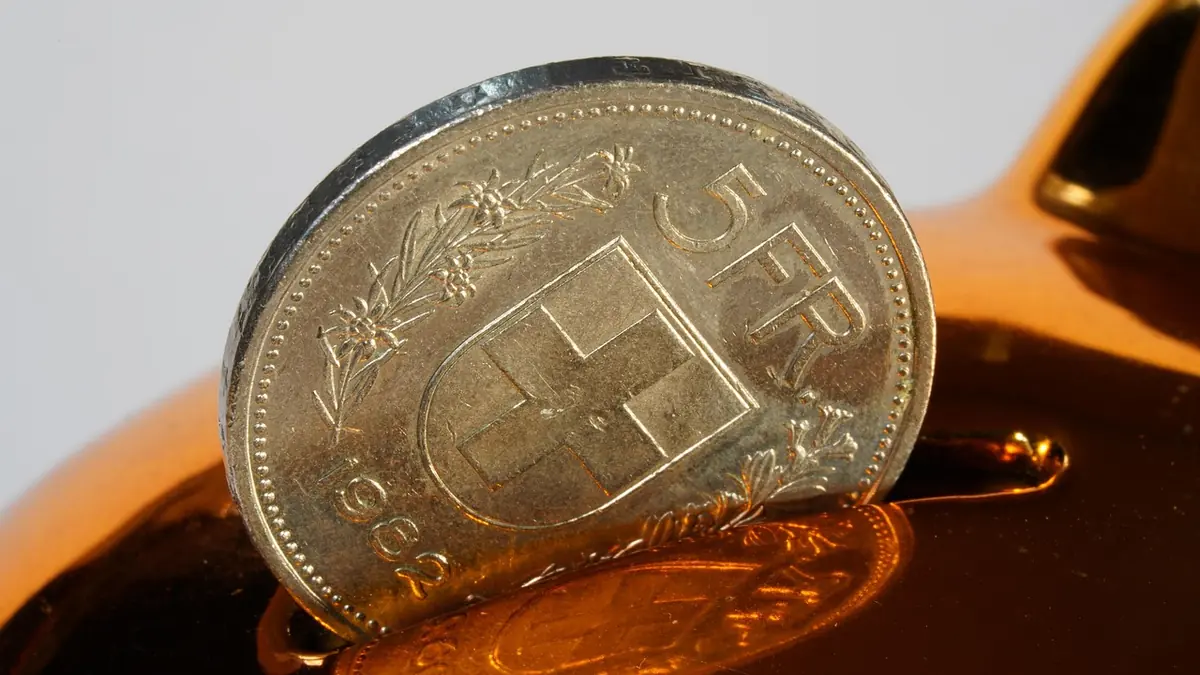
The franc appreciates more than a cent in a day. Fears about European public debt and SNB rates at 0%.
Context
In brief
- The franc rises by more than a cent against the euro in one day
- The euro trades around 0.93 francs
- Imports and travel cost less; exports suffer
- SNB maintains key interest rate at 0%
Key Facts
- Strong appreciation → franc after months of weakness
- Exchange rate → approx. 0.93 francs to one euro
- Cause → weakness of the euro and fears about public debts
- Effects → favored consumers, penalized exporting companies
- Monetary policy → SNB policy rate at 0% from June 2025; unchanged on 24 September
The movement of the franc
After months of weakness, the franc reversed sharply and appreciated especially against the euro. In just one day, the rise exceeded one cent, a rare movement on the currency markets. In the morning, the euro was trading around 0.93 francs.
The Keystone-ATS agency attributes the strengthening mainly to the weakness of the euro. Concerns about the high debt of many eurozone states and the US have been with investors for weeks. New tensions over the French financial situation and political uncertainty around the hexagonal budget broke the camel's back.
The yield difference between French and German government bonds widened sharply, as investors sold European assets. In these phases, money traditionally flows into the franc, which is considered a safe haven.
Switzerland as a refuge
Commerzbank analysts point to Switzerland's debt brake, described as working, and a public debt that is not comparable to that of other industrialized countries.
"In a world where bond yields are rising everywhere, there are no longer many markets to hide in," say Commerzbank analysts.
In addition to France's public finances, investors are looking at geopolitical tensions in the Middle East and energy price developments. The US dollar and the Japanese yen are also considered relatively defensive, but the yen is struggling, also due to the Bank of Japan's recent rate hikes.
The SNB, on the other hand, has maintained its key interest rate at 0% since June 2025 and left it unchanged on 24 September. In Switzerland, inflation remains within the framework of price stability and the economy is growing. The sale of European assets has thus strengthened the Swiss currency just as the market was once again seeking protection.
Operational details
The effect on the cost of living and exports
A stronger franc is first and foremost good news for Swiss consumers. Foreign goods and services tend to cost less if companies pass on the exchange rate gain. The advantage concerns imported goods, travel abroad and purchases in eurozone countries. Energy and raw materials paid for in foreign currencies can also weigh less on prices in the Confederation. For the cost of living, the concrete check must be made on the final price, not just the quotation.
From exchange to receipt
The transfer is neither automatic nor complete. Traders and manufacturers may have bought months in advance, worked on long-term contracts or had exchange rate hedges. The change in price can therefore arrive later at retail and not transfer entirely. The comparatore CHF/EUR allows you to read the current price; however, it does not prove that a shop has already reduced the price.
| Area | Effect to be observed |
|---|---|
| Imported goods | Possible price reduction if exchange gain is passed on |
| Travel and shopping in the Eurozone | Advantage for the Swiss consumer, linked to foreign currency |
| Energy and raw materials | Possible price relief in the Confederation |
| Exports & Tourism | "Swiss made" more expensive abroad; disadvantage for activities with costs in Swiss francs and foreign currency revenues |
For export-oriented companies, the opposite is the case. The strong franc makes "Swiss made" sold abroad more expensive, especially if the costs remain in Swiss francs and the revenues come in euros, dollars or other currencies. The price is therefore particularly relevant for industry and parts of tourism.
Companies can partially compensate for the disadvantage by acting on prices, productivity, by hedging foreign exchange or by means of production sites abroad. The same currency can relieve domestic prices and make it more difficult to sell outside Switzerland: the advantage for consumers and the pressure on exports go hand in hand.
Useful tools to protect your net income
To reduce FX leakage, compare CHF-EUR exchange options and banks for cross-border workers.
Key points
How to turn the change into a decision
Currency movements are best read by separating the price from the actual effect on the balance sheet. For a household or company, control can remain simple and focus on items exposed to foreign currency.
Four steps for those who live in Switzerland
1. Identify the exposure: imported goods, foreign services, travel or purchases in Eurozone countries. For a company, separate costs in francs and revenues in euros, dollars or other currencies. 2. Compare the current price with the actual price in Swiss francs. The comparatore CHF/EUR helps you to read the exchange rate before considering a purchase. 3. Check airtime: months in advance, long-term contracts, and foreign exchange hedges can delay the effect on the price. 4. Update the valuation only on the price actually charged. A stronger franc does not mean that every foreign good or service costs less immediately and entirely.
To follow the impact on the costo della vita in Svizzera, it is worth starting with what you actually pay. If the price does not change, the favourable rate has not yet been transferred or the transfer has only been partial.
A control for companies
If you sell abroad, you should measure costs in Swiss francs and foreign currency revenues separately. You can then look at the levers that are already available: acting on prices, improving productivity, using hedging operations or using production sites abroad. These are partial answers and do not completely eliminate the disadvantage.
The same applies to the parts of tourism exposed to the exchange rate. The price must be observed in conjunction with the actual prices: for a consumer, this means comparing the foreign price with the price in Swiss francs. For a company, it means understanding in which items the currency creates pressure and in which response is practicable.
The SNB maintains the key interest rate at 0%, and inflation in Switzerland remains within price stability while the economy grows. Day-to-day control must therefore remain anchored in actual expenditure or revenues, not in a generic forecast. To translate the effect on disposable income into a personal estimate, use calcolatore stipendio.
Source: swissinfo.ch
Frequently Asked Questions
- Why has the franc strengthened sharply?
- According to the Keystone-ATS agency, the strengthening is due to the weakness of the euro and fears about the high public debts of many eurozone states and the US. Tensions over the French financial situation and political uncertainty over the budget have prompted investors to sell European assets in favor of the franc, considered a safe haven.
- What is the effect on the cost of living for consumers?
- A stronger franc potentially makes imported goods, travel and purchases in the eurozone cheaper. However, the transfer of exchange gains is not automatic: traders and manufacturers may have bought in advance or used exchange rate hedges, so the final price may not reflect the exchange rate right away.
- How does this change affect Swiss exports?
- For exporting companies, the strong franc makes 'Swiss made' more expensive abroad, especially if the costs remain in francs and the revenues arrive in euros or other currencies. Companies can compensate by acting on prices, productivity, with exchange rate hedges or production sites abroad, but the disadvantage is not completely erased.