Reducing traffic: cheap tickets are not enough (cross-border guide)
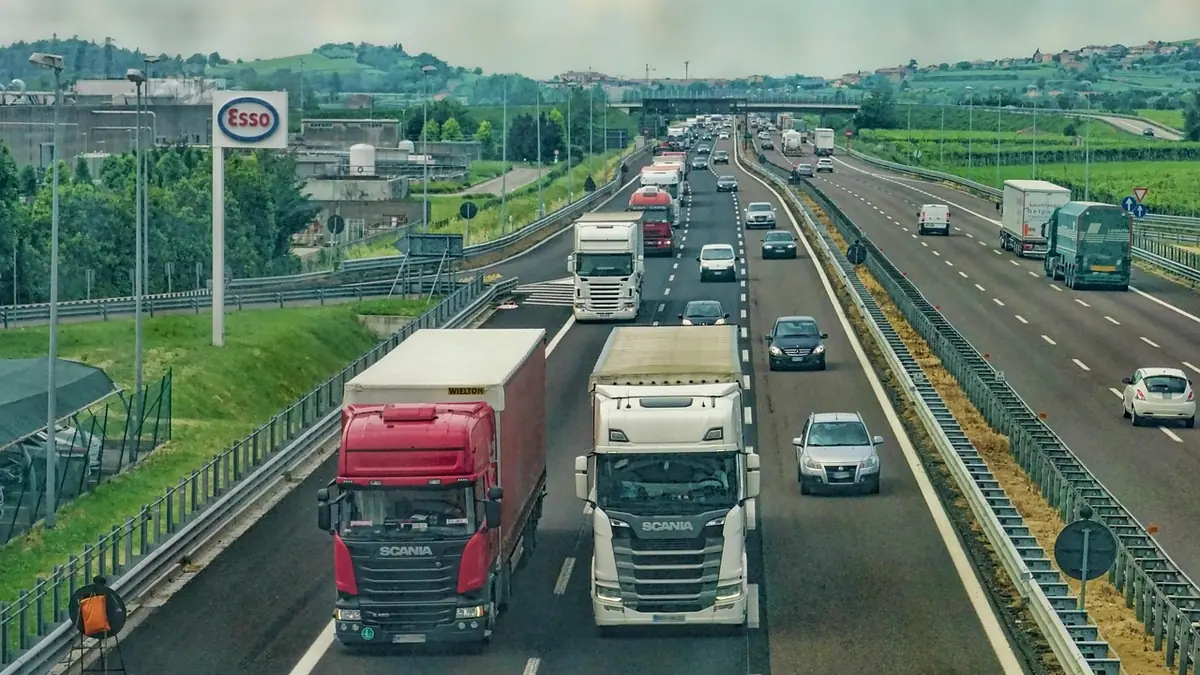
An HSLU study reveals that convenience, secure parking and luggage transport are more important than price to encourage public transport.
Context
In a nutshell
- HSLU study: cheap tickets are not enough to reduce road traffic
- 70% of trips and holidays take place by car; 92% for those who do not have a transport subscription
- Convenience, parking and luggage matter more than the price
- A change of means of transport reduces the choice of public transport by 31%
Key facts
- What: Study on leisure mobility and factors that encourage public transport
- Where: Switzerland (HSLU Lucerne research, national spillovers)
- Who: University of Applied Sciences and Arts of Lucerne (HSLU), Federal Office of Roads (USTRA), Widar von Arx (research manager)
- Car share: 70% day trips and holidays; 92% among those who do not have a subscription
- Critical factor: An additional change reduces the probability of public transport by 31%
- Potential services: Door-to-door luggage transport would increase the use of public transport by 8 percentage points
The study by the University of Applied Sciences and Arts of Lucerne (HSLU), commissioned by the Federal Office of Roads (USTRA), disassembles a commonplace widespread in Swiss mobility policy. Lowering ticket prices is not the main solution to convince Swiss people to give up their car during trips and holidays. The research, coordinated by Widar von Arx, identifies other much more relevant obstacles: practicality in travel, the certainty of finding a parking space at the destination and concrete services such as luggage transport.
The numbers of the study are explicit. In the
Operational details
The reality of Swiss public transport The study reveals a structural gap between the theoretical convenience of public transport and the practical choice of the car at the national level. It is not just a matter of economic sensitivity to price. Researchers observe that travelers are not very sensitive to ticket costs when on vacation. The value of free time and convenience prevail over the economic lever. This has direct implications for the cost of living in Switzerland: cantonal administrations, which plan public investments in mobility, must reconsider strategies based solely on tariff reduction. The practical solutions proposed by the HSLU research are concrete and immediately implementable. For those who continue to use the car, the certainty of finding parking at the destination could make travelers more willing to change their departure time, thus distributing traffic throughout the day rather than concentrating it during peak hours. Advance booking of parking and Park and Ride facilities are already feasible in many Swiss cantons, but are not yet standardized at the national level. Some cantons have invested in online systems, others have not. ### What role for additional services? The research suggests specific interventions on the practical disadvantages of public transport. A door-to-door service for luggage transport could increase the share of public transport use in day trips by up to 8 percentage points. At the national level, this would result in a significant redistribution of traffic on the roads. Direct connections, high service frequency, and coordinated mobility solutions for the last leg of the journey (the so-called 'last mile') are also important. These interventions would be more decisive than ticket discounts in effectively reducing road traffic.
Key points
What changes in daily practice
The HSLU study does not present miracle recipes, but rather clear priorities for public decision-makers and transport managers. There is no single measure capable of deeply changing travel habits: this is the clear conclusion of the researchers. To ease traffic, it is necessary to address the concrete needs of travelers. Certainty in planning, simple connections, and convenience must prevail over the sole economic lever. The Swiss cantons are already taking the first steps. Some have introduced online booking systems for parking near train stations. Other administrations are expanding Park and Ride coverage. However, national harmonization remains limited. The HSLU research provides an empirical basis to justify public investments in these directions, independently of hypothetical fiscal policies on cars or fuels.
How to plan a trip using public transport
If you intend to reduce the use of your car during your trips in Switzerland, some concrete steps emerge from the research:
1. Check available connections. Consult the public transport website to find direct routes or with few changes to your destination. An additional change significantly reduces the likelihood of choice.
2. Book the parking in advance. If you still prefer to drive to a station, many cantons offer online booking systems to avoid wasting time looking for parking and to better distribute traffic flows.
3. Evaluate the total cost of living of the trip, not just the ticket. Include fuel, tolls, parking, and vehicle wear. Often, public transport turns out to be more economical than it seems at first glance.
4. Take advantage of seasonal offers. Many Swiss operators offer discounted tickets for trips, especially in the low season.
…
Frequently Asked Questions
- Why do the Swiss prefer the car during the holidays even though public transport is available?
- According to the HSLU study commissioned by USTRA, it's not a matter of price. Practical factors such as luggage transport, the certainty of finding parking and direct connections matter much more than modest savings on tickets. Those who already spend significant amounts for a holiday (such as a ski pass) see the difference of a few francs between car and train as completely irrelevant in the final decision.
- What impact do changes of medium have on the choice of public transport?
- The impact is substantial. HSLU research reveals that an additional change between public transport reduces the likelihood of choosing it for a day trip by 31%. Travelers prefer direct routes, albeit slightly more expensive, because travel time and comfort matter more than economic savings in leisure time.
- Which service could significantly increase the use of public transport?
- A door-to-door service for transporting luggage could increase the share of public transport use on daily trips by up to 8 percentage points. Improving the final connections (the last mile), increasing the frequency of services and coordinating mobility at the last stretch would also be more effective than simple discounts on tickets.
- How can cantons reduce road traffic without cutting ticket prices?
- Cantons can invest in online booking systems for car parks, Park and Ride facilities, and coordination between transport services to ensure the first and last mile runs smoothly. HSLU research shows that these practical interventions are more effective in reducing traffic than simple fare discounts.
- Does the study provide specific recommendations for the Swiss Confederation?
- Yes. HSLU research (commissioned by USTRA, the Federal Office of Roads) suggests that there is no single remedy. Coordination between the federal and cantonal levels is needed to standardise services, ensure planning certainty and improve the comfort and convenience of travellers, rather than focusing exclusively on price reductions.
Related articles
- All articles: Transport and traffic
- «Trasporti ’45»: Ticino ai margini della mobilità svizzera
- Abbonamenti trasporti pubblici nel Cantone di Nidvaldo: zone e tariffe
- Città svizzere: più margine per clima e 30 km/h
- Traffico ferroviario sospeso in Germania: impatto su Svizzera
- Grigioni: il contante resta un diritto per i servizi pubblici