Fuel: why prices at the pump remain high
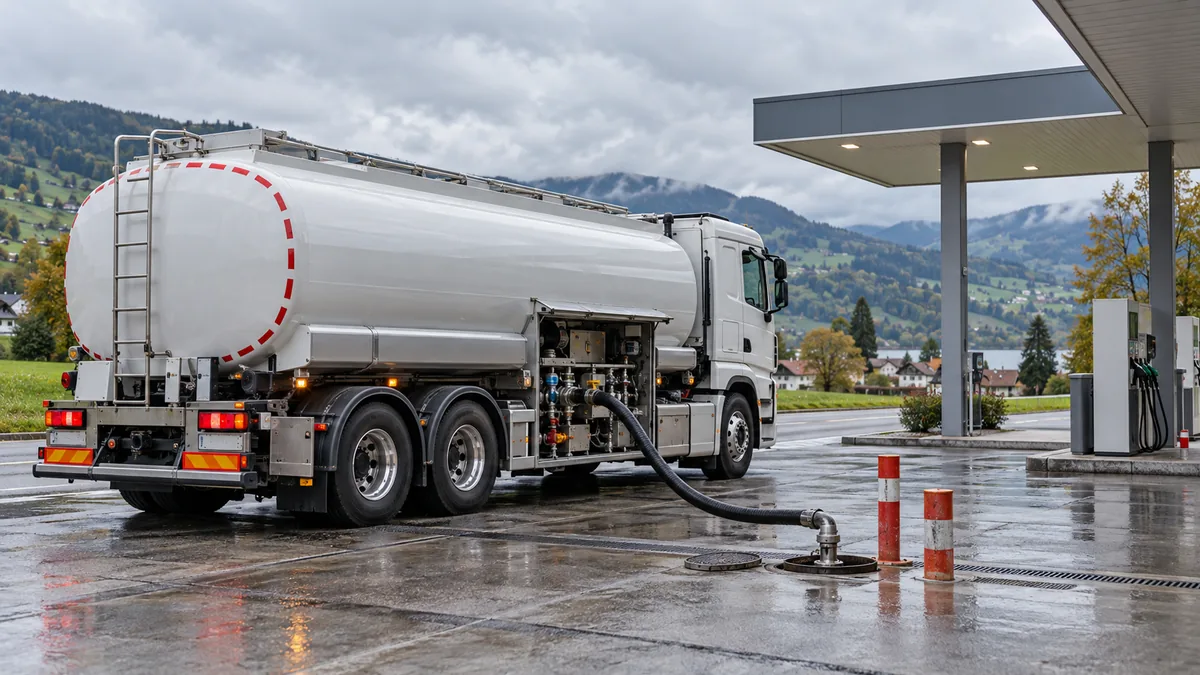
Crude oil remains close to 100 dollars per barrel.
Context
TL;DR
- Crude oil remains near 100 dollars per barrel.
- Transits through Hormuz are 30-40% lower.
- Cressier is the only refinery in Switzerland.
- About half of the fuel arrives along the Rhine.
Key facts
- Crude oil price → close to 100 dollars per barrel
- Volumes through the Strait of Hormuz → 30-40% below pre-conflict levels
- Swiss refinery → Cressier, the only one in the country
- Production shutdown → two weeks
- Supplies via the Rhine → about half of the fuel for Swiss road traffic
Since the beginning of September, the price of crude oil has remained close to 100 dollars per barrel. The partial resumption of tanker traffic through the Strait of Hormuz has not significantly changed this price.
The situation in the Middle East remains tense, and the volumes passing through the strait are 30-40% lower than before the conflict. Marcelo Olarreaga, professor of economics at the University of Geneva, describes a market still marked by uncertainty: oil quantities fluctuate and prices remain under pressure.
Why the pump reacts with a delay
The price of crude oil and the price paid at the service station do not move at the same time. A decrease in prices must pass through the chain that brings oil to the fuels available to motorists. When the price falls, transmitting the shock takes time; when it rises, however, the increase is passed on much more quickly.
«The transmission of changes recorded on the oil market to gasoline prices is slow, in Switzerland as elsewhere. A decline in prices, like the current one, is passed on with a particularly long delay, while price increases reach the pump much more quickly».
Switzerland depends considerably on imports of already refined petroleum products. This makes the transition between the international price and the pump price longer.
Moreno Volpi, a member of the TCS management, identifies available refining capacity as the decisive factor. Cressier, the only refinery in Switzerland, had to halt production for two weeks. During that period, pump prices rose sharply: refining capacity was reduced and demand was concentrated on a more limited supply.
Transport also contributes to the increase in final costs. Moving oil and fuel has become more expensive, especially because the waters of the Rhine have reached exceptionally low levels. The river is an essential supply channel: about half of the fuel intended for Swiss road traffic comes via this route. When the water level falls, ships carry less cargo and costs rise.
Operational details
Reading the price beyond crude oil
For those refueling in Switzerland, the dynamics described by the source require separating three stages: the international price of crude oil, the availability of refined fuel, and the cost of bringing it to market. A favorable movement in the first stage does not automatically erase the difficulties in the other two. This is why the partial recovery of maritime transits did not translate into a significant drop at the pump.
The comparison between a decline and an increase is asymmetrical. When oil prices fall, it takes time for the shock to reach gasoline; when they rise, the effect on fuels arrives much more quickly. For motorists, therefore, a falling price does not equate to an immediate reduction, while a new increase can be passed on with less delay.
Four signals to read together
| Signal | Practical reading |
|---|---|
| Crude oil falling | Relief at the pump takes time. |
| Transits through Hormuz resumed only partially | Volumes remain below the levels preceding the conflict. |
| Limited refining capacity | Reduced supply may encounter concentrated demand and cause prices to rise rapidly. |
| Rhine with low water levels | Ships carry less cargo and transport becomes more expensive. |
The Rhine's water level introduces a variable distinct from the price of crude oil. Moreno Volpi specifically identifies a rise in the river's level as one of the few conditions that could favor a decrease in fuel prices in Switzerland. Refining capacity, on the other hand, will not double as a result of the crises affecting the world.
In a hypothetical scenario, a decline in crude oil accompanied by still-low Rhine water levels would produce opposing signals: the oil market would make room for some easing, but logistics would continue to weigh on costs. The case of the Cressier refinery shows the other side of the chain: when available capacity narrows and demand concentrates on the remaining supply, the price at the pump can rise suddenly.
Meanwhile, rising fuel prices seem to be encouraging growing interest in electric mobility. The source presents this interest as a consequence of cost pressures, not as an immediate solution to supply or transport difficulties.
Key points
A practical framework for those who need to refuel
The source makes it possible to develop a simple way of reading movements at the pump, without confusing the price of oil with that of fuel already available in Switzerland. Anyone assessing the effect of prices can follow four steps.
Four operational steps
1. Start with crude oil. If the price falls, consider the movement a signal that has yet to be transmitted to gasoline prices. The decrease does not automatically produce an immediate drop at the pump.
2. Check refining. Available capacity is decisive. Cressier is the only refinery in Switzerland, and its shutdown for two weeks coincided with a sudden increase in prices, while supply was reduced and demand concentrated.
3. Include the Rhine in the assessment. With exceptionally low water levels, ships can load less oil and fuel. Transport becomes more expensive, and this weighs on final costs. A rise in the river level is identified as one of the few conditions favorable to a decrease in prices.
4. Consider electric mobility. Rising fuel prices seem to be encouraging growing interest in this mode of transport. The source presents it as a reaction to cost pressures, without indicating an immediate effect on prices at the pump.
How to interpret the scenarios
If crude oil prices decrease but refining capacity remains limited, it is useful to separate the two signals: the first is favorable, while the second continues to hinder the transmission of the decrease. If the Rhine also remains low, logistics adds a further obstacle. If, instead, the river returns to a higher level, one of the conditions that Moreno Volpi considers favorable to a drop is met, although the source does not present it as a guarantee.
The same framework helps interpret increases. A refining shutdown or more expensive transport can have a rapid impact, whereas a decrease in crude oil prices takes more time. To connect rising fuel prices with other expenditure items, consult costo della vita in Svizzera.
Source: rsi.ch
Frequently Asked Questions
- Why doesn't the price of gasoline drop immediately when crude oil prices fall?
- The transmission of price shocks to the final price takes time, especially for decreases. The Confederation imports many refined products and domestic refining capacity is limited. As Marcelo Olarreaga explains, increases are passed through much more quickly than decreases, creating a market asymmetry.
- What is the impact of the Cressier refinery on prices?
- Cressier is the only refinery in Switzerland. Its recent two-week production stoppage caused a sudden increase in prices at the pump. During that period, refining capacity was limited and demand concentrated on a reduced supply, amplifying the effect on the final cost for motorists.
- How does the low water level of the Rhine affect fuel costs?
- Around half of the fuel for road traffic arrives via the Rhine. With exceptionally low water levels, ships can transport less cargo, making transport more expensive. Moreno Volpi of the TCS indicates that a rise in the river level is one of the few conditions that could favor a decrease in prices in Switzerland.
Related articles
- All articles: Energy and fuel
- Prezzi pompa Svizzera: vincoli raffinazione e Reno
- Export di greggio: Medio Oriente sopra i livelli pre-guerra
- Salasso alla pompa: diesel caro, benzina in rialzo
- Nessuno sgravio sul carburante: Berna conferma il pieno caro
- Apprendisti, le istruzioni non bastano: «Vanno seguiti da vicino»