Buying a house in St. Gallen: mortgage and taxes
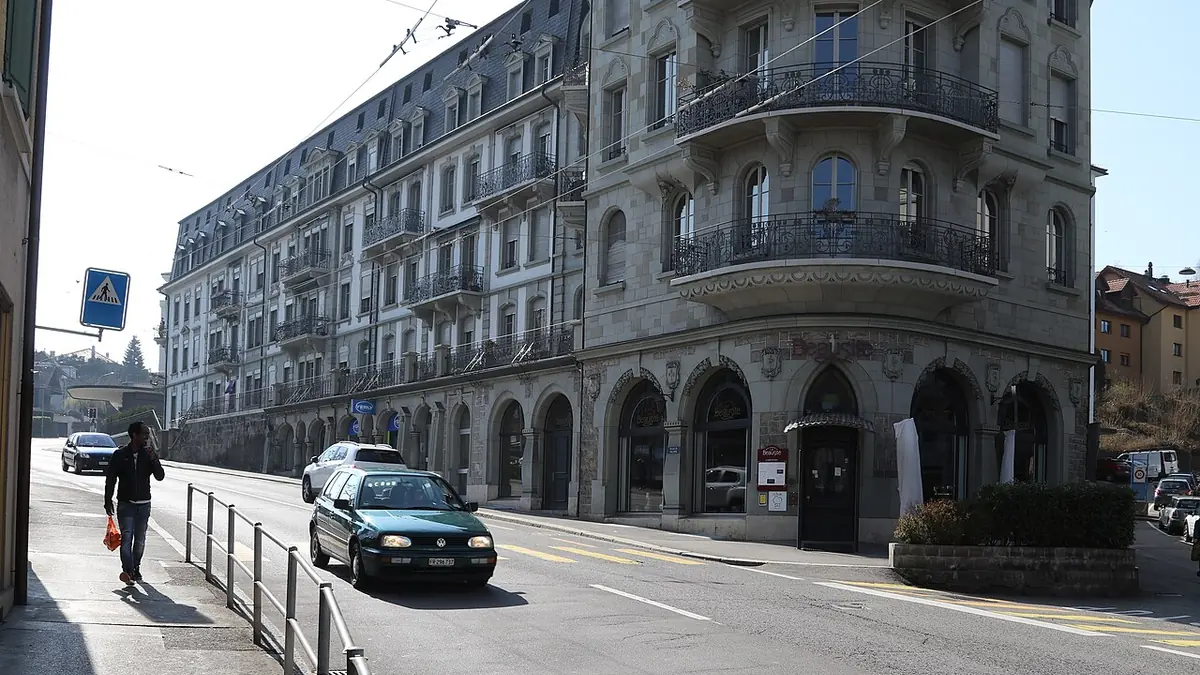
Guide to buying real estate in Switzerland: mortgage, own funds, transfer tax and step-by-step procedures for buyers in the Canton of St. Gallen.
Context
In brief
- Real estate purchase is one of the main investments in the life of a Swiss resident
- Mortgage requires own funds of at least 20% of the purchase price
- Transfer tax, notary fees, and tax deductibility of interest affect the total budget
Key facts
- What: Purchase of real estate property in Switzerland
- Where: Canton of St. Gallen (and Swiss national market)
- Who: Swiss residents, borrowers with verifiable income
- Minimum own funds: At least 20% of the purchase price (bank standard)
- Deductibility: Mortgage interest is tax-deductible at the federal and cantonal levels
The Swiss real estate market follows economic dynamics that vary from canton to canton. When planning to buy a home, the first step is to understand the structural factors that influence prices: location, size of the building, condition of the property, proximity to public services, and access to transportation infrastructure.
At the national level, the Swiss housing market is regulated by federal laws on land ownership. However, each canton has its own jurisdiction over real estate taxation, including transfer taxes (stamp duties), which vary significantly depending on the jurisdiction. In the Canton of St. Gallen, as in every canton, the price of a property depends on general economic factors — bank interest rates, credit availability, market demand — and local factors such as demographic growth and economic development. Mortgage interest rates are set by banks and follow the trend of the Swiss National Bank (SNB), which guides the country's monetary policy.
Provision and financial stability
Before applying for a mortgage, it is crucial to assess your overall financial sustainability. Switzerland provides three levels of provision: AHV (old-age and survivors' insurance), BVG (occupational pension fund), and the third pillar, which affect the available assets for purchase. A relevant aspect: funds from the occupational pension fund (BVG) can be partially withdrawn for the purchase of a first home. This operation allows increasing the available own funds but must be carefully evaluated in relation to the future old-age pension.
Health insurance coverage (LAMal) is mandatory for all Swiss residents. Premiums vary by canton and risk region and must be considered in the monthly budget when assessing whether a mortgage is sustainable. Also, ordinary and extraordinary maintenance costs of the property must be planned for the long term.
Operational details
The mortgage loan is the main financing instrument for the purchase of real estate in Switzerland. Banks typically require equity of at least 20% of the purchase price. This percentage is an established standard throughout Switzerland, although some institutions may offer slightly different conditions with higher interest rates.
Mortgage loans are offered by banks in two main forms: fixed rate (the rate remains unchanged for the entire duration, usually 5, 10 or 15 years, offering certainty on monthly repayments) and variable rate (the rate changes according to the trend of market rates, which involves the risk of an increase in installments but potential convenience if rates fall).
How banks evaluate sustainability
A fundamental assessment that banks conduct is the sustainability of the mortgage. This means verifying that the borrower is able to pay the regular installments and bear any rate increases over time. The rule of thumb used by Swiss banks is the "stress test": the institutions evaluate whether the customer could continue to pay even in the event of a rise in interest rates. A customer with a stable income (employee with a permanent contract, self-employed worker with certified income) has greater ease of access to credit than a customer with a precarious income.
Age is a relevant factor: banks prefer that the mortgage be paid off by retirement age (67 in many cantons, 65 in others). If a customer is 55 years old and asks for a 20-year mortgage, the bank may impose more stringent conditions or refuse. Income verification is done on a documentary basis (last three years of tax returns, salary certificates), and the bank consults the Swiss Credit Register (CRS) to check your credit history.
Tax deductibility of interest
A significant benefit that is often overlooked: interest paid on your mortgage loan is tax deductible. When you file your tax return (annually with the cantonal tax authority), you can deduct the interest paid to the lender from your taxable income. This deduction significantly reduces the amount of taxes owed over the decades of your mortgage and represents an important tax incentive. Deductibility applies at both the federal and cantonal levels, although the reporting procedures vary slightly depending on the canton.
Switzerland has a three-level tax system (federal, cantonal and municipal). At the federal level there is no specific real estate tax, but at the cantonal and municipal level there is: the real estate tax (land tax) varies from canton to canton. Understanding these two elements — interest deductibility and property taxation — is essential to calculating the true cost of your mortgage over time.
Useful tools for your case
To conveniently check your scenario within/beyond 20 km, use the net salary calculator and tax return guide.
Key points
Buying a property in Switzerland follows a standardized procedure, although with details that vary slightly from canton to canton.
Phase 1: Research and offer
The process begins with finding a property that fits your available budget. Once identified, the buyer (often in conjunction with a real estate agent) submits a written offer to the seller. If accepted, we move on to the next phase. At this stage it is advisable to check with the municipal office if the property has restrictions (protected areas, construction limitations) or if public works are underway nearby.
Phase 2: Technical appraisal and mortgage application
Before formalizing the purchase, it is advisable (and often mandatory for banks) to have an independent technical appraisal of the property carried out. This document certifies the condition of the property and its market value. The bank uses this appraisal to determine the amount of the loan it will provide, usually not exceeding 80% of the appraised value.
At the same time, the customer submits a loan application to the chosen bank. The approval process usually takes 2-4 weeks and includes income verification, sustainability analysis, control at the Swiss Risk Centre.
Phase 3: Notarial deed and land registration
Once the mortgage has been approved, the parties proceed to draft the deed of sale in front of a notary. In Switzerland, the notary witnesses the transfer of ownership and registers it in the canton's Land Registry (Grundbuchamt). This step is crucial: ownership is legally transferred only after registration in the Land Registry.
Transfer tax
The transfer tax (right of passage in some cantons) is a cantonal tax on the transfer of real estate. It varies significantly from canton to canton:
- Some cantons (Zug, Schwyz) have abolished or reduced this tax to stimulate the real estate market
- Most cantons apply a rate that depends on the value of the property and the family relationship between seller and buyer (family members often pay less)
In the canton of St. Gallen, as in many other cantons, there is a transfer tax calculated on the value of the property. The rate varies but is generally between 1% and 3%. It is essential to check the exact rate with the cantonal tax administration before purchasing, as this tax can add thousands of francs to the total cost of the transaction.
Notary fees
Notary expenses (notary's fees, registration at the Land Registry, registrations in the Land Registry) are administrative costs that vary based on the value of the property. In general, they are between 0.5% and 1.5% of the purchase price, but it is advisable to request an exact quote from the notary before signing the deed. Other minor expenses include land registry searches and mortgage registration.
Practical checklist
- Assess personal financial strength and accumulate own funds (at least 20% of the target price)
- Get pre-approval from the bank to know the maximum loan amount available
- Once the property has been identified, request an independent technical appraisal
- Check the transfer tax rate and exact calculation with the canton
- Request quotes for notary fees and land registration
- Take out real estate civil liability insurance (owner liability)
- Use the mortgage calculator to simulate different monthly payments and scenarios
- Consult a tax advisor to fully understand the implications (interest deductibility, estate taxation)
The total time from property identification to final transfer is usually 6-12 weeks, depending on the complexity of the transaction and the bank's processing speed.
Sources: Old-age provision (UFAS)
Frequently Asked Questions
- What is the minimum own funds required to buy a house in Switzerland?
- Banks typically require own funds of at least 20% of the purchase price. For example, for a property of CHF 500,000, you need to have at least CHF 100,000. Some institutions accept slightly lower percentages (15-18%), but this results in higher interest rates and additional mortgage insurance costs. It is possible to increase own funds by withdrawing part of the occupational pension (LPP) intended for the purchase of a first home, an operation allowed in Switzerland.
- How does the sustainability of the mortgage assessed by the bank work?
- The bank checks if the customer is able to pay the monthly installments. Use the 'stress test': simulate a scenario where interest rates rise by 1-2 percentage points and assess whether the customer could continue to pay. The general rule is that the monthly installment must not exceed 30-35% of the monthly net income. In addition, the mortgage must be extinguished within the retirement age (generally 67 years). The bank analyzes the income of the last three years through tax returns and verifies the credit history at the Swiss Risk Centre.
- What are the additional costs in addition to the purchase price?
- In addition to the price of the property, it is necessary to account for: transfer tax (1-3% of the value, varies by canton), notary and land registration fees (0.5-1.5% of the price), real estate liability insurance (annual cost), municipal property taxes (varies by canton). It is prudent to add a 5-10% buffer to the total budget for unforeseen costs and initial maintenance.
- Are the mortgage interest tax deductible?
- Yes, in Switzerland the interest paid on the mortgage loan is tax deductible. When filing the tax return with the cantonal tax authority, you can subtract the interest from the taxable income. This deduction significantly reduces the amount of taxes due over the decades of the mortgage. The deduction is valid at both the federal and cantonal levels, although reporting procedures vary slightly.
- How long does the entire purchase process take?
- From the submission of the offer to the final transfer of ownership, it usually takes 6-12 weeks. This period includes: negotiation of the offer (1-2 weeks), application for mortgage and bank approval (2-4 weeks), technical expertise (1-2 weeks), preparation of the notarial deed (1-2 weeks), signature at the notary and registration in the Land Registry (2-4 weeks). Times vary depending on the complexity and processing speed of the bank.