Swiss on the run across the border for accommodation (cross-border guide)
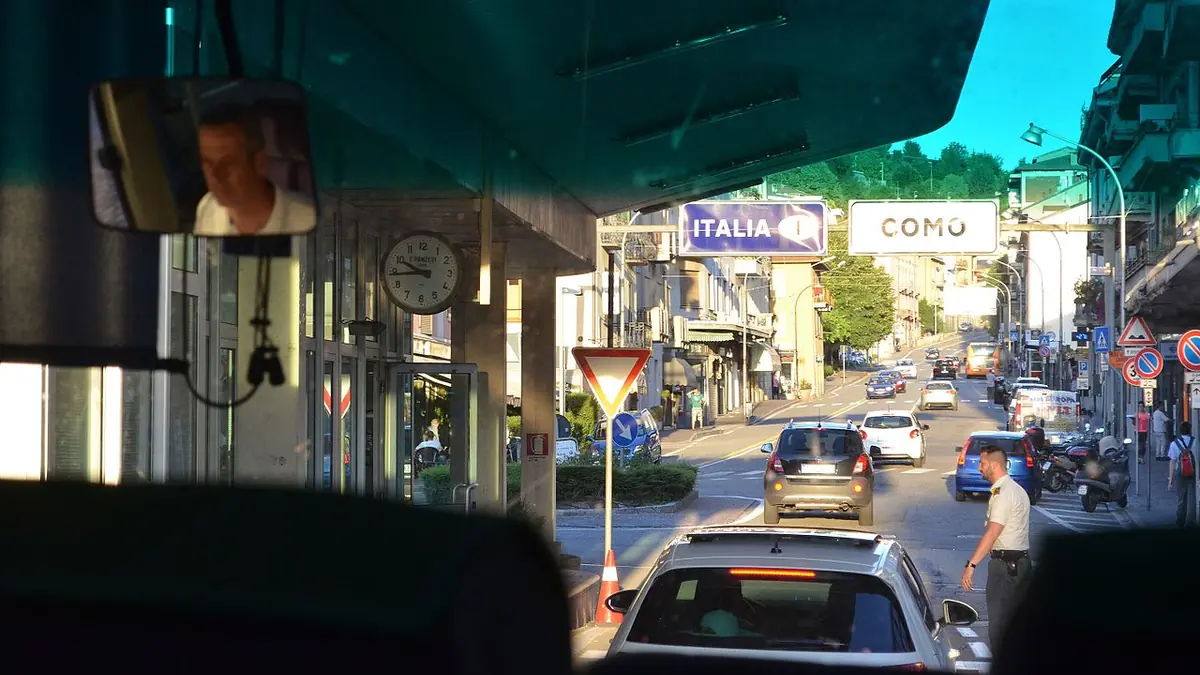
154,700 Swiss live in border regions. 70% of Romans find rents too high. Como and Varese among the regions concerned.
Context
In a nutshell
- 154,700 Swiss live in border regions, +14% in 7 years (UST)
- 70% of Romans say rents' too high ', 30% consider France
- Como (4,430 Swiss) and Varese (3,106) among the most affected Italian regions
- Haute-Savoie (5'189) and Freiburg (18'017) leaders of the phenomenon
Key facts
- What: Increase in the number of Swiss living abroad as' reverse borderers'
- When: +14% in the period 2017-2025 (UST data)
- Where: Como, Varese, Haute-Savoie, Freiburg, Ain, Liechtenstein
- Who: Federal Statistical Office (FSO), Consul Stéphanie Périllard
- Amount: 70% of the Romans find rents' too high ', 30% consider moving to France
The phenomenon of Swiss abandonment across borders is amplifying due to high housing costs. According to a report by the Tamedia group, based on data from the Federal Statistical Office (FSO), today 154,700 Swiss citizens live in border regions abroad, an increase of 14% compared to seven years earlier. Growth is' constant and unstoppable ', as defined by the Swiss Consul General in Lyon, Stéphanie Périllard, responsible for the border regions of Geneva.
The most affected areas are Haute-Savoie and Freiburg. Haute-Savoie has over 50,000 Swiss residents, an increase of 5,189 compared to 2017. In Germany, the district of Freiburg has 18,017 Swiss, up3,026. The Ain, in France, has 18,003 more Swiss than in the period 2017-2025.
Operational details
Implications for Ticino border workers
The flight of the Swiss to Italian regions such as Como and Varese also has a direct impact on Ticino border crossers. Pressure on local real estate markets could increase, reducing the supply of affordable homes for those living in Italy but working in Switzerland. This scenario is further complicated by the fact that many cross-border workers already face high costs for accommodation in Canton Ticino, where rental prices are among the highest in Switzerland.
The economic sustainability of commuting becomes a critical aspect. Border workers who live in Italy but work in Switzerland often face a choice between moving to regions such as Como or Varese to reduce costs, or incurring higher food and transport costs to return to the office. Console Périllard points out that the progression of the phenomenon is slow but steady, which suggests that the economic impact will not be felt immediately, but could accumulate over time.
In addition, growing competition for property in areas such as Como and Varese could push prices up, making it harder for frontier workers to find affordable accommodation. This dynamism requires a careful evaluation of housing alternatives, especially for those who consider moving to Switzerland as a definitive option.
Comparison of destination regions
The Italian regions that attract the Swiss show
Useful planning tools
To estimate your pension strategy, use the pension planner and the pillar 3 simulator.
Key points
What to do as a Ticino border worker
For border workers who live in Italy but work in Ticino, it is essential to monitor the evolution of the real estate market in the neighbouring regions. The possibility of moving to areas such as Como or Varese could offer solutions to reduce housing costs, but requires a thorough assessment of the tax and mobility implications.
First, consider the impact of the new border agreement, signed on 23 December 2020 and in force from 1 January 2024. This agreement introduces a tax regime for new frontier workers with an exemption of 10,000 euros, while old frontier workers benefit from an exemption of 7,500 euros in the transitional regime 2024-2033. Double taxation is managed through the Convention of 9 December 1976, which provides for a tax credit to avoid contemporary sustainability.
With regard to insurance, remember that LAMal (health insurance) offers frontier workers the right of option, with an adult deductible of between 300 and 2,500francs. Social security management (AVS, AI, IPG) follows a separate system, with contributions supported by the employer and the worker.
If you are considering a transfer, use the tools on the site to compare living costs between Ticino, Como and Varese. The cost-of-living calculator helps you assess the economic impact of a possible move, considering rents, taxes, and transportation costs. In addition, the map
Source: tio.ch
Frequently Asked Questions
- How much has the number of Swiss living abroad increased?
- According to the UST, between 2017 and 2025 the number increased by 14%. This increase reflects the increasing pressure on Swiss real estate markets, with regions such as Como and Varese attracting more and more Swiss citizens.
- What are the main reasons for the transfer of the Swiss to Italy?
- The main thrust is economic: rents and property prices in Switzerland are too high. A study by Comparis shows that 70% of Romans consider renting 'too expensive', and 30% consider moving to France.
- How is double taxation managed for border workers living in Italy?
- The Italian-Swiss Convention of 9 December 1976 provides for a tax credit to avoid double taxation. Border crossers subject to both systems can use the credit to offset taxes paid in one country with those due in the other.
- What site tools can I use to evaluate a possible transfer?
- The cost of living calculator allows you to compare rents, taxes and expenses between Ticino, Como and Varese. The map of the crossings helps you plan commuting times, which are essential to evaluate the feasibility of a housing solution in Italy.
Related articles
- All articles: Housing and rent
- Frontalieri: a Zurigo solo avanzi immobiliari
- Varese-Ticino: il digitale cancella i confini per i frontalieri
- Migliori Comuni per Frontalieri 2026 | Classifica
- 228.463€ dalla Lombardia per l'affitto: 218 famiglie salvate
- Violenza sessuale, le conseguenze sono tante e durature