SMILE: sustainable mobility between Varese, Como and Ticino
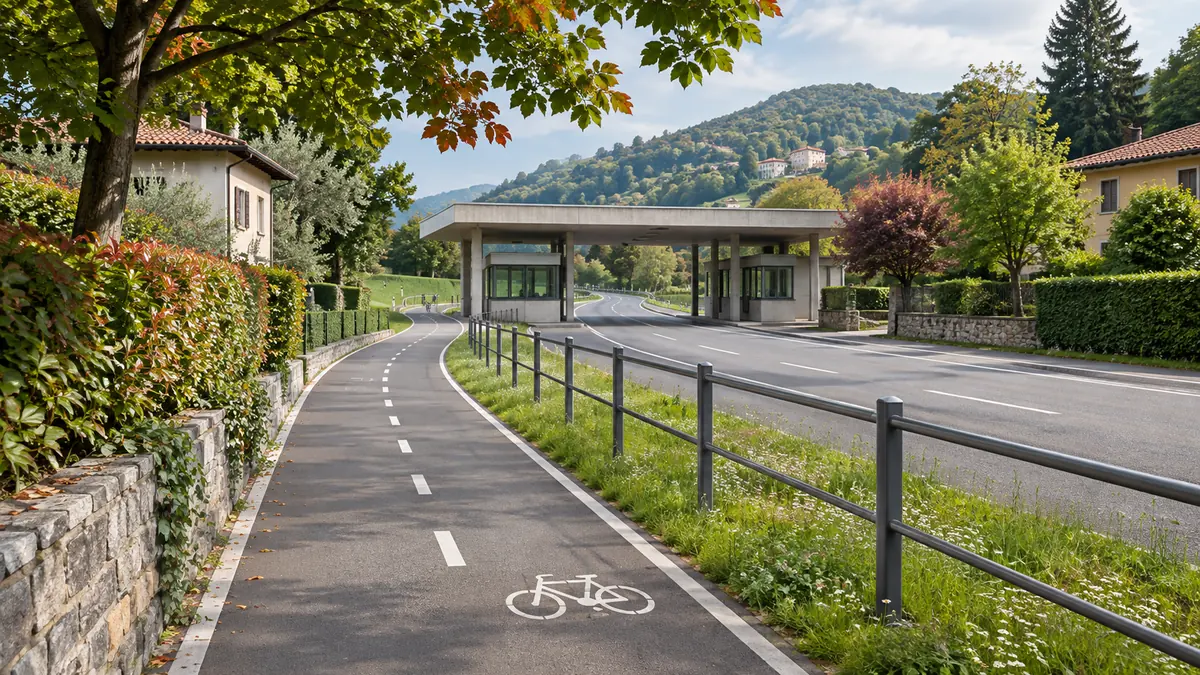
On November 10, 2026, Chiasso will be the venue for SMILE’s public presentation.
Context
TL;DR
- SMILE connects Varese, Como and Canton Ticino
- Focus on home-work and home-school
- Conference in Chiasso on 10 November 2026
- Six meetings between late November and early December
Key facts
- Project → SMILE, light cross-border mobility
- Area → provinces of Varese and Como, Canton of Ticino
- Leader → Province of Varese and Canton of Ticino
- Event → Chiasso, 10 November 2026
- Participation → free with online registration
The project and its area
On November 10, 2026, Chiasso will be the public presentation point of SMILE. The conference will illustrate the official path of the cross-border initiative, the first cognitive results and the territorial analyzes already conducted. The day will also serve to encourage direct dialogue with stakeholders in the border area.
The program includes territorial analysis reports, strategic objectives and operational macro-lines that will guide the common strategy and the first pilot actions. The event is therefore presented as the first public passage of a project intended to involve local bodies, institutions and realities.
SMILE aims to promote more sustainable, accessible and widely integrated mobility in the area between the provinces of Varese and Como and the Canton of Ticino. The initiative focuses on daily mobility, with particular attention to home-work and home-school travel.
At the basis of the project is the need to resolve the historical difficulties of cross-border mobility. The territory is affected every day by an impressive flow of traffic, generated not only by work and study, but also by tourism and leisure. According to the project description, this flow contributes significantly to the constant congestion of the main road axes between Italy and the Swiss Confederation.
The two lead bodies are the Province of Varese and the Canton of Ticino. The direct partnership includes the Regional Transport Commission of Mendrisiotto and Basso Ceresio, indicated by the acronym CRTM, as well as the Municipality of Como and the Province of Como. Furthermore, the project receives operational support from numerous associated municipalities and local authorities.
The approach is divided between supply and demand for mobility. On the one hand, routes, spaces and services for bicycles, walking and integration between public transport and cycle mobility are planned. On the other hand, the aim is to stimulate citizens' knowledge, sensitivity and propensity towards sustainable, interconnected and virtuous methods.
Finally, the project includes a cross-border action plan for the development of light mobility. Planning will start from the analysis of the state of the art, demand volumes and emerging trends. This phase will be accompanied by pilot actions on infrastructures, spaces, cycling services and information, training and awareness initiatives aimed at workers, students, residents and visitors to the area.
Operational details
From shared vision to action on the ground
Supply, demand and planning
SMILE connects three distinct levels: how people travel, what the area offers and the process by which priorities will be defined. The source therefore describes not only the construction or modernization of routes. Alongside infrastructure, it places a component dedicated to the habits of workers, students, residents and people who visit the cross-border area.
| Plan | Content indicated in the project |
|---|---|
| Mobility supply | Routes, spaces and services for bicycles and walking |
| Intermodality | Integration between public transport and cycling mobility |
| Mobility demand | Information, awareness and propensity toward sustainable modes |
| Planning | Analysis of the current state of affairs, volumes and emerging trends |
| Pilot actions | Infrastructure, dedicated areas and training and awareness-raising initiatives |
The most direct connection for a cross-border commuter concerns the centrality of home-to-work travel. The project operates in an area that includes Varese, Como and Canton Ticino and considers daily mobility one of its areas of focus. The same approach also includes home-to-school travel and does not limit its scope to workers alone. The source also mentions tourism and leisure as components of daily traffic in the border area.
This distinction clarifies the scope of the initiative. SMILE is not presented as an intervention aimed at a single type of user or a single mode of transport. Active mobility includes cycling and walking, while intermodality connects these modes to public transport. The section dedicated to demand instead concerns knowledge and behavior, with information, training and awareness-raising activities.
A second strand concerns planning and experimentation. The Action Plan will have to build a shared vision, establish priorities and coordinate policies and actions along the border area. The pilot actions represent the operational step envisaged by the project: they will concern routes and areas for home-to-work and home-to-school travel, the enhancement of cycling services and initiatives aimed at mobility habits.
The source links the creation of SMILE to long-standing critical issues and congestion on the main roads, but does not provide measurements of travel times, the number of people involved or any reduction in traffic already achieved. The documented result is therefore the launch of a process of analysis, consultation and planning, not a quantitative effect that has already been verified.
For those who cross the border daily, the useful point is the decision to place home-to-work travel and intermodality at the center of the strategy. However, no definitive routes, schedules, kilometers of new infrastructure or methods for evaluating the effects of the pilot actions are indicated.
Key points
The timing, participation, and limits of the information available
From the conference to the cycle of meetings
The calendar indicated by the source starts from Chiasso. On November 10, 2026, the conference will be open access and participation will be free. To take part in the event, an online registration is required through a special form.
The day will also have a participatory function. Local bodies, institutions and realities will be called upon to share priorities, critical issues, virtuous experiences and opportunities related to sustainable mobility. The dedicated working table will have to collect these contributions to guide the next phases of the project and the definition of the common strategy.
The process will go live between the end of November and the beginning of December 2026. In that period, a first cycle consisting of 6 operational meetings is planned. According to the source, these meetings are essential to develop a shared methodological approach in view of the final drafting of the Cross-border Action Plan.
This sequence makes it possible to distinguish what is already fixed from what must be defined. The place of the conference, the date, the free access, the registration route and the number of the first cycle of meetings are indicated. On the other hand, the names of the individual associated municipalities, the detailed calendar of meetings, the location of the pilot works or the number of routes and services that will be carried out are not reported.
The perimeter of the source
The text does not indicate a budget, an overall duration, kilometers of infrastructure, travel times or numerical targets on congestion. It also does not attribute to SMILE measures regarding G permits, AVS, LPP, LAMal, refunds, tax at source, New Frontier Agreement or double taxation. These issues remain outside the perimeter described, which concerns light mobility and the participation of actors in the border area.
The same caution applies to any connections with INPS or with specific places such as Brogeda: the source does not recall them and does not allow to attribute to the project interventions, procedures or effects on those references. For the border worker, the documented information therefore concerns the cross-border route on mobility, not taxation, social security or insurance.
The project, as it is presented, is still described through objectives, analysis, institutional comparison and pilot actions. The subsequent phases will have to translate this approach into a shared Plan and concrete interventions, but the source does not anticipate more specific content. For the topic of transport, please refer to the Ticino public transport.
Source: comozero.it
Frequently Asked Questions
- What geographical areas are involved in the SMILE project?
- The SMILE project concerns the provinces of Varese and Como, as well as the Canton of Ticino. The initiative aims to promote more sustainable mobility in this border area, addressing historical issues related to daily traffic.
- When will the public conference be held in Chiasso and how to participate?
- The conference in Chiasso is scheduled for 10 November 2026 and is free of charge, requiring an online registration for participation. The event will illustrate the official path and the first cognitive results of the initiative.
- What are the leading bodies and partners of the project?
- The two leading entities of the SMILE project are the Province of Varese and the Canton of Ticino. The direct partnership includes the Regional Transport Commission of Mendrisiotto and Basso Ceresio (CRTM), the Municipality of Como and the Province of Como.
- What is the daily mobility faced by SMILE focused on?
- The initiative focuses on daily mobility, with particular attention to home-work and home-school travel, while also considering the traffic generated by tourism and leisure in the border area.
Related articles
- All articles: Transport and traffic
- Frontalieri in Ticino: flussi e mobilità verso Como e Varese
- Cinque atti parlamentari per migliorare la mobilità in Ticino
- Ticino guida i rincari di mobilità e abitazione
- Il progetto TRIP per lo sviluppo della mobilità transfrontaliera tra Lombardia e Grigioni.
- Mobilità e frontaliere ticinesi: come gestire i problemi di traffico e costi