Petrol exceeds 1.9 euros per litre: first time in two years (cross-border guide)
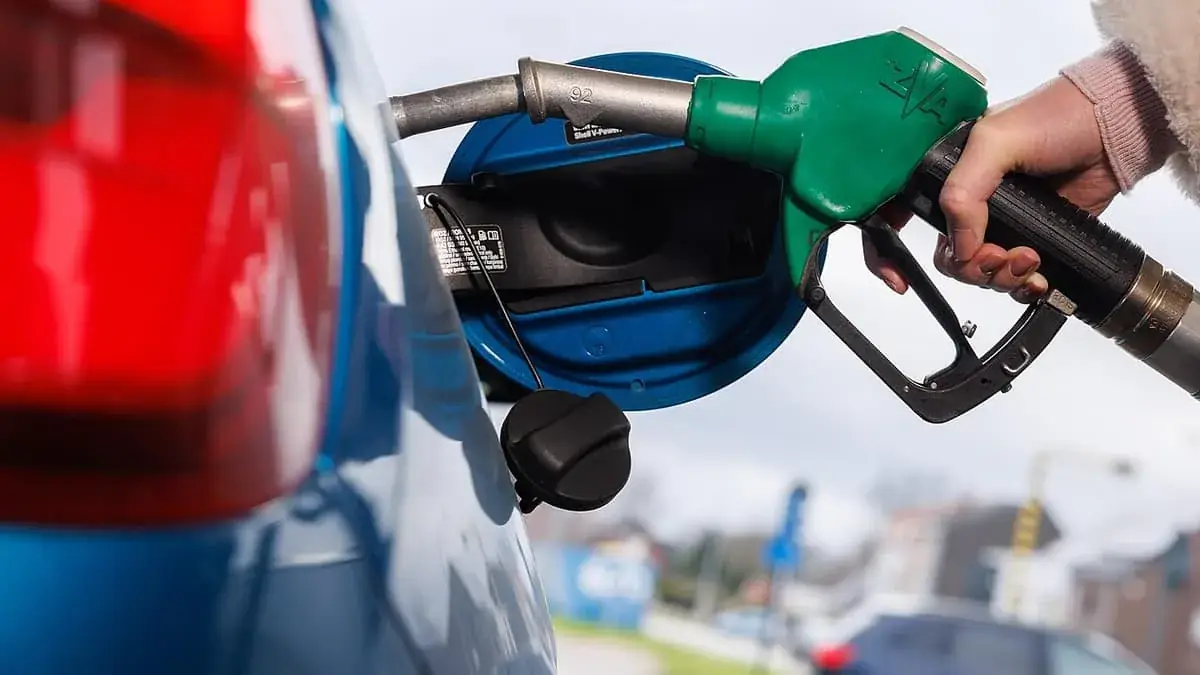
Petrol price hits 1.926 euros per litre in self-service mode, while diesel slightly decreases.
Context
In brief
- Petrol at 1.926 euros/litre self-service
- Diesel at 2.044 euros/litre self-service
- 6 cent increase for petrol
Key facts
- What: Average fuel prices
- When: 5 May 2026
- Where: National road and motorway network
- Who: Ministry of Enterprises and Made in Italy
- Amount: 1.926 euros/litre for self-service petrol
The price of petrol continues to rise. Today, 5 May 2026, for the first time in two years, it exceeds the 1.9 euro per litre mark. Diesel slightly decreases, remaining just over four cents above two euros, while LPG is at 82 cents per litre. The Ministry of Enterprises and Made in Italy reports that, based on the latest data collected by the Mimit Fuel Prices Observatory, today the average price of fuels in 'self-service' mode along the national road network is 1.926 euros/l for petrol and 2.044 euros/l for diesel. On the motorway network, however, the average self-service price is 1.981 euros/l for petrol and 2.114 euros/l for diesel.
Details by sales method and brand
According to the usual survey by Staffetta Quotidiana, IP has increased the recommended prices of petrol by 6 cents per litre and reduced those of diesel by four. For Q8, we record a one-cent decrease on petrol, and for Tamoil, a one-cent decrease on diesel. Coming to the details by sales method and brand based on data collected at 8 am yesterday morning, considering all the approximately 20,000 service stations that communicate prices to the Ministry of Enterprises and Made in Italy's Price Observatory (road and motorway network together), these are the average prices practiced, elaborated by Staffetta:
…
Operational details
Analysis of Practical Implications
The increase in gasoline prices has a significant impact on cross-border workers who daily cross the border between Italy and Switzerland. With gasoline prices exceeding 1.9 euros per liter, transportation costs rise, affecting family budgets. For cross-border workers who use their cars to commute to work in Switzerland, fuel costs represent a significant expense. Additionally, fuel costs also affect freight transport, with potential repercussions on consumer goods prices.
Comparison with the Previous Situation
Before the increase, the average price of gasoline was below 1.9 euros per liter. With the current rise, cross-border workers must account for an additional cost for fuel refills. For example, for a 50-liter refill, the additional cost is approximately 8.60 euros on highways and 8.52 euros on average roads. This increase can significantly impact the monthly budgets of cross-border worker families, especially those with multiple vehicles or long daily commutes.
Future Scenarios
If the trend of rising prices continues, cross-border workers may be forced to reconsider their travel habits. Some might opt for alternative transportation methods, such as carpooling or public transport, to reduce transportation costs. Others might consider purchasing more fuel-efficient vehicles. Furthermore, the rise in fuel prices could push cross-border workers to request salary increases or additional benefits to offset the higher transportation costs.
…
Key points
What to do for cross-border workers
For cross-border workers who use their car to commute to Switzerland, it's important to closely monitor fuel prices and look for any available offers or discounts. Additionally, you can consider using mobile apps that allow you to find service stations with the lowest prices. Another solution could be to plan your routes to minimize the kilometers traveled, for example by using alternative routes or sharing the car with other cross-border workers.
Concrete steps
1. Monitor fuel prices: Use mobile apps or websites that allow you to compare fuel prices at different service stations. 2. Plan your routes: Plan your routes to minimize the kilometers traveled, for example by using alternative routes or sharing the car with other cross-border workers. 3. Consider alternative means of transport: Evaluate the use of alternative means of transport, such as carpooling or public transport, to reduce transport costs. 4. Request salary increases or additional benefits: If the increase in fuel prices has a significant impact on the family budget, you can request salary increases or additional benefits to compensate for the increase in transport costs.
Useful tools
For cross-border workers who want to monitor fuel prices and plan their routes efficiently, you can use tools like the fuel cost calculator or the fuel price comparator. These tools allow you to compare fuel prices at different service stations and plan your routes to minimize the kilometers traveled.
…
Frequently Asked Questions
- What is the average price of self-service gasoline on the national road network?
- The average price of self-service gasoline on the national road network is 1.926 euros per litre.
- What is the average price of self-service diesel on the motorway network?
- The average price of self-service diesel on the motorway network is 2.114 euros per litre.
- What are the average prices for self-service gasoline?
- The average prices for self-service gasoline are 1.901 euros per litre, with companies at 1.916 euros per litre and independent pumps at 1.872 euros per litre.
Related articles
- All articles: Energy and fuel
- Caro carburanti: benzina a 1,9 euro al litro
- Benzina in Svizzera a record annuale: +13% in 3 mesi
- Costo benzina in Ticino: perché i frontalieri pagano di più
- L'allarme di Coldiretti Varese: Carburanti oltre i 2 euro: aumentano i costi per imprese agricole e famiglie
- Costo carburanti: benzina a 1,97 euro e gasolio a 2,18