Prodex turns 40: 130 space projects funded in Switzerland
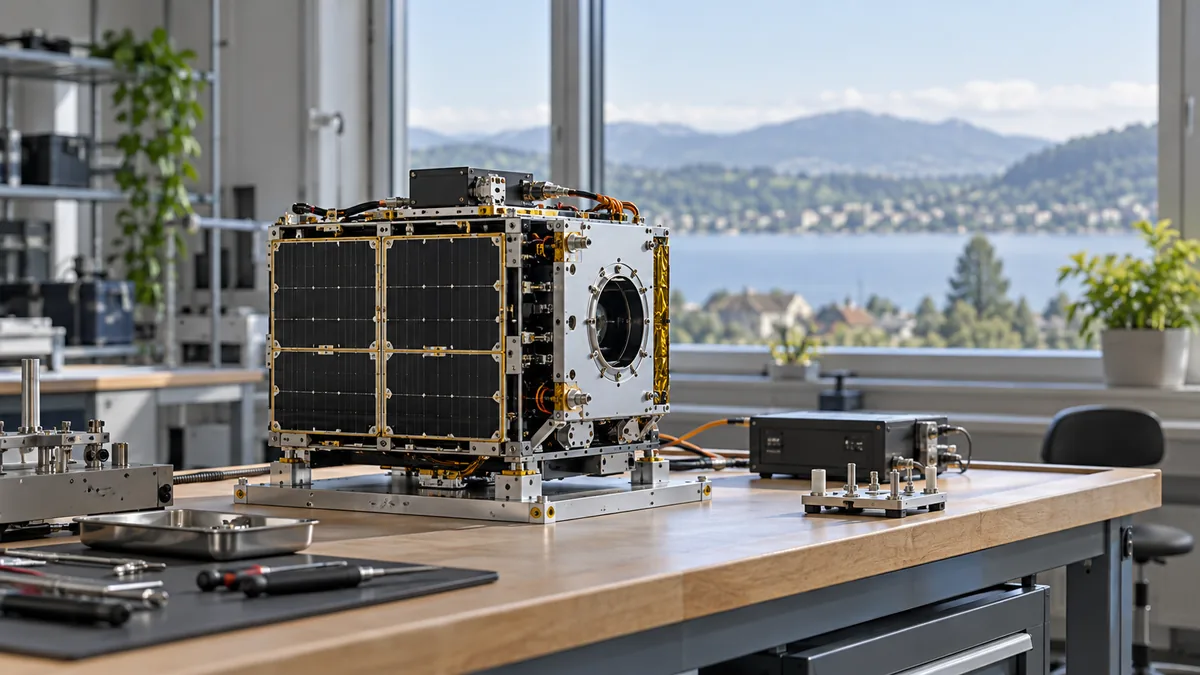
The press release of October 16, 2026, celebrates the first 40 years of Prodex, the European Space Agency (ESA) program dedicated to experimental space research.
Context
TL;DR
- ESA celebrates Prodex's first 40 years
- Swiss and Belgian delegations launched Prodex in 1986
- Zurich hosted the conference and ceremony
- 130 projects funded in Switzerland over 40 years
Key facts
- Date → October 16, 2026
- Program → Prodex
- Agency → ESA
- Participation → 17 member states
- Projects in Switzerland → 130
- University research centers → over 20
- Contributions to Swiss industry → over 50%
- Celebrations → Zurich, from October 14 to 16, 2026
The press release of October 16, 2026, celebrates the first 40 years of Prodex, the European Space Agency (ESA) program dedicated to experimental space research. Since 1986, Prodex has provided resources for the development and use of scientific instruments and experiments.
Switzerland played a decisive role in the creation of Prodex and, through the program, finances its own space experiments. The program thus aims to support standards of scientific excellence in ESA missions and those of international partners such as NASA, JAXA and CNES.
Why the program was created
Space research is considered one of ESA's pillars. In general, the research institutes of member states develop the Agency's scientific experiments, while the respective states finance their implementation. States without their own national funding instrument therefore lacked an equivalent opportunity.
To address this need, in 1986, the Swiss and Belgian delegations launched Prodex, working with prominent figures from the scientific and administrative worlds. Currently, 17 member states of the Agency participate in the program.
ESA's experience enables Prodex to send highly complex scientific instruments and experiments into space, used both in the Agency's missions and those of international partners; these include the space agencies of the United States, Japan and France.
The anniversary was celebrated in Zurich from October 14 to 16, 2026, with a conference and a ceremony. The opening address was given by State Secretary Martina Hirayama. During several roundtable discussions, delegations from the participating states engaged with representatives of ESA and figures from the space research and industry communities.
Over the past 40 years, 130 development projects for space experiments have received support in Switzerland, carried out by more than 20 university research centers. Through specific mandates, more than 50% of the contributions were allocated to Swiss industry.
Operational details
The practical significance described by the source unfolds on two levels: the path that takes instruments into space and their subsequent use on Earth. With Prodex, highly complex scientific instruments and experiments can reach space and be used in ESA missions and those of partners such as NASA, JAXA and CNES.
From mission to everyday life
| Field | What the source indicates |
|---|---|
| Research | Scientific instruments and experiments used in space missions |
| Industry | More than 50% of contributions allocated to Swiss industry |
| Exploration | Rosetta monitored a comet for several years |
| Planets | CHEOPS precisely measures exoplanets |
| Earth | Observation of the planet and climate, weather forecasts and alerts in the event of disasters |
The technological path starts with the development of instruments, passes through space missions and leads to technologies that can be refined and used for other missions, infrastructure and applications in everyday life on Earth. For Swiss citizens, the benefit cited is linked above all to Earth and climate observation, with results concerning weather forecasts and alerts in the event of disasters.
The examples illustrate the variety of results. Rosetta made it possible, for the first time, to monitor a comet for several years and make important discoveries about the origin of water on Earth. CHEOPS was ESA's first mission led by Switzerland and, at European level, the first to precisely measure exoplanets.
Thanks to Prodex, instruments and experiments were also developed for ESA's Euclid space telescope, NASA's James Webb Space Telescope and the International Space Station. The research described in the press release therefore extends from the exploration of comets and exoplanets to the observation of Earth.
The comparison before and after the program began concerns funding. States without a national instrument did not have a corresponding opportunity; after 1986, Prodex provides resources for the development and use of scientific instruments and experiments. Today, 17 Member States of the Agency participate in the program.
Key points
To turn the press release into a practical reading, it is useful to use a five-step checklist. Each item can be linked directly to the elements indicated by the source, without adding external data.
Five steps for finding one's bearings
1. Set the timeframe. Record the publication date, 16 October 2026, and the period of the celebrations, from 14 to 16 October 2026. The location is Zurich, where the conference and ceremony took place.
2. Identify the connection. Prodex is ESA's programme that promotes experimental space research and provides resources for the development and use of scientific instruments and experiments.
3. Follow the Swiss path. Note the role of the Swiss and Belgian delegations in its launch in 1986, then link the programme to the figure of 130 development projects funded in Switzerland and carried out by more than 20 university research centres.
4. Check where the contributions go. Record the share indicated for Swiss industry: over 50%, through dedicated mandates. This step distinguishes the industrial component from the university one.
5. Separate space and Earth. Alongside missions and telescopes, look for the section concerning Earth and climate observation. The source cites weather forecasts and alerts in the event of disasters as applications that also benefit Swiss citizens.
The institutional part of the event should be kept distinct from the scientific results. Martina Hirayama delivered the opening speech, while the round tables brought the delegations of the participating states, ESA representatives and figures from space research and industry together for discussion.
The last check consists in verifying that every example remains anchored to the source: Rosetta, CHEOPS, Euclid, James Webb or the International Space Station. Thus the reader recognizes the international dimension of the missions and the Swiss presence in research and industry, without attributing to the programme results other than those described.
Source: admin.ch
Frequently Asked Questions
- What is the Prodex programme and when was it established?
- Prodex is the European Space Agency (ESA) program that promotes experimental space research. It was launched in 1986 by the Swiss and Belgian delegations to provide a national funding instrument to member states that lacked one.
- How many projects has Switzerland financed in 40 years?
- Over 40 years, Switzerland has funded 130 development projects for space experiments, carried out by more than 20 university research centers. More than 50% of the contributions was allocated to Swiss industry through dedicated contracts.
- Which space missions mentioned by the source benefited from Prodex?
- The source mentions Rosetta (monitoring of a comet), CHEOPS (precise measurement of exoplanets, the first ESA mission led by Switzerland), Euclid, NASA's James Webb telescope and the International Space Station.
- What concrete benefits do Swiss citizens derive from Prodex?
- The statement identifies Earth and climate observation as the main benefit for citizens, with applications in weather forecasting and warnings in the event of disasters.
- Where and when did the 40th anniversary celebrations take place?
- The celebrations were held in Zurich from October 14 to 16, 2026, with a conference and a ceremony. State Secretary Martina Hirayama delivered the opening speech.