Credible neutrality requires an active role (cross-border guide)
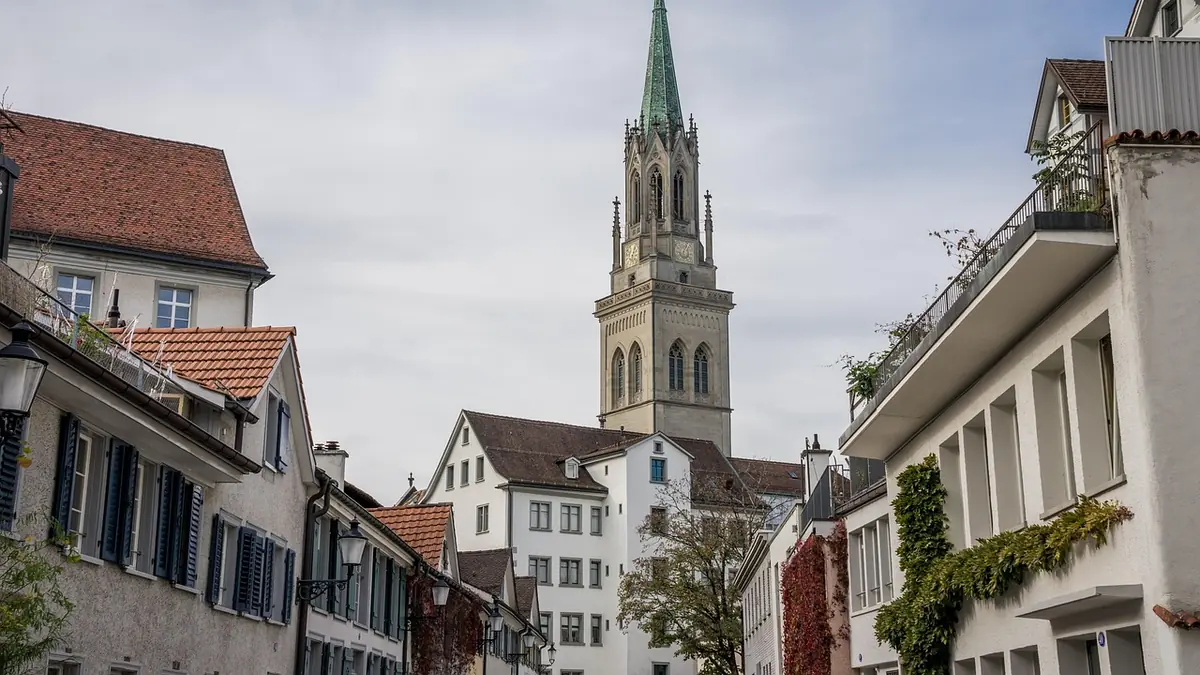
Historian Matthieu Gillabert analyzes how the doctrine of Swiss neutrality has evolved, to understand the active role necessary for its credibility.
Context
In a nutshell
- Contemporary Swiss neutrality requires active participation in international politics
- Historian Matthieu Gillabert explores the evolution of the doctrine of neutrality
- Credibility of neutrality depends on engagement in international institutions
Key facts
- Topic: Swiss foreign policy and the evolution of neutrality
- Protagonist: Historian Matthieu Gillabert
- Central concept: Credible neutrality and active role
- Context: Federal institutions and international relations
- Implication: Active participation in world affairs
Swiss foreign policy faces a fundamental contemporary challenge: how to maintain credibility in neutrality while taking an increasingly active role in international affairs. This is the central theme of a historical analysis conducted by historian Matthieu Gillabert, which examines how and for what reasons the guiding doctrine of Swiss neutrality has evolved.
The title of this reflection — “Credible neutrality requires an active role” — sums up a powerful idea: Switzerland cannot maintain its neutrality by withdrawing from the world. On the contrary, the credibility of neutrality depends on the way in which the country actively participates in international decision-making processes, from multilateral organizations to diplomatic negotiations.
For decades, Swiss neutrality has been interpreted as a position of non-alignment and
Operational details
The idea of an 'active neutrality' reflects how Switzerland has reconciled the apparent contradiction between traditional non-alignment and participation in multilateral institutions. In the contemporary context, a purely passive position is no longer sustainable in the face of global challenges and the need for international credibility.
Swiss federal institutions must therefore navigate a delicate balance. On one hand, they maintain the historical commitment to neutrality. On the other, they recognize that the absence of a voice in international decision-making processes would threaten the very credibility that neutrality intends to preserve.
This balance manifests itself in various ways. Switzerland participates in diplomatic negotiations, adheres to international agreements while always maintaining the possibility of staying outside formal alliances, and contributes to humanitarian and peacekeeping efforts. Every action is calculated to strengthen the prestige of Swiss neutrality rather than weaken it.
The Importance of Credibility in Neutrality
A neutrality that is not backed by an active commitment to seeking solutions to global problems risks being perceived as indifference rather than principle. Gillabert's research contributes to explaining how Switzerland has historically built credibility through concrete actions — from mediation in international conflicts to the provision of humanitarian services — rather than through simple declarations of neutrality.
…
Key points
Understanding how the doctrine of Swiss neutrality has evolved is important for anyone wishing to understand the Country's foreign policy decisions. For Swiss citizens, this knowledge enables them to participate more consciously in democratic debates about how the Country should position itself in the international community.
How to Stay Informed About Swiss Foreign Policy
The Swiss Federal Council regularly publishes reports and documents on foreign policy, available through official channels of the federal administrations. These materials provide insights into strategic decisions and the principles that guide them.
Furthermore, the Swiss Parliament regularly debates foreign policy matters, and these debates are public and recorded in official minutes. Interested citizens can follow these proceedings to understand how their representatives address global challenges. Swiss national media also regularly cover foreign policy decisions, offering analysis and commentary.
Why This Matters for Switzerland
Foreign policy is not confined to diplomatic debate. Decisions about how Switzerland positions itself internationally directly affect citizens:
- Trade Relations: International trading partners consider Switzerland's stability and reputation when deciding to do business with the Country.
- Economic Stability: Credible neutrality contributes to confidence in global markets and Switzerland's attractiveness as a financial hub.
- Employment Opportunities: An active role for Switzerland in international institutions creates employment opportunities in the public sector and in international organizations based in Switzerland.
- Security: Foreign policy decisions influence Switzerland's national security and stability in the European geopolitical context.
…
Frequently Asked Questions
- What does' active neutrality 'mean in Swiss foreign policy?
- Active neutrality is a contemporary concept of neutrality that does not imply passive isolation, but active participation in international decision-making processes. As analysed by historian Matthieu Gillabert, Switzerland maintains its independence and non-alignment while actively participating in diplomatic negotiations, multilateral organisations and international humanitarian efforts. In this way, the credibility of neutrality is strengthened by demonstrating concrete commitment to solving g
- Why has Switzerland evolved its doctrine of neutrality?
- According to Matthieu Gillabert's analysis, the doctrine of neutrality has evolved for historical reasons related to the international context. Over time, a purely passive position has become untenable in the face of global challenges and the need for international credibility. A credible neutrality today requires not simply to be absent, but to position oneself strategically and independently on issues of global importance.
- How does this evolution of neutrality affect the daily lives of Swiss citizens?
- Although neutrality seems like an abstract concept, it concretely influences how Switzerland relates to international trade partners, how it participates in global economic agreements, and what job opportunities are created in the public sector and in international organizations based in Switzerland. In addition, Switzerland's international positioning influences the country's economic stability and the value of its currency in the global market.
- Who conducts the historical analysis of Swiss neutrality?
- Historian Matthieu Gillabert examines how the doctrine of Swiss neutrality has evolved over time, helping to understand how Switzerland's contemporary foreign policy positions itself on this fundamental issue. His research helps explain how Switzerland has historically built credibility through concrete actions rather than through passive declarations of neutrality.