Serious Road Accident on Regina Road: Two Injured (cross-border guide)
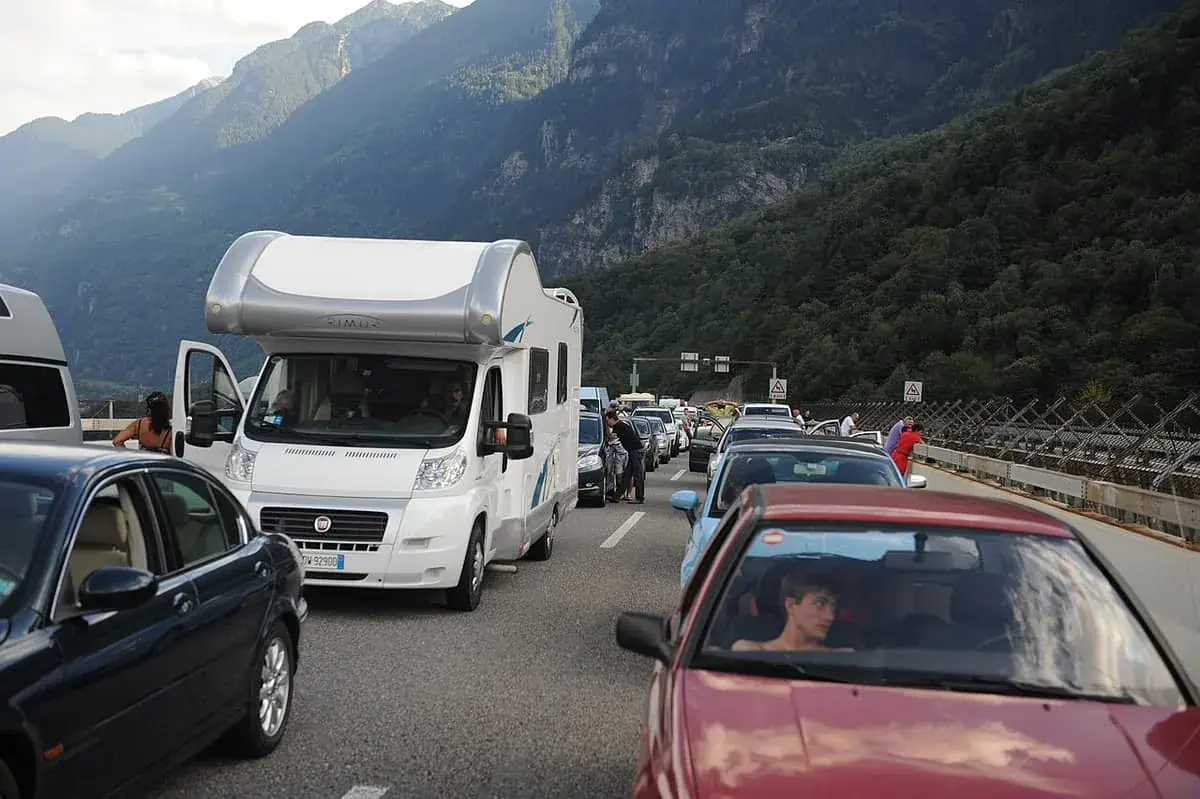
Urgent technical rescue intervention at Domaso along the Regina Road.
Context
TL;DR
- Serious road accident on Regina Road in Domaso
- Two people seriously injured, transported by helicopter
- Emergency services responded rapidly and effectively
Key facts
- Cosa: Serious road accident involving a vehicle
- Quando: Yesterday evening, around 23:45
- Dove: Domaso along the Regina Road
- Chi: Two people seriously injured
- Intervento: Emergency helicopters, ambulances, and medical car dispatched
- Importanza: Rapid and coordinated response minimized damage
Yesterday evening, around 23:45, a serious road accident occurred at Domaso along the Regina Road involving a vehicle. Two people were seriously injured and transported to the hospital with the emergency helicopter. The Soreu dei Laghi central dispatch sent numerous emergency vehicles, including three ambulances, a medical car, and two Areu helicopters, one from Como Villa Guardia and one from Sondrio. The accident caused significant concern among local residents and required an urgent technical rescue intervention.
Operational details
The road accident in Domaso is a concrete example of how preparation and coordination of emergency forces can make a difference in emergency situations. The rapid and effective response of the emergency operators allowed for the minimization of damage and immediate intervention for the injured patients. This example underscores the importance of a coordinated response and rapid intervention in emergency situations, with the use of advanced technologies and collaboration between different emergency forces.
Recommended tools
For an updated estimate, use the net salary calculator and the CHF-EUR exchange comparator.
Key points
Conclusione
The road accident on the Regina Road in Domaso is an example of how emergency procedures in Ticino can be effective. Thanks to the rapid intervention of the police and emergency services, the injured were saved and received the necessary treatment. This intervention demonstrated the importance of preparation and organized intervention in emergency situations.
For a precise calculation of your net salary as a cross-border worker, use our comparator: the most complete tool to compare your take-home pay between G and B permits, with all tax and social deductions updated to 2026.
What this page covers
Serious Road Accident on Regina Road: Two Injured is presented here as a practical resource rather than a thin summary. Urgent technical rescue intervention at Domaso along the Regina Road. The static SEO content adds the missing context users need to understand who is affected, what may change in practice, and why the topic matters for people living in Italy and working in Ticino.
Many visits start from Google, not from the homepage, so the page needs enough substance on first load to explain the scenario clearly. That means giving readers more than a short excerpt: it should show the business, tax, salary, and day-to-day implications that normally drive real decisions for cross-border workers.
Why this matters
For cross-border workers, a single update often sits at the intersection of several systems: Swiss payroll rules, Italian tax consequences, commuting costs, health coverage, and administrative deadlines. Relevant themes on this page include road, regina, accident, injured, serious, along. Without that wider framing, a page can look too thin even when the topic itself is important.
This page therefore expands the intent behind the article: what changed, why readers should care, which profiles are most exposed, and what additional checks are worth running before acting on the information. That improves both user comprehension and the page's search quality signals.
What to verify now
A useful first step is to compare the article with your own profile: place of residence, job location, old or new frontier-worker tax regime, family situation, salary level, and any remote-work arrangement. Small differences in those inputs can produce very different outcomes, especially on net income and compliance.
It is also worth validating the topic against the calculators, guides, and job pages linked across Frontaliere Ticino. When readers connect the article to real numbers such as withholding tax, IRPEF top-up, insurance costs, exchange-rate exposure, or commuting expenses, they can tell whether the update is informational or requires action.
Practical impact for cross-border workers
The practical value of an article for this audience is not just the headline. What matters is the likely effect on monthly cash flow, annual planning, documents to prepare, and choices about salary, insurance, work arrangement, or relocation. The page is structured to keep that practical lens visible from the start.
If the topic creates downstream questions around deadlines, forms, deductions, hiring, or policy changes, readers should not have to leave with only a vague summary. This static content is designed to bridge that gap and make the page useful enough to stand on its own while still connecting naturally to deeper tools and guides.
Useful next steps
The best next step is to use the linked calculators, guides, FAQs, and job search pages to test the topic against your exact case. That turns a single article into a practical decision flow, which is the core value users expect from Frontaliere Ticino.
If you have specific questions about how this topic affects your personal situation — salary, taxation, health insurance, pension planning, or transport — the platform's interactive calculators can give you precise quantitative answers using official 2026 fiscal parameters, without the need for external consultations.
Frequently Asked Questions
- What are the most common causes of road accidents on the Via Regina?
- The Via Regina is one of the busiest roads in Ticino, with over 10,000 vehicles crossing it every day. The average speed of cars along this road is around 60 km/h, but in case of an emergency, law enforcement can reduce the speed to 30 km/h to ensure the safety of travelers.
- What is the average response time of Areu helicopters in the event of an emergency on the Via Regina?
- According to the article, the response time is about 10 minutes.
- What are the emergency procedures for Italian cross-border commuters involved in an accident on the Via Regina with serious injuries?
- In the event of an accident with serious injuries on the Via Regina, cross-border commuters must immediately call 118 (Italy) or 144 (Switzerland). The Soreu dei Laghi center coordinates rescue operations between Ticino and Lombardy, sending ambulances, medical cars and Areu helicopters (response time: 10-15 minutes). Patients are transported to the nearest hospitals, such as Bellinzona or Lugano.
- How is health insurance coverage managed for an Italian cross-border commuter involved in a road accident in Switzerland?
- Italian cross-border commuters with a European Health Insurance Card (TSE) are entitled to emergency treatment in Switzerland at no direct cost, thanks to the EU-Switzerland agreement. For subsequent treatment, it is advisable to take out supplementary health insurance that covers costs not reimbursed by the Swiss system (e.g. reimbursement of hospital co-payments).
- What are the speed limits and specific rules for heavy vehicles on the Via Regina between Italy and Switzerland?
- On the Via Regina, heavy vehicles over 3.5 tonnes must comply with a speed limit of 50 km/h in Ticino and 60 km/h in Lombardy. In an emergency, law enforcement can reduce the speed to 30 km/h to ensure safety. The use of seat belts and respect for safety distances is mandatory.