Joint checks in Mendrisiotto between September and November
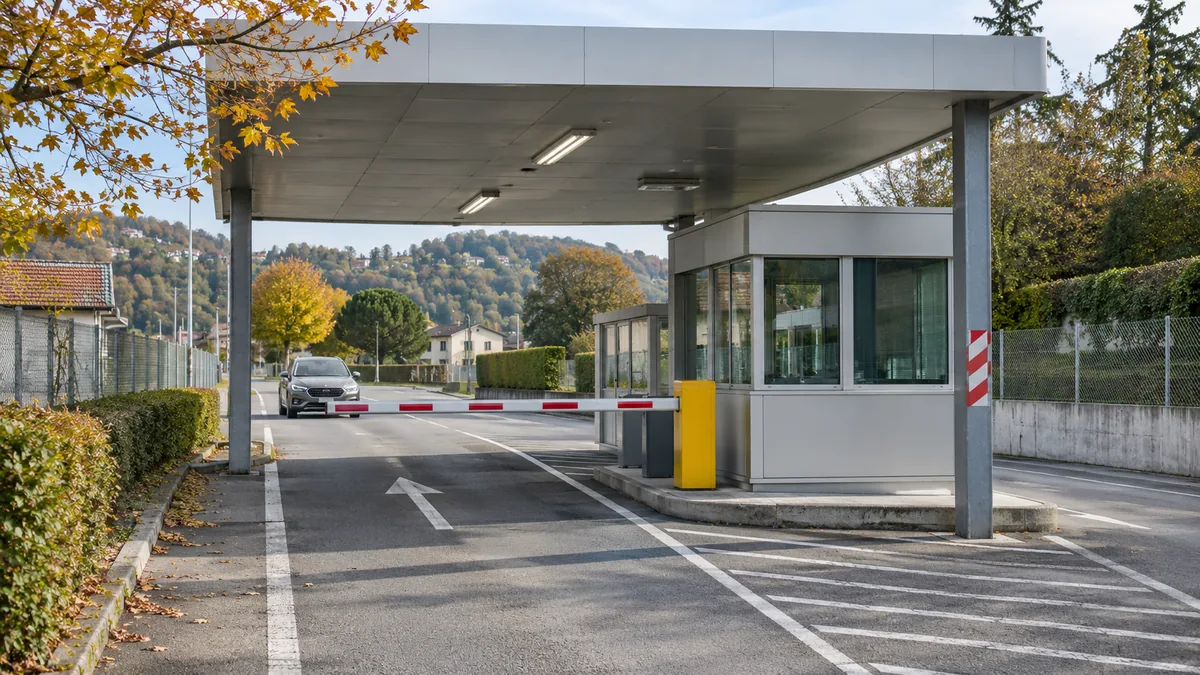
The operation aimed to monitor transit flows, detect any suspicious situations and counter potentially unlawful conduct.
Context
TL;DR
- Between September and November, joint checks in Mendrisiotto
- 43 checkpoints, 461 vehicles and 699 people
- 26 traffic violations and 17 customs infringements
- Three wanted persons identified and 1,5 grams of cocaine seized
Key facts
- Period → between September and November
- Location → border areas of Mendrisiotto
- Authorities → Cantonal Police and Udsc
- Checkpoints → 43
- Vehicles checked → 461
- Persons checked → 699
- LCStr violations → 26
- LD offences → 17
The operation aimed to monitor transit flows, detect any suspicious situations and counter potentially unlawful conduct. The activities were directed in particular at preventing and combating crimes against property and cross-border criminal activity. According to the source, coordinating the presence in the area also made it possible to tighten checks on people and vehicles in transit.
The resources of the two forces were concentrated at strategic points in the area. The collaboration made it possible to bring together different areas of expertise and to search for people or vehicles that were being sought, as well as to ascertain any violations of the regulations in force. The overall tally includes 43 checkpoints, 461 vehicles checked and 699 people checked.
During the checks, a counterfeit identity document was found. During a vehicle inspection, a hidden compartment was discovered: 1,5 grams of cocaine were found and seized inside. Three wanted people were also identified.
For the cross-border commuter who crosses a border area of the Canton of Ticino, the report therefore documents the existence of coordinated checks on people and vehicles in transit. However, it does not indicate whether any cross-border workers were among those checked, nor does it distinguish between the different reasons for the journeys. This limitation remains part of the picture reported by the source.
Operational details
The scale of the checks, as shown by the data
The tally allows a simple calculation of the operation's average scale. Dividing the 461 vehicles checked by the 43 checkpoints gives approximately 10,7 vehicles per checkpoint. Dividing the 699 people checked by the same 43 checkpoints, the arithmetic mean is approximately 16,3 people per checkpoint.
These figures help interpret the operation's total, but do not describe the work carried out on each individual day or at each point. The source does not, in fact, break down the checks by the different days and does not indicate how many vehicles or how many people were checked at each location. In addition, vehicles and people are different categories: the text does not clarify whether the people checked were occupants of the vehicles checked or whether they also included people checked separately. For this reason, it is not correct to automatically add 461 and 699 as if they were distinct individuals.
The ratio between the three wanted persons identified and the 699 people checked can likewise be expressed only as a descriptive proportion: 3 divided by 699 equals approximately 0,43 percent. It is not a general estimate and does not measure the probability of finding a wanted person. Similarly, the vehicle with the hidden compartment represents, purely arithmetically, approximately 0,22 percent of the 461 vehicles checked; however, the source does not present this figure as a detection rate.
Finally, 26 violations of LCStr plus 17 infringements of LD add up to 43 incidents overall, the same number as the checkpoints. The numerical coincidence does not prove that each checkpoint produced a violation: the text does not establish a one-to-one connection. For a cross-border commuter, therefore, the activity figures remain documented, but not crossing times, the duration of the checks or any changes in traffic.
Key points
Cooperation and limits of the reconstruction
The result is not presented merely as a sum of checks. The source describes the operation as an opportunity for operational cooperation between the cantonal police and UDSC, with coordinated interventions and a visible, widespread presence in border areas.
The joint work of the cantonal police and UDSC constituted an important operational opportunity: it made it possible to coordinate interventions and ensure a visible, widespread presence in border areas.
The text also indicates an exchange of experiences among people active in the same sectors, but who normally lack the opportunity to work in close collaboration every day. The effort is presented as part of activities to prevent and combat illegality, with the stated objective of protecting the security of the territory and the population.
The reconstruction does not, however, provide the names of the individual checkpoints, the times, the duration of the checks or the number of operators deployed. Nor does it specify the identity of the people being sought, the reason they were being sought, the origin of the forged document, the function of the hidden compartment or subsequent developments following the seizure of the cocaine. The finding of 26 violations of LCStr and 17 infringements of LD is also reported, without further details on the outcome of the individual proceedings.
The report does not link the operation to the administrative, tax or social-security conditions of those who work across the border. Consequently, these issues cannot be used to infer specific effects on cross-border workers. The documented scope remains that of a joint inspection operation in the Mendrisiotto, with numerical results and finds indicated by the source, but without data on the effects on traffic or cross-border workers.
Source: varesenews.it
Frequently Asked Questions
- What was the reference period for the joint inspections in Mendrisiotto?
- The joint checks by the Cantonal Police and Udsc took place between September and November in the border areas of the Mendrisiotto.
- How many vehicles and people were checked during the operation?
- The overall operation tally records 461 vehicles checked and 699 people checked in total.
- What specific results were identified during the checks?
- A total of 26 traffic violations and 17 customs offences were recorded. In addition, three wanted persons were identified and 1,5 grams of cocaine were seized.
- Which entities participated in the coordinated operation at the border?
- The operation was carried out in collaboration between the cantonal police and the Federal Office for Customs and Border Security (Udsc).
- Is there a direct correlation between the checkpoints and the violations?
- A total of 43 checkpoints were recorded, along with 26 violations of the LCStr plus 17 infringements of the LD, for a total of 43 incidents, but the source does not establish a one-to-one link between the two.
Related articles
- All articles: Border and customs
- Controlli velocità in Ticino: cosa sapere per i frontalieri
- Mendrisiotto: tre eventi e strade chiuse nel fine settimana
- Controlli al confine Ticino: cosa cambia per i frontalieri
- 25 anni di emergenze sanitarie: il S.A.M. di Mendrisiotto
- Radar in Canton Ticino dal 19 al 25 ottobre: dove sono i controlli