Living in Magreglio and working in Ticino as a border worker
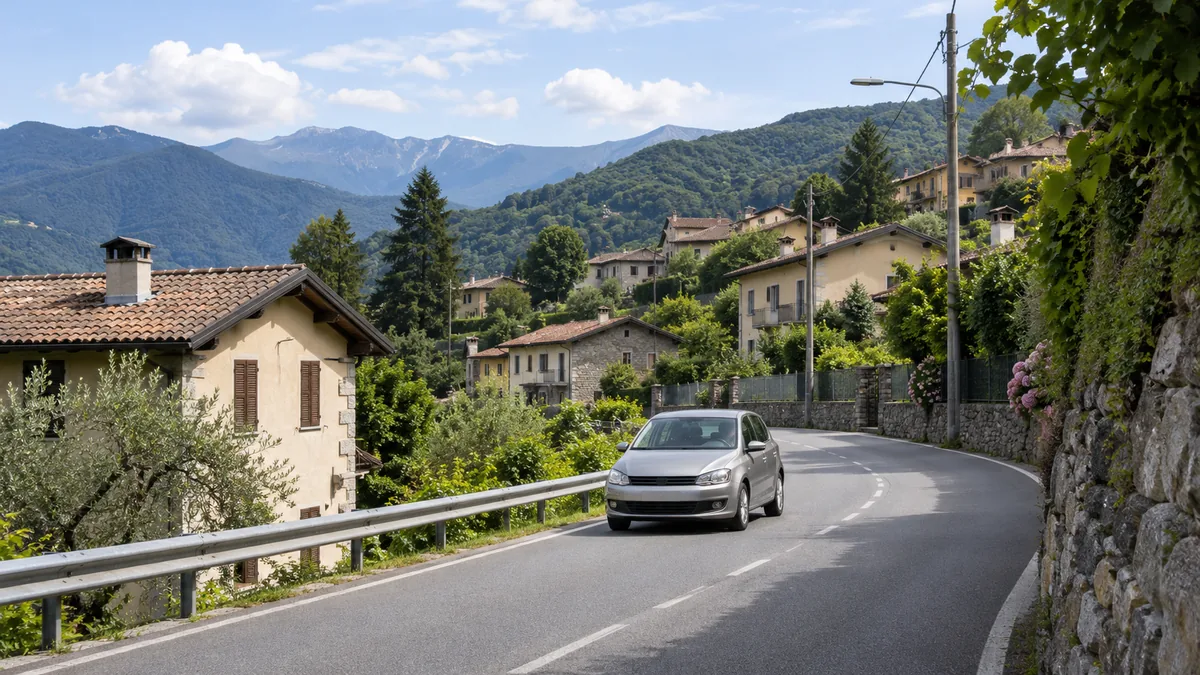
Analysis and practical information for those who choose to reside in Magreglio, in the province of Como, and work as a border worker in Ticino.
Context
In brief
- Residence in Magreglio, in the province of Como according to ISTAT codes
- Work activity in Ticino according to the official UST nomenclature
- Tax management according to the New Frontier Workers Agreement L. 83/2023
- Specific rules for withholding tax, AHV/AVS and personal income tax (IRPEF) allowance
Key facts
- Italian location: Magreglio, CO province
- Work destination: Ticino
- Regulatory reference: Law 83 of 13/6/2023
- Agreement entry into force: January 1, 2024
- IRPEF allowance for new cross-border workers: 10,000 euros
Choosing to reside in an Italian municipality like Magreglio, located in the province of Como, and then commuting daily to work in Swiss territory, specifically in Canton Ticino, requires a careful analysis of the logistical, administrative and fiscal factors that regulate the lives of commuting workers. From a territorial perspective, Magreglio represents a characteristic geographical location of the Lombardy pre-Alpine belt, whose travel towards the Swiss border requires navigating road sections and border crossings well known to commuters. For those undertaking this working path, understanding the current regulatory framework is essential to navigate between both Italian and Swiss tax obligations. The provisions introduced by the recent regulatory framework redefine the taxation and social security management methods for those who regularly cross the border. The Swiss Federal Tax Administration FTA and competent bodies define the deductions applied directly at source on dependent employment income earned in Switzerland. For a worker who maintains their official residence in Magreglio and performs their duties in Ticino, daily commuting involves evaluating travel times and available road connections. The analysis of the departure territory and the destination territory allows for better planning of travel, taking into account the specificities of the road links connecting the province of Como with the Swiss customs offices.
Regulatory and territorial aspects of commuting between Magreglio and Ticino
When considering moving to or residing in Magreglio with an annexed job in Ticino, it is necessary to examine precisely the distinction between the regulations applicable to cross-border workers. The classification of workers is based on rigorous criteria established by bilateral agreements and ratification laws, including Law 83 of June 13, 2023, which transposed the New Cross-Border Workers Agreement signed on December 23, 2020, and entered into force on July 17, 2023, with application from January 1, 2024. This regulatory framework distinguishes so-called new cross-border workers from old cross-border workers, regulated by Article 9 of the same agreement. Workers who reside in municipalities located within the established boundaries and who return daily to their homes in Italy are subject to differentiated tax regimes. For new cross-border workers, Switzerland applies a withholding tax of up to 80%, while Italy proceeds to tax the same income by eliminating double taxation through the tax credit mechanism included in the CE section of the 730 tax model. For old cross-border workers, on the other hand, taxation remains limited exclusively to Switzerland according to the parameters defined by the Agreement and transitional provisions. The Convention against Double Taxation, signed on March 9, 1976, constitutes a further reference pillar for the regulation of fiscal relations between Italy and Switzerland, always bearing in mind that the Swiss Confederation is not part of the European Union or the European Economic Area.
Operational details
The Swiss social security and contributions context
The exercise of an employed activity in the Canton of Ticino entails mandatory registration in the social security and social security systems of the Helvetic Confederation. For the worker residing in Magreglio and employed across the border, the pay slip reflects a series of mandatory contribution deductions established by federal legislation and administered by the competent bodies. These include contributions for Old Age and AVS Survivors Insurance, AI Disability Insurance and IPG Loss of Earnings Allowances, which provide a share to be paid by the employee of 5.3%. To these deductions are added the contributions for AD and AC unemployment insurance set at 1.1% up to the maximum income limit set at 148,200 Swiss francs, as well as the LAINF accident insurance, whose occlusion rate generally varies between 0.7% and 1.5%. A further relevant social security element is the LPP professional pension, whose contributions vary between 7% and 18% based on the age groups starting from the age of twenty-five. The management of these social security institutions requires the utmost attention from the worker, who must coordinate his Swiss contribution position with the social security and tax obligations in force in Italy. The determination of the taxes due in Italian territory takes into account the exemptions provided for by the legislation, such as the IRPEF exemption set at 10,000 euros for new cross-border commuters. As regards health care and medical coverage, cross-border workers working in Ticino can exercise the right of option for KVG health insurance, choosing between the Swiss and Italian systems according to the provisions in force. The deductibles for adults under the KVG regime usually vary between 300 and 2500 Swiss francs. To learn more about economic planning and estimating your net salary in relation to these deductions, you can consult the tax calculator available online.
Key points
Analysis of the labor market and flows of cross-border workers between Italy and Switzerland
The phenomenon of cross-border workers between Italy and the Canton of Ticino represents a structural and economically significant component of the regional and cross-border job market. According to statistical data released by the Statistics Office of the Canton of Ticino USTAT, in the first quarter of 2026 there were approximately 79,000 cross-border workers active in Ticino, specifically 78,561 units, highlighting a slight decline compared to previous periods but still remaining at a percentage equal to approximately 32% of the total employed in the Canton of Ticino. This significant presence of manpower from Italian border provinces, including the province of Como where Magreglio is located, has a profound impact on daily mobility, local services and the management of road flows towards the main transit crossings such as Brogeda and Gaggiolo. The administrative collaboration between the Italian and Swiss authorities makes use of official institutions and bodies such as the Federal Tax Administration AFC, the Ministry of Economy and Finance MEF, INPS and the Revenue Agency, which supervise the correct application of tax rules and the transfer of financial resources deriving from tax refunds to border municipalities. For those who live in Magreglio and evaluate professional opportunities in Ticino, the in-depth knowledge of the statistical data and employment dynamics published by bodies such as the Federal Statistics Office BFS and the Secretariat of State for the Economy SECO offers a stable and verifiable information framework. To find your way around the various employment opportunities and better understand the dynamics of the cross-border job market, it is useful to consult the job offers available via the page dedicated to job offers.
Frequently Asked Questions
- What are the tax rules for new frontier workers living in Magreglio and working in Ticino?
- New cross-border workers residing in border municipalities such as Magreglio and employed in Ticino are subject to withholding tax in Switzerland, which can levy up to 80%. Italy also taxes income, eliminating double taxation through the tax credit included in the EC framework of the tax return form 730, also benefiting from the IRPEF exemption of 10,000 euros provided for by Law 83 of 13 June 2023.
- What is the amount of compulsory social security contributions withheld in a paycheck in Switzerland?
- Contribution withholdings in Switzerland include Old Age, Survivors and Disability Insurance with AVS, AI and IPG contributions set at 5.3% for the employee's share. Added to these are AD and AC unemployment insurance at 1.1% up to a maximum of 148,200 Swiss francs, LAINF accident insurance with rates between 0.7% and 1.5% and contributions for the LPP professional pension of between 7% and 18% based on the age of the worker.
- What is the numerical consistency of border workers in Ticino according to official data?
- According to data collected by the Statistics Office of the Canton of Ticino USTAT in the first quarter of 2026, there are approximately 79,000 cross-border workers active in the Canton of Ticino, specifically 78,561 units. This figure represents approximately 32% of the total employed in the cantonal territory, highlighting the significant weight of the workforce coming from the Italian border provinces.