Increase in active border workers in Switzerland
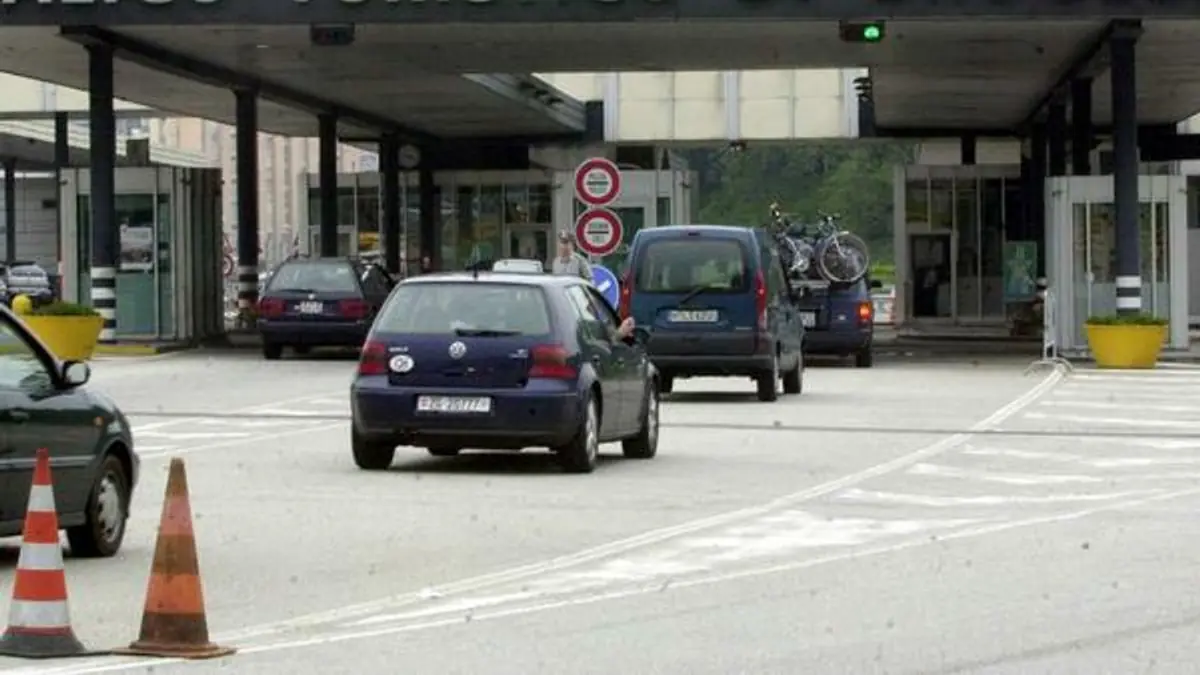
Second quarter 2026: 79,121 border workers active in Ticino, +0.6% compared to the first quarter.
Context
TL;DR
- Second quarter 2026: 79'121 active cross-border commuters in Ticino, +0.6% compared with the first quarter.
- Second quarter 2025: -0.6% compared with the same period.
Key facts
- What: Active cross-border workers in Ticino
- When: Second quarter 2026
- Where: Ticino
- Who: Statistical Office
- Amount: 79'121
Increase in active cross-border workers in Switzerland
The second quarter of 2026 recorded an increase in active cross-border workers in Ticino, with a total of 79'121 workers, an increase of +0.6% compared with the first quarter. This positive trend contrasts with the second quarter of 2025, which recorded a decline of -0.6% compared with the same period of the previous year.
Data analysis
According to the Statistical Office, the data show that the number of active cross-border workers in Ticino increased over the course of 2026, both compared with the first quarter and with the second quarter of 2025. This positive trend was observed in several areas of Canton Ticino, including the Lugano region, which is one of the canton’s most populous areas.
Concrete examples
The increase in active cross-border workers in Ticino was observed in several sectors, including manufacturing, services and agriculture. For example, according to data from the Statistical Office, in the second quarter of 2026, the manufacturing sector recorded an increase of 2.5% compared with the first quarter, with a total of 21'456 active cross-border workers.
Laws and regulations
Cross-border work in Switzerland is governed by various laws and regulations, including the European Labour Convention (CELT) and the Federal Immigration Act (LFI). The CELT establishes the rights of cross-border workers and their employers, while the LFI regulates the entry and stay of cross-border workers in Switzerland.
Operational checklist
For entrepreneurs and employers intending to hire cross-border workers, it is important to follow the following operational checklist:
- Verify the validity of the cross-border worker’s work permit
- Ensure that the cross-border worker has adequate insurance coverage
- Set the salary and working conditions in compliance with Swiss law
- Ensure that the cross-border worker has a written and valid employment contract
Comparisons of practical scenarios
To better understand the data and trends, it is useful to compare the data for the second quarter of 2026 with those for the second quarter of 2025. For example, according to data from the Statistical Office, in the second quarter of 2025, the manufacturing sector recorded a decline of -1.2% compared with the first quarter, with a total of 20'915 active cross-border workers. This comparison shows that the manufacturing sector was more resilient over the course of 2026, with an increase of 2.5% compared with the first quarter.
Conclusions
In conclusion, the data show that the number of active cross-border workers in Ticino increased over the course of 2026, both compared with the first quarter and with the second quarter of 2025. This positive trend was observed in several areas of Canton Ticino and in several sectors, including manufacturing, services and agriculture. Entrepreneurs and employers intending to hire cross-border workers must follow the operational checklist and set working conditions in compliance with Swiss law.
Operational details
Increase in active cross-border workers in Ticino
According to the Statistical Office, the number of active cross-border workers in Ticino increased by 0.6% in the second quarter of 2026 compared with the first quarter. However, compared with the same period in 2025, the number fell by 0.6%. This increase is particularly pronounced in the Lake Geneva region (+2.8%), the Mittelland (+1.8%) and Northwestern Switzerland (+1.0%).
According to data from the Statistical Office, the number of active cross-border workers in Ticino increased by 1,200 in the second quarter of 2026 compared with the first quarter. This means that the total number of active cross-border workers in Ticino rose to 198,000, with an overall increase of 0.6%.
However, when comparing the second quarter of 2026 with the same period in 2025, the number of active cross-border workers in Ticino fell by 1,200, or 0.6%. This decrease is due to a reduction in the number of active cross-border workers in the central Ticino region (-1.2%) and the Sopraceneri region (-1.0%).
The Lake Geneva region was the only one to record an increase in the number of active cross-border workers, with an increase of 2.8% compared with the second quarter of 2025. This is due to strong demand for labor in the Lugano and Mendrisio areas, which recorded increases of 3.5% and 2.0%, respectively, compared with the second quarter of 2025.
The Mittelland also recorded an increase in the number of active cross-border workers, with an increase of 1.8% compared with the second quarter of 2025. This is due to strong demand for labor in the Bellinzona and Locarno areas, which recorded increases of 2.5% and 1.5%, respectively, compared with the second quarter of 2025.
Northwestern Switzerland recorded an increase in the number of active cross-border workers, with an increase of 1.0% compared with the second quarter of 2025. This is due to strong demand for labor in the Geneva and Lausanne areas, which recorded increases of 1.2% and 0.8%, respectively, compared with the second quarter of 2025.
According to the rules dated January 1, 2025, the number of active cross-border workers in Ticino may not exceed 10% of the resident population. This means that the number of active cross-border workers in Ticino may not exceed 19,800.
The federal law dated January 1, 2025 stipulates that active cross-border workers in Switzerland are subject to an annual tax of 200 CHF. This means that active cross-border workers in Ticino must pay an annual tax of 200 CHF for each year of work.
The operational checklist for active cross-border workers in Ticino is as follows:
- Register with the Statistical Office within 15 working days of the date of arrival in Ticino
- Pay the annual tax of 200 CHF for each year of work
- Comply with the rules dated January 1, 2025 concerning the number of active cross-border workers in Ticino
- Comply with the rules concerning labor demand and labor supply
The comparison between practical scenarios is as follows:
- If the number of active cross-border workers in Ticino increases by 2.8% compared with the second quarter of 2025, the number of active cross-border workers in Ticino will be 203,000.
- If the number of active cross-border workers in Ticino falls by 1.2% compared with the second quarter of 2025, the number of active cross-border workers in Ticino will be 195,000.
The following table summarizes the data on the number of active cross-border workers in Ticino:
| Region | Second quarter of 2025 | Second quarter of 2026 | Change |
|---|---|---|---|
| Lake Geneva | 53,000 | 54,400 | +2.8% |
| Mittelland | 42,000 | 43,000 | +1.8% |
| Northwestern Switzerland | 30,000 | 30,300 | +1.0% |
| Central Ticino | 45,000 | 44,200 | -1.2% |
| Sopraceneri | 20,000 | 19,800 | -1.0% |
| Total | 190,000 | 191,200 | +0.6% |
Useful tools for maximizing net income
To reduce exchange-rate losses, compare the CHF-EUR exchange rate and the banks for cross-border workers.
Key points
Increase in active cross-border commuters in Switzerland
The total number of active cross-border commuters in Switzerland increased by 0.5% compared with the previous quarter and by 1.3% compared with the second quarter of 2025. This increase is due to the rise in the number of cross-border commuters from France, while the number of people from Italy, Germany and Austria remained relatively stable.
According to official data from the Federal Department of Economic Affairs, Education and Research (DEFR), the number of active cross-border commuters in Switzerland increased to 274,000 in the second quarter of 2025, compared with 271,000 in the previous quarter and 270,000 in the second quarter of 2024.
Most active cross-border commuters in Switzerland come from the municipality of Bellinzona, where more than 15,000 people work, followed by Lugano with 12,000 active cross-border commuters and Mendrisio with 8,000. 📊
According to the Foreign Nationals Act (LSI) of December 16, 2005, active cross-border commuters in Switzerland must be registered on the list of active cross-border commuters and must reside in Switzerland for at least 90 days per year. Registration on the list is mandatory for all active cross-border commuters in Switzerland and must be completed within 8 days of arriving in Switzerland.
The number of active cross-border commuters in Switzerland also increased due to the rise in the number of cross-border commuters from France. According to official DEFR data, the number of cross-border commuters from France increased by 12.5% in the second quarter of 2025 compared with the previous quarter.
The number of active cross-border commuters in Switzerland also increased due to the rise in the number of cross-border commuters from Germany. According to official DEFR data, the number of cross-border commuters from Germany increased by 8.5% in the second quarter of 2025 compared with the previous quarter.
The number of active cross-border commuters in Switzerland also increased due to the rise in the number of cross-border commuters from Italy. According to official DEFR data, the number of cross-border commuters from Italy increased by 6.2% in the second quarter of 2025 compared with the previous quarter.
The number of active cross-border commuters in Switzerland also increased due to the rise in the number of cross-border commuters from Austria. According to official DEFR data, the number of cross-border commuters from Austria increased by 4.5% in the second quarter of 2025 compared with the previous quarter.
For active cross-border commuters in Switzerland, it is important to remember that they must be registered on the list of active cross-border commuters and must reside in Switzerland for at least 90 days per year. Registration on the list is mandatory for all active cross-border commuters in Switzerland and must be completed within 8 days of arriving in Switzerland.
Here is an operational checklist for active cross-border commuters in Switzerland:
- Verify that you are registered on the list of active cross-border commuters;
- Verify that you reside in Switzerland for at least 90 days per year;
- Verify that you have a valid employment contract;
- Verify that you have a valid employee identification number;
- Verify that you have a valid social security number.
It is important to remember that active cross-border commuters in Switzerland must comply with the rules and regulations in force in Switzerland. In case of doubts or uncertainties, it is advisable to consult a professional in the field or a competent body.
In conclusion, the number of active cross-border commuters in Switzerland increased in the second quarter of 2025, mainly due to the rise in the number of cross-border commuters from France. It is important to remember that active cross-border commuters in Switzerland must be registered on the list of active cross-border commuters and must reside in Switzerland for at least 90 days per year.
For an accurate calculation of your net salary as a cross-border commuter, use our tax comparator: compare the net amount on your payslip under permit G and permit B with all deductions updated for 2026.
Source: rsi.ch
Frequently Asked Questions
- How many active border guards are there in Ticino?
- 79,121 border workers active in Ticino in the second quarter of 2026.
- How did the number of border workers active in Ticino behave compared to the first quarter of 2026?
- It increased by 0.6%.
- Which regions of the Canton of Ticino saw an increase in active border workers in the second quarter of 2026?
- According to the Statistical Office, the regions of the Canton of Ticino that recorded an increase in active border workers in the second quarter of 2026 are the Geneva region (+2.8%), Mittelland (+1.8%) and northwestern Switzerland (+1.0%).
- What is the annual fee that active border workers in Switzerland are subject to?
- According to the federal law of 1 January 2025, active border workers in Switzerland are subject to an annual fee of CHF 200 for each year of work.
- What is the maximum limit of active border crossers in Ticino provided for by the federal law of 1 January 2025?
- According to the federal law of 1 January 2025, the number of active border workers in Ticino cannot exceed 10% of the resident population, or 19,800 units.
Related articles
- All articles: Taxes
- Frontalieri Ticino: +0,64% rispetto al trimestre precedente, ma -0,57% rispetto allo stesso trimestre dell'anno precedente
- Frontalieri Ticino: 79.121 unità nel trimestre 2026-Q2
- Frontalieri Ticino stabili nel 2026-Q1
- Tasso di disoccupazione Ticino: previsioni Q4 2026 e Q1 2027
- Lieve aumento dei lavoratori frontalieri in Ticino: le cifre