Border controls: the Government rejects the UDC initiative (cross-border guide)
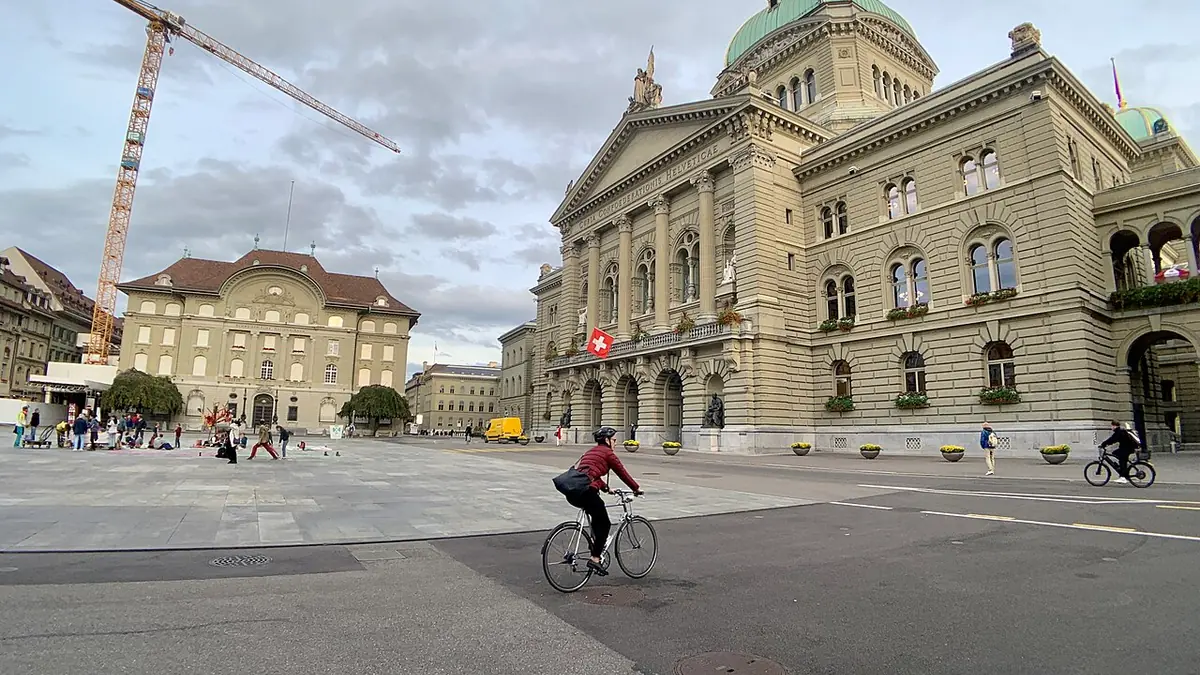
The Federal Council rejects the initiative 'Stopping abuses in asylum': systematic checks would cost billions and risk leaving Schengen.
Context
In a nutshell
- UDC/'Stop Abuses in Asylum' initiative rejected by the Federal Council
- Systematic border control would cause billions of francs of costs
- Risk of abandonment of the Schengen/Dublin system with costs between 5.8 and 16.1 billion
- Government-Economic impact-Safety risks-Impact on commuting
- Government-Impatic economic-Risks for safety-Impact on hought crossings: The prompt asks for a professional financial journalist style. I need to ensure the word count is met by expanding on the source content's details (the costs, the specific reasons for rejection, the implications for Schengen). I will structure body1 with the required sections and lead. Body 2 will analyze the implications for the daily life of workers/commuters (as per the source: congestion, economic burden). Body 3 will focus on the current state and what to monitor regarding migration/asylum laws mentioned in the source. Wait, I must be careful not to invent. The source mentions
Operational details
The impact on traffic and the economy
The implementation of the initiative proposed by the SVP would have direct and heavy repercussions on daily mobility. According to the Federal Council's analyses, Switzerland records approximately 2.2 million border crossings every day. This massive flow, which includes several hundred thousand cross-border commuters, would be overturned by permanent and systematic controls.
Congestion and traffic costs
The introduction of a complete presence at border crossings would generate what the Government defines as strong pressure on the economy and on commuter traffic. In particular, border areas would suffer a devastating impact due to what would be defined as a congestion cost of billions of francs. This scenario concerns not only the time lost in slowdowns, but the entire economic impact resulting from the inefficiency of border flows.
The Executive also emphasizes that increasing the personnel assigned to border protection would entail high costs, adding a further burden to public coffers. In addition to the direct charges, the risk of compromising well-being in Switzerland is one of the Government's central concerns, which sees this measure as a threat to the country's economic stability.
The risk to internal security
Contrary to what is claimed by the promoters, the Federal Council believes that systematic controls would not be suitable instruments to curb secondary migration or cross-border crime. The Government reiterates that the current customs system already carries out controls based on the situation and risks, which can be intensified if necessary, without however blocking the entire circulation system.
…
Key points
Migration Management and Legislative Perspectives
Despite the rejection of the SVP initiative, the Federal Council recognizes the need to intervene in the migration sector. However, the goal is not to implement systematic controls that would paralyze the borders, but rather to adopt measures within existing international frameworks. Switzerland participates in the European Pact on Migration and Asylum, and it is precisely within this context that efforts are focused on curbing secondary migratory movements within the Schengen area.
New Measures Under Preparation
The Federal Department of Justice and Police is actively working on new solutions. In collaboration with the Cantons, legislative amendments are being prepared with two main objectives: to relieve the asylum system and to increase security in this sector. These measures aim to make the system more efficient without compromising Switzerland's humanitarian tradition, an element that the SVP initiative would instead seriously call into question.
The initiative proposed limiting asylum to a maximum of 5,000 people per year. However, the Executive has clarified that such a limit would not exempt Switzerland from the obligation to examine every single asylum application. Furthermore, the imposition of such rigid restrictions would prevent the temporary reception of people fleeing conflict zones, an aspect that clashes with the country's humanitarian principles.
…
Frequently Asked Questions
- Why did the Federal Council reject the UDC initiative?
- The Government rejected the initiative as the implementation of permanent and systematic checks would cause congestion costs of billions of francs, heavily impacting the economy and mobility of the approximately 2.2 million daily passages. Furthermore, the abandonment of the Schengen/Dublin system would entail estimated costs of between CHF 5.8 billion and CHF 16.1 billion and the loss of access to European databases essential for internal security.
- What would have been the effects on commuters and border crossers?
- The introduction of a complete garrison of the crossings would generate a strong pressure on commuter traffic. According to the Executive, border areas would suffer a devastating impact due to congestion costs, transforming daily flows into an inefficient system. This scenario would put the country's economic stability and general well-being in Switzerland at risk.
- What are the alternatives proposed to manage migration?
- The Federal Council intends to intervene within international frameworks, participating in the European Pact on Migration and Asylum. The Federal Department of Justice and Police, in collaboration with the Cantons, is preparing amendments to the law to make the asylum system less burdensome and increase its security, but without resorting to systematic checks that would paralyse the borders.
Related articles
- All articles: Agreements and politics
- Comuni di frontiera in Ticino: guida pratica
- Traffico A2 e frontiera: aggiornamenti viabilità Ticino
- Licata: Schengen ed euro aprono nuove opportunità per Lombardia e Bulgaria
- Controlli frontiera Svizzera-Francia: cosa cambia per i frontalieri
- Costi salute Svizzera: esperto avverte, «Sistema al