EU Agreement: Ticino Demands Mandatory Vote (cross-border guide)
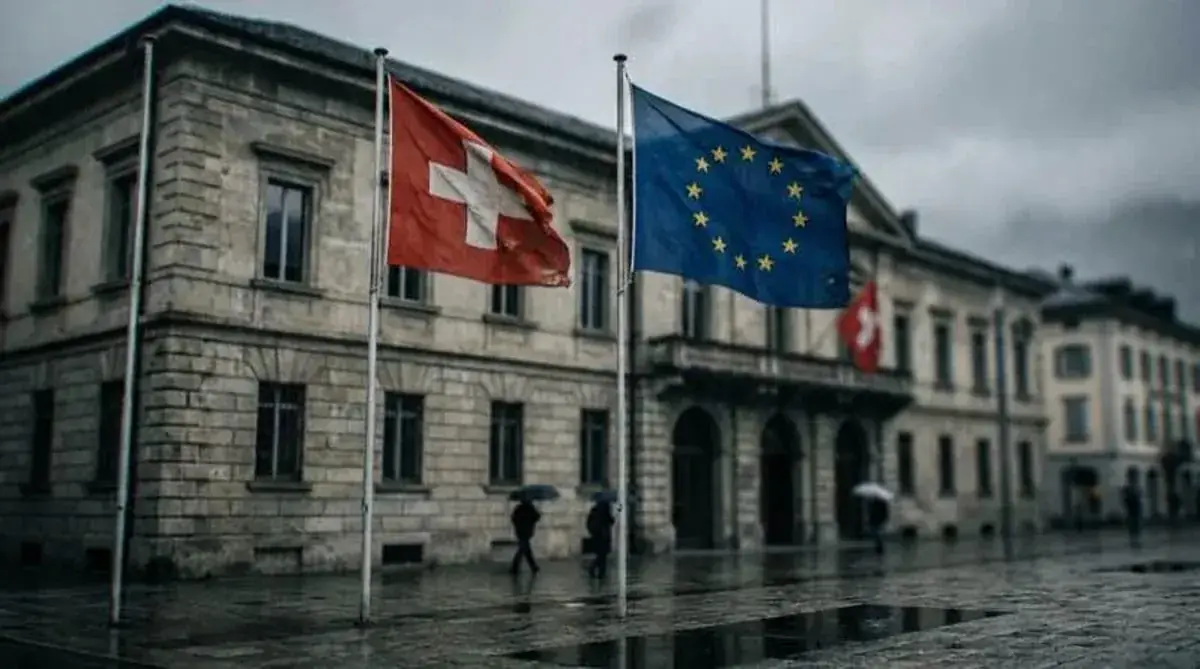
The Grand Council approves the UDC motion: the new agreement with the EU must pass a referendum with a double majority of People and Cantons. A strong signal from Bellinzona to Bern.
Context
TL;DR
- UE accord
- Voto obbligatorio
- Ticino
Key facts
- Cosa: Accordo UE voto obbligatorio
- Dove: Ticino
- Chi: UDC e Consiglio di Stato
- Quando: 24 febbraio 2026
- Contenuto: Framework Agreement 2.0 con UE
- Richiesta: Voto obbligatorio con doppia maggioranza
- Motivo: Protezione sovranità nazionale
A strong and unequivocal political signal is being sent from Bellinzona to Bern. The Ticino Grand Council has approved a crucial motion presented by the UDC aimed at securing the ratification process of the so-called "Framework Agreement 2.0" with the European Union. The demand is clear: any new institutional treaty with Brussels must be subject to a mandatory referendum with a double majority of the People and the Cantons.
This is not a mere technical detail, but a stance that touches the heart of Swiss federalism. A double majority is required for constitutional amendments and for joining collective security organizations or supranational communities. Applying it to this agreement means elevating it to an act of constitutional importance, preventing a narrow majority of voters from deciding for the entire federal structure. Alain Bühler, UDC group leader, spoke of a necessary act "against any attempt to bypass the popular will and to tie Switzerland to Brussels without the consent of the Cantons." The motion, originally drafted by the Young UDC, now instructs the Ticino Council of State to exert maximum pressure on federal authorities to enforce this line.
Operational details
But what are the concrete fears that prompted the cantonal parliament to take this step? The UDC bluntly defines the agreement as a "treaty of submission," a strong label that reflects deep concerns about national sovereignty.
The Critical Points of Agreement 2.0
The agreement's detractors highlight three problematic pillars that, in their view, would undermine Swiss independence:
- Dynamic adoption of EU law: Switzerland would be obliged to automatically and continuously adopt the evolution of European legislation in the sectors covered by the bilateral agreements. This would drastically reduce the room for maneuver of the Swiss parliament and, consequently, of the cantonal authorities on matters such as the labor market and flanking measures.
- Subordination to the EU Court of Justice: In case of disputes over the interpretation of the agreements, the final say would effectively rest with the Court of Justice in Luxembourg. For many, this represents an unacceptable cession of legal sovereignty.
- Sanctions and retaliatory measures: Should Switzerland fail to comply with a ruling or a new regulation, the EU could apply retaliatory measures, such as limiting access to the single market. For a highly export-oriented economy like Ticino's, the consequences would be direct and severe.
For a border canton like Ticino, where the debate on protecting the labor market and wage dumping is a daily issue, the erosion of cantonal powers and wage protection measures represents a concrete threat that the Grand Council wanted to address head-on.
Key points
The Grand Council's decision is not just a matter of high politics; it has tangible implications for every cross-border worker and for the entire economic fabric of Ticino. A possible dynamic adoption of EU law could, over time, change the rules on free movement, workplace safety regulations, collective agreements, and even the permit system. The stability and predictability of the legal framework are essential for those planning their careers and lives across the border.
What changes for cross-border workers?
In the short term, nothing. This is a preventive political action. However, this move signals that Ticino intends to fight to maintain as much control as possible over its labor policies, including the precious flanking measures that curb wage pressure. If Ticino's line prevails at the federal level, Swiss citizens (and the Cantons) will have the final say, ensuring a thorough public debate before any epochal change. In this climate of political uncertainty, having a clear understanding of one's current financial situation becomes even more important. Knowing exactly how economic and political dynamics can affect one's income is the first step towards effective planning. For this reason, tools like the net salary calculator can provide a solid benchmark for assessing the impact of any future tax or contribution changes.
(Source: Ticinonline, February 24, 2026)
Frequently Asked Questions
- What does the framework agreement 2.0 mean for cross-border commuters?
- Currently, nothing changes for cross-border commuters. The Ticino motion is a preventive political action. If Ticino's position prevails, Swiss citizens and the Cantons will have the final say on any changes, ensuring a public debate before momentous decisions are made.
- What are the critical points of the framework agreement 2.0 according to the SVP?
- The critical points are the dynamic adoption of EU law (the obligation to incorporate new European laws), subordination to the EU Court of Justice for disputes, and the possibility of EU sanctions in case of non-compliance, posing risks to access to the single market.
- Why is the Ticino Grand Council calling for a mandatory referendum on the framework agreement 2.0?
- Because the SVP considers the agreement a 'treaty of submission' that undermines Swiss sovereignty. The double majority (People and Cantons) would ensure that decisions of such magnitude are not made by slim majorities, thereby protecting federalism.
- What are Ticino's concerns regarding the framework agreement 2.0?
- Ticino fears the erosion of cantonal competencies and measures protecting the labor market and wages, such as accompanying measures. This is crucial for a border canton where wage dumping is a daily problem.
Related articles
- All articles: Agreements and politics
- Stop ai Ristorni: il Ticino Alza la Voce Contro la Tassa Salute
- Massima Allerta a Chiasso-Brogeda: Cosa Significa per i
- Cambio cantone di lavoro per frontaliere Ticino Grigioni: cosa cambia
- Due austriaci fuggono da auto in movimento: inseguimento finisce contro un muro
- Frontalieri italiani in Canton Ticino sono in calo: cosa significa per loro?