Bellinzona inaugurates the first cycle path
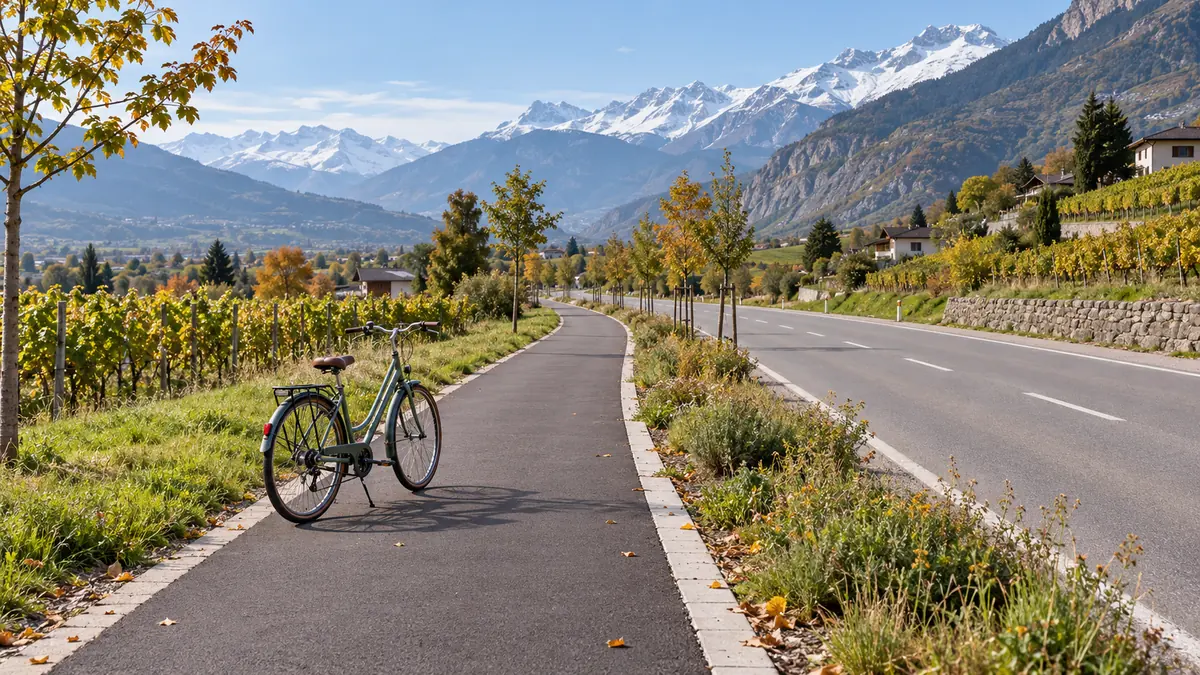
Bellinzona inaugurates its first cycle path The route is three kilometers long The route runs from Giubiasco to Bellinzona Bicycles and motorized traffic
Context
TL;DR
- Bellinzona inaugurates its first cycle street
- The route is three kilometers long
- The route runs from Giubiasco to Bellinzona
- Bicycles and motorized traffic share the carriageway
Key facts
- Project → first cycle street in the City
- Length → three kilometres
- Start → via Golena in Giubiasco
- Finish → intersection of via Chicherio and viale Franscini
- Roads along the route → via Maestri Comacini and via Raggi
- Purpose → connect the neighbourhoods and facilitate daily travel
A route between Giubiasco and Bellinzona
Three kilometres mark Bellinzona's first official entry into the world of «cycle streets». The City has inaugurated a cycle street that starts from via Golena, in Giubiasco, and reaches the intersection of via Chicherio and viale Franscini, in Bellinzona. The route also passes along via Maestri Comacini and via Raggi.
The project is not limited to opening a connection: on the roadway, bicycles and motor traffic share the space, according to a coexistence model that places safety and the quality of the cycling route at the centre. The trial therefore also concerns how different users make use of the same area.
The initiative is also a test bed for new cycling mobility solutions in Bellinzona. It also forms part of the City's efforts to consolidate the active mobility network and gradually improve connections between the neighbourhoods.
The new cycle street aims to connect Giubiasco and Bellinzona within the municipal territory and make the bicycle a choice for everyday journeys as well, not just for leisure. The destinations considered include schools, services and workplaces. The project is associated with these daily journeys.
Operational details
Intersections at the heart of the trial
The most tangible part of the intervention concerns right-of-way rules. The change required modifications to several intersections that, on sections with a 30 km/h limit, had until then been governed by right-hand priority. According to the source, this arrangement often gives rise to misunderstandings and risky situations, especially on roads used by many cyclists and pedestrians.
The first change described is right at the starting point on via Golena, in Giubiasco. Two intersections now have a Stop sign for those arriving from the right. The change is presented as a solution for making the flow of bicycle traffic safer, by intervening directly at the point where the paths cross.
Heading toward Bellinzona, the text then points to the complicated intersection between via Golena and via della Rongia. Here, the change is not described as another Stop sign, but as much clearer and more binding right-of-way signage. Cyclists and pedestrians on via Golena always have priority.
The comparison between the two locations makes the content of the trial clear: in one case, the rule is made explicit through a Stop sign for those arriving from the right; in the other, the right-of-way signage along via Golena is reinforced. The source therefore documents two distinct interventions within the same connection, both concerning the management of intersections.
These changes are connected to the everyday function assigned to the cycle street. If the route is meant to facilitate travel to schools, services and workplaces, the City also intervenes at points where sharing the carriageway can create misunderstandings. However, the text presents the works as a trial and does not report subsequent data on use of the route.
Key points
A piece in the active mobility network
The project is presented as part of a broader municipal plan, not as a standalone project. Within this framework, the City aims to strengthen the active mobility network and gradually make cycling connections between neighborhoods more effective. The section between Giubiasco and Bellinzona is therefore one element of this network, even though its route remains defined by specific roads and intersections.
The connection emphasized by the City also concerns the quality of public space. Under this approach, strengthening cycling mobility gives people more practical, functional and sustainable travel options. The project is therefore both a road-traffic intervention and a test of an alternative use of the roadway.
There is also a reference to the timeline of safety requests. The changes at the intersections come nearly ten years after the interpellation submitted in 2017 by Ronnie David, then a municipal councillor for the Greens. Through that interpellation, David called for measures to improve the safety of cyclists and pedestrians. The source notes the temporal connection, but does not claim that the interpellation alone caused the works described today.
The text does not provide the cost of the project, the expected or recorded number of cyclists, any change in travel times, or data on the effect of the new signage. Nor does it indicate any changes to motor traffic beyond coexistence on the roadway and interventions concerning right of way.
For the Frontaliere Ticino audience, the scope of the news item therefore remains precise: the source discusses urban mobility in Canton Ticino and does not address the cross-border worker’s relationship with the G permit, AVS, LPP or LAMal. It provides no information on tax revenue rebates, withholding tax or double taxation, nor does it mention INPS or the Brogeda border crossing. No changes on these issues can be inferred from this announcement.
Source: laregione.ch
Frequently Asked Questions
- What are the features of the new bike path?
- The route extends for three kilometres, connecting Via Golena to Giubiasco with the intersection between Via Chicherio and Viale Franscini in Bellinzona, passing through Via Maestri Comacini and Via Raggi. It is a 'velostrasse' where bicycles and motorized traffic share the roadway. The work is conceived as an experimentation to encourage daily movements, such as those to schools, services and workplaces, as part of a broader plan to strengthen the network dedicated to slow mobility between neighbourhoods.
- How has safety at intersections been improved?
- The City has introduced specific changes to manage the precedence, often a source of misunderstanding in areas at 30 km/h. In Giubiasco, on Via Golena, stop signs have been installed for those coming from the right at two intersections. In addition, at the intersection of Via Golena and Via della Rongia, the signage has been enhanced to make the precedence in favour of cyclists and pedestrians clearer and more binding. These interventions aim to reduce risk situations at the points where users' trajectories intersect.
- Are there any costs or data on the use of the new road?
- The source does not report the cost of the intervention, nor does it provide statistical data on the number of cyclists expected or detected. There are also no changes in travel times or specific effects on motor traffic, in addition to coexistence on the roadway. The project is described as an ongoing trial, which follows a question submitted in 2017 by then city councillor Ronnie David to urge improvements to the safety of cyclists and pedestrians.
Related articles
- All articles: Taxes
- La bici vale miliardi: sei percorsi ciclabili attraversano la provincia di Varese
- Lombardia: 115 milioni per il piano ciclabile
- Bellinzona e Valli punta sulla bici: percorsi, eventi e collaborazioni
- Ciclabile Lumino-Castione: seconda fase dei lavori
- SlowUp 2026: strade chiuse e trasporti limitati a Bellinzona