One in two summers will be warmer than the current one (cross-border guide)
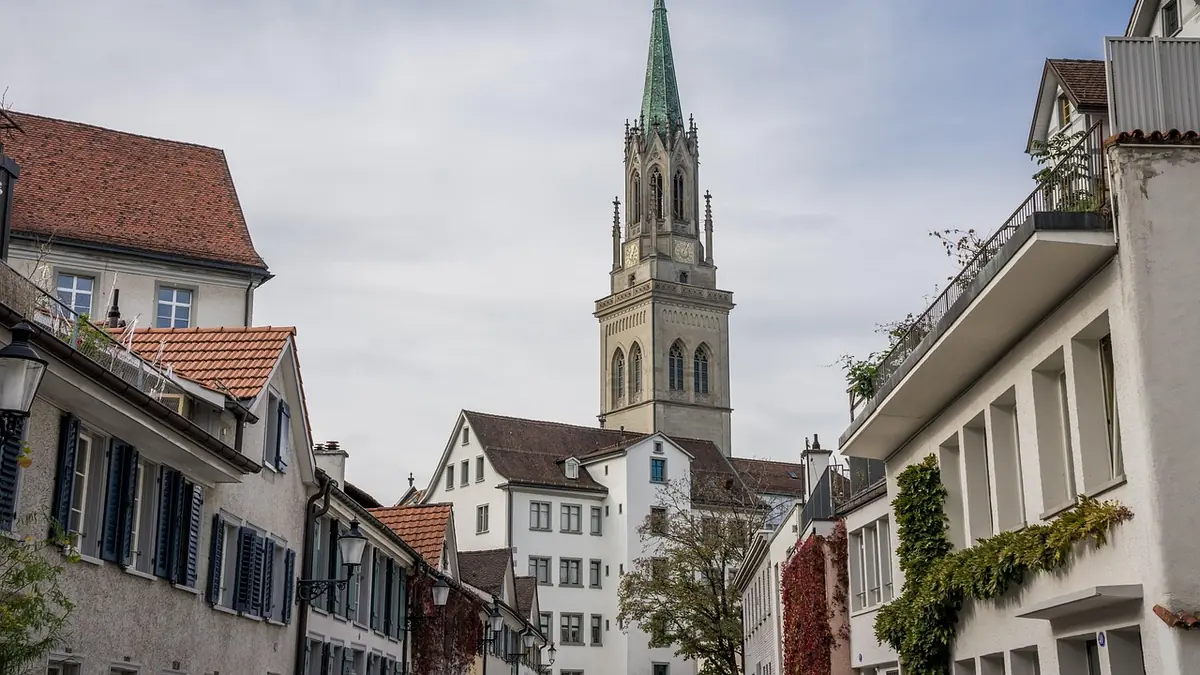
According to climatologist Reto Knutti, one in two summers will be warmer than the current one. Urgent interventions needed in cities.
Context
In brief
- One summer in two will be hotter than the current one.
- Health risks and more linked to extreme heat and drought.
- Urgent interventions needed on cities.
Key facts
- What: Future climate prospects in Switzerland.
- When: Next years.
- Where: Switzerland.
- Who: Reto Knutti, climatologist at ETH.
- Amount: Estimated economic losses of half a billion francs or more per year.
Zurich - As Switzerland prepares to face a new heatwave in the coming days, climatologist Reto Knutti warns about future prospects. "With current global climate policies, we are heading towards a world where one summer in two will be hotter than this one," says the professor of climate physics at ETH in an interview published today by Watson.
According to Knutti, the exceptional heat of the summer of 2026 is not surprising compared to the scenarios developed by MeteoSwiss and ETH. Five factors contribute to this: global warming, responsible for 60-70% in his opinion, soil drought, cleaner air and the consequent greater solar radiation, the accumulation of high pressures over Europe, and the scarcity of thunderstorms. The expert also recalls that Basel and Sion recorded over 50 days with temperatures of at least 30 degrees at the measuring stations this year.
The effects, he points out, are already heavy. Knutti speaks of hundreds of additional deaths in Switzerland this summer due to the heat and at least 35,000 victims in Europe. The drought is also worrying: agriculture has suffered, while damage to forests may only become apparent later. The heat would also have repercussions on psychological health and productivity, with losses in Switzerland estimated by the expert at half a billion francs or more per year.
…
Operational details
Practical analysis: concrete implications at national/cantonal level
Knutti's forecasts have concrete implications for Switzerland. Swiss cities will face significant challenges in adapting to climate change. Spatial planning and increased urban greenery will be crucial to mitigate the effects of extreme heat and drought.
Spatial planning and urban greenery
The «sponge city» is a concept that could become fundamental for Swiss cities. This strategy involves the use of porous materials and the creation of green spaces that can retain water and reduce the risk of flooding. In addition, urban greenery can help cool cities, improving air quality and the health of residents.
Air conditioning: a partial solution
Air conditioning could be a partial solution to dealing with extreme heat, especially in public buildings and retirement homes. However, Knutti stresses that it is not a universal solution and that it should be used with caution, also considering the environmental impact of air conditioners.
Emissions reduction
Although adaptation is necessary, Knutti recalls that reducing emissions must have the same priority. This means that climate policies globally need to be reviewed and strengthened to avoid a future where one in two summers will be warmer than the current one.
Useful tools to protect your net income
To reduce FX leakage, compare CHF-EUR exchange options and banks for cross-border workers.
Key points
Concrete actions for residents and governance
To address climate change, both residents and local authorities must take concrete measures. Here are some actions that can be taken:
For residents
- Increase private greenery: Residents can contribute by planting trees and creating gardens that can help cool their homes and improve air quality.
- Use air conditioning responsibly: While air conditioning can be useful, it is important to use it responsibly to reduce environmental impact.
For local authorities
- Urban planning: Local authorities must review urban plans to include more green spaces and porous materials that can retain water.
- Invest in green infrastructure: Create public parks and gardens that can help cool cities and improve air quality.
Understanding the economic impact of climate change
Understanding the economic impact of climate change helps to assess how much to invest in prevention. Estimated economic losses in Switzerland could reach half a billion francs or more per year, making a proactive approach necessary to mitigate these risks.
Consult resources on cost of living in Switzerland
For more information on how climate change could affect the cost of living in Switzerland, consult the resources available on our site.
Salary calculator
To calculate your net salary and better understand the impact of climate policies on your economic situation, use our salary calculator.
Source: tio.ch
Frequently Asked Questions
- What are the main causes of extreme heat in Switzerland?
- The main causes of extreme heat in Switzerland are global warming, soil drought, cleaner air and resulting increased solar radiation, the build-up of high pressures on Europe, and the scarcity of thunderstorms.
- What are the effects of extreme heat and drought on health and the economy?
- Extreme heat and drought put people's health at risk and have a significant impact on the economy. Estimated economic losses in Switzerland could reach half a billion francs or more per year.
- What interventions are needed to address extreme heat and drought?
- To deal with extreme heat and drought, cities and buildings must be rethought, intervening in territorial planning, increasing greenery and adopting the concept of "sponge cities".