Opening a business in Solothurn: costs and procedures
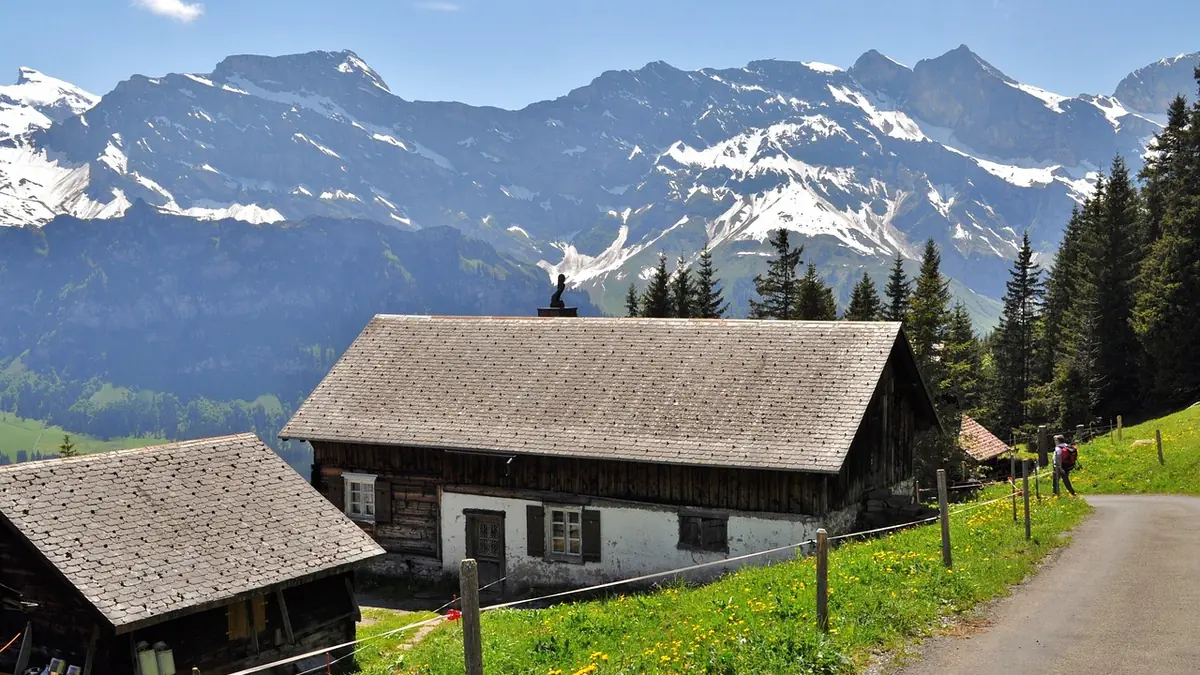
From legal forms to the costs of registration in the commercial register, insurance obligations: how to start a business in the Canton of Solothurn.
Context
In short
- Four legal forms available: sole proprietorship, LLC, Corporation, cooperative
- Mandatory registration with the federal commercial register, centralized procedure
- Minimum capital CHF 20'000 for Corporation and LLC (at least half paid before registration)
- Federal insurance obligations: AHV/AI/IPG, LAMal, LAINF, LPP
Key facts
- What: Opening and registering activities in the Canton of Solothurn
- Where: Swiss federal commercial register (managed by the cantons)
- Who: Swiss citizens, permanent residents, foreigners with work permit
- Legal forms: Sole proprietorship, LLC, Corporation, cooperative
- Minimum capital: CHF 20'000 for Corporation and LLC
- AHV/AI/IPG contributions: 5.3% employee (10.6% total with employer)
- Maximum hours: 45 hours/week (industry, offices, sales) or 50 hours other sectors
- LAMal: Mandatory insurance for residents within 3 months of arrival
Opening a business in the Canton of Solothurn means navigating a federal and cantonal administrative system with uniform national regulations. Switzerland does not have a federal minimum wage — some cantons have their own — but requires registration with the federal commercial register, choice of legal form, and compliance with mandatory insurance and tax obligations.
The four legal forms
The choice of legal structure is the first critical step. Each form has different implications for liability, taxation, and administrative complexity.
The sole proprietorship is the simplest form: the entrepreneur is a natural person, with unlimited liability for business debts. It does not require minimum capital, but personal assets remain exposed. Ideal for freelancers and professionals who want reduced initial costs.
The Limited Liability Company (LLC, or GmbH/Sàrl in other regions) limits liability to the paid-in capital. Minimum capital CHF 20'000: at least half (CHF 10'000) must be deposited in a Swiss bank before registration, the rest within 5 years. Requires at least one shareholder. It is the preferred structure for small and medium-sized businesses.
The Corporation (Corp, or AG/SA) also has a minimum capital of CHF 20'000 and limited liability, but requires more complex administrative structures: bylaws, shareholders' meeting, board of directors. Suitable for medium to large businesses.
The cooperative operates with a minimum number of members varying by canton. Each member has an equal right to vote. Common in the agricultural, craft, and commercial sectors.
Registration with the federal commercial register
Registration with the commercial register is mandatory before starting activities. The procedure is centralized at the federal level to ensure legal uniformity throughout Switzerland. Each canton manages the competent commercial register office, which collects applications and transmits them to the federal register.
Required documents vary by legal form: for a sole proprietorship, personal data and activity description are sufficient; for capital companies, bylaws, bank deposit documents, list of shareholders are needed. Processing times: approximately 2-4 weeks after submitting complete documentation. Once registered, the company receives a nationally valid business number.
Operational details
Minimum capital and registration fees
The minimum capital thresholds are set at the federal level for legal uniformity, but the registration fees for the commercial register are managed by the cantons, so they vary.
For a limited liability company, the minimum capital is CHF 20,000. At least half (CHF 10,000) must be deposited in a Swiss bank before registration. The remainder can be paid within 5 years without penalty, provided it is paid according to the company's regulations.
For a joint-stock company, the minimum capital is identical: CHF 20,000. Half must be deposited before registration.
A sole proprietorship has no mandatory minimum capital, making it a low initial cost option.
The registration fees for the commercial register in the Canton of Solothurn vary according to the legal form and the declared capital. It is advisable to contact the Solothurn Canton Commercial Register Office directly for exact amounts and updated procedures, as the rates can be reviewed annually.
The three-tier tax system
Anyone opening a business in Switzerland faces a tax burden determined by three levels of government:
Federal level: Federal direct tax (FDT) on individuals or business profits. Managed by the Federal Customs Administration. The rate is progressive and varies with income.
Canton level: Cantonal income and capital tax. In the Canton of Solothurn, it is managed by the cantonal administration. Rates vary significantly among Swiss cantons.
Municipal level: Multiplier applied to the cantonal tax. Each municipality applies its own multiplier, making the final rate variable even within the same canton of Solothurn. A common multiplier of 1.5 means that the cantonal tax is multiplied by 1.5 at the municipal level.
For a sole proprietorship, the income is taxed as personal income at the three levels. For capital companies (SA, SARL), the profit is taxed at the business level (profit taxes), and then the dividends distributed to shareholders are taxed again at the personal level. The total tax burden on a business can vary from 25% to 35% of gross income depending on the chosen legal form and specific location.
AVS/AI/IPG registration obligations for employees
Anyone hiring employees must register the company with the competent AVS/AI/IPG compensation fund for the payment of mandatory contributions. Insured employees pay 5.3% of gross salary (AVS/AI/IPG combined, including unemployment risk). The employer pays a total of 10.6% (5.3% employee + 5.3% employer).
This registration is separate from the commercial register registration and must be done within 30 days of hiring the first employee. Delay in paying contributions exposes the company to fines and retroactive recovery.
Useful planning tools
To estimate your pension strategy, use the pension planner and the pillar 3 simulator.
Key points
Federal and cantonal insurance obligations
Anyone starting a business and hiring employees must comply with mandatory federal insurance obligations.
Health insurance (LAMal): Mandatory for all residents in Switzerland within 3 months of arrival. Premiums are private, per capita, and not deductible as salary contributions. Adult deductibles range from CHF 300, 500, 1000, 1500, 2000, 2500. Each canton offers premium reductions (subsidies) based on income bracket. In the Canton of Solothurn, subsidies are managed by the cantonal administration.
AVS/AI/IPG (mandatory pension): For each employee, the employer contributes 5.3% (matching the employee's 5.3%). The total amount is 10.6% of gross salary. Included: AVS 2.2% (employee) + AI 0.7% (employee) + IPG 0.5% (employee) + Unemployment reserve 1.1% (employee) + identical percentages for the employer.
Accident insurance (LAINF/LAA): Mandatory if employees are hired for more than 8 hours per week. The rate varies by economic sector: 0.7–1.5% of gross salary. For high-risk sectors, the rate is higher. Managed by SUVA or authorized private insurers.
Unemployment insurance (AD/AC): Mandatory for employees with a salary above a minimum threshold. Total contribution 1.1% up to an annual maximum. Employee and employer pay equal shares.
Professional pension (LPP/BVG): Mandatory for employees with a coordinated salary ≥CHF 22,050 annually (figure indexed each year). Contribution rates vary by age bracket: 7% (25–34 years), 10% (35–44 years), 15% (45–54 years), 18% (55+ years up to the reference age). Managed by authorized pension funds.
Step-by-step procedure to start a business
Step 1: Choose the legal form most suitable for your business model (sole proprietorship, LLC, corporation, cooperative).
Step 2: If LLC or corporation, deposit the minimum capital (at least half of CHF 20,000) in a Swiss bank and obtain a deposit certificate.
Step 3: Register with the federal commercial register. Contact the Commercial Register Office of the Canton of Solothurn and submit complete documentation (articles of association for companies, identity document, list of shareholders, bank certificate, activity description).
Step 4: Wait for approval (approximately 2-4 weeks). Once registered, you will receive a nationally valid business number.
Step 5: Register with the competent AVS/AI/IPG compensation fund for the Canton of Solothurn, providing the business number and employee details. This must be done within 30 days of hiring the first employee.
Step 6: If not already insured, take out LAMal within 3 months of arrival (for residents). Contact a health insurance fund in your canton and choose the deductible model.
Step 7: If you hire employees, register for LAINF/LAA with SUVA or an authorized private insurer, providing the business number and activity description.
Step 8: If the expected turnover exceeds CHF 100,000 annually, register for VAT with the Federal Customs Administration. The standard VAT rate is 7.7%.
Step 9: Open a business bank account with a Swiss bank to separate personal and business funds.
Step 10: Declare the start of the business to the tax administration of the Canton of Solothurn for cantonal and municipal taxation.
Planning the initial budget
To calculate the tax burden (IFD, cantonal and municipal tax), AVS/AI/IPG contributions, LAMal, and other insurance costs, use our salary calculator. If you plan to hire employees, the tool also shows the total labor cost. For in-depth pension planning beyond AVS/AI/IPG, consult the guide on professional pension. If you have questions about the annual tax return, our national portal offers forms and clarifications for entrepreneurs.
Frequently Asked Questions
- Do I need to register my sole proprietorship with the Trade Register?
- Yes, it is mandatory. Anyone who exercises professional economic activity autonomously and independently must register with the Federal Trade Register before starting the activity. The registration has national validity. No minimum capital is required for a sole proprietorship, but registration remains mandatory. Contact the Commercial Registry Office of the Canton of Solothurn for forms and procedure.
- What minimum capital is needed to open a SARL?
- The minimum capital for a Limited Liability Company is CHF 20,000. At least half (CHF10,000) must be paid into a Swiss bank before registration and proven with a bank certificate. Residual capital can be paid up within 5 years. This threshold is set at the federal level for legal uniformity throughout Switzerland.
- How much are the registration fees in the Canton of Solothurn?
- The registration fees vary according to the legal form and the declared capital. There is no fixed national figure; each canton sets its own tariffs. In the Canton of Solothurn, I advise you to contact the Cantonal Trade Register Office directly (or consult the cantonal website) for the exact amounts and any benefits for new businesses. Rates may vary annually.
- What are the main insurance obligations for those who hire employees?
- The main federal obligations are: (1) AVS/AI/IPG: 5.3% employee and 10.6% total with employer contribution; (2) LAMal: compulsory insurance within 3 months for residents (per capita premiums, NOT deductible as salary contributions); (3) LAINF/LAA: accident insurance 0.7-1.5% of the salary according to the sector; (4) AD/AC: unemployment insurance 1.1% up to the annual maximum. If the coordinated salary exceeds CHF 22,050, occupational pension (LPP) with rates of 7-18% according to the employee's age is also mandatory.
- Does the Canton of Solothurn have a cantonal minimum wage?
- Switzerland does not have a federal minimum wage. Some Swiss cantons have adopted it (e.g. Geneva, Neuchâtel, Basel-City), others have not. For the Canton of Solothurn, I recommend checking directly with the cantonal administration or the relevant labour department if there is a cantonal minimum wage, to which sector it applies, and what the current amounts are. The thresholds change periodically.