SEM reopens the Niederscherli facility: 120 beds
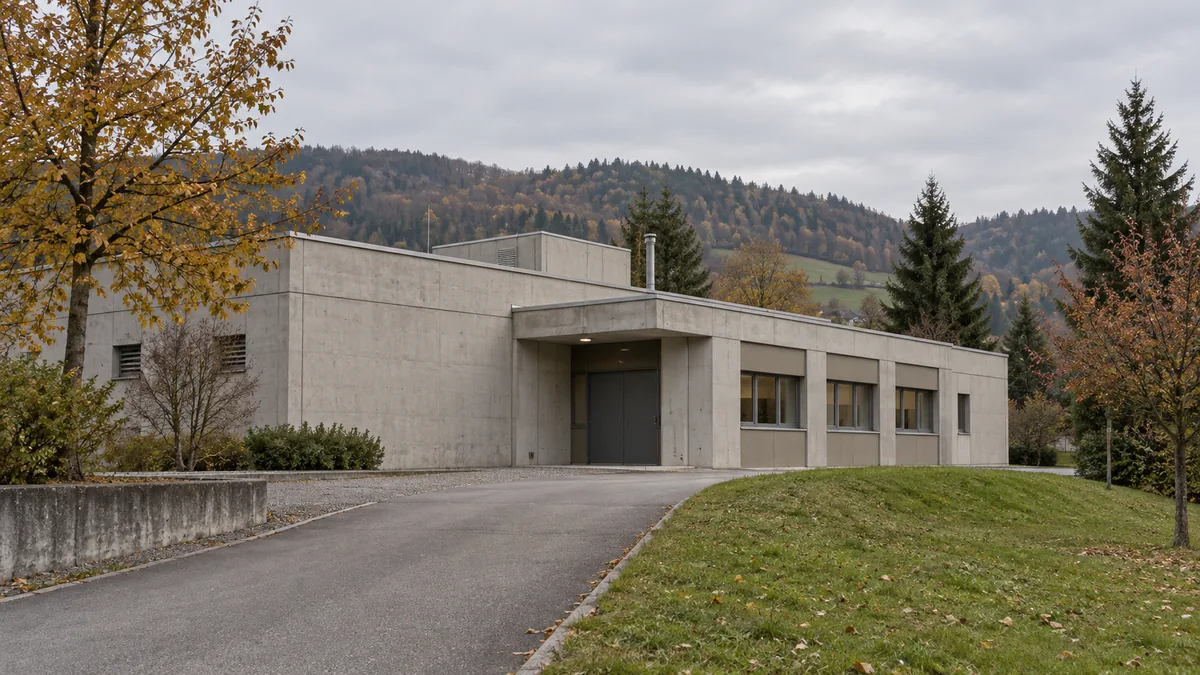
SEM reopens Niederscherli (BE) in mid-November.
Context
TL;DR
- SEM reopens Niederscherli (BE) in mid-November.
- The facility has 120 beds.
- New applications are rising slightly for seasonal reasons.
- Forecast for the end of 2026: 22 000 asylum applications; 10 000 concern S status.
Key facts
- Decision → State Secretariat for Migration (SEM)
- Location → Niederscherli, Municipality of Köniz (BE)
- Reopening → mid-November
- Capacity → 120 beds
- Primary destination → Ukrainian refugees
- Forecast for the end of 2026 → 22 000 asylum applications; 10 000 concern S status
- Closed centers → six, in June 2026
- Condition → closure of Niederscherli when applications start falling again
The reopening announced by SEM
On October 15, 2026, from Bern-Wabern, the State Secretariat for Migration (SEM) announced the temporary reopening of the civil protection facility in Niederscherli, in the Municipality of Köniz (BE). The opening is scheduled for mid-November and provides 120 beds. The facility is intended primarily for Ukrainian refugees.
The decision comes after a slight increase, linked to seasonal factors, in the number of new asylum applications. The SEM points out, however, that the level remains contained and markedly lower than last year. The decline had made it possible to close six federal asylum centers in June 2026.
The reopening is not presented as a permanent expansion of the network. If the need for places should grow, the SEM can arrange additional beds by increasing occupancy density in other federal asylum centers. For the Niederscherli facility and any densification measures, the administration will proceed in consultation with the authorities of the municipalities concerned.
The plan also contains a return condition. As soon as the number of new applications starts falling again, the SEM will close Niederscherli again. For the time being, reopening other reception facilities is not planned.
The timetable indicated by the SEM unfolds in three stages: the reopening in mid-November, the quantitative estimate for the end of 2026 and the condition concerning the centers already closed, which extends at least into the summer of 2027. According to the SEM, around 22 000 asylum applications and around 10 000 applications concerning S status are expected by the end of 2026. The six centers closed in June 2026 will remain inoperative at least until the summer of 2027, provided that the number of new applications evolves as expected.
Operational details
A capacity that adapts to demand
To understand the decision in operational terms, the key point is the flexibility of reception capacity. SEM does not describe a general reopening of the centers closed in June: it identifies a specific facility, with a defined capacity, and leaves open the possibility of increasing the number of places in other centers if needed. The comparison between the announced steps is as follows:
| Scenario | Planned measure | Condition |
|---|---|---|
| New applications showing slight seasonal growth | Reopening of Niederscherli | Mid-November and 120 beds |
| Need for additional capacity | Densification in other federal asylum centers | Agreement with the municipalities concerned |
| New applications declining | New closure of Niederscherli | No other facility planned for now |
| Developments in line with forecasts | Six centers closed in June remain inoperative | At least until summer 2027 |
The picture compares a temporary response with a longer-term perspective. The Niederscherli facility is intended to address the slight seasonal increase without turning the forecast into a program to reopen all the centers. The source specifies that no additional facilities are currently planned to reopen and that the six closed centers will remain inoperative at least until summer 2027, if the expected developments are confirmed.
The numbers should also be read separately. The 120 beds describe the capacity of the facility becoming operational again; the 22 000 asylum applications and 10 000 applications for S status, on the other hand, are SEM's estimate for the end of 2026. Treating them as equivalent would lead to confusion between available places and projected applications.
The role of the municipalities concerned
The reopening of Niederscherli and any densification in the other centers will be implemented in agreement with the authorities of the municipalities concerned. Coordination with the local area is therefore part of the measure described by SEM.
For the reader, the practical implication is to follow the sequence, not just the overall number. Seasonal growth may activate temporary places; a decline in new applications leads to the closure of the facility; the absence of a new announcement, by contrast, means that the plan for the six closed centers remains in force. Planning remains tied to the trend in applications and the conditions set out by SEM.
Key points
How to follow developments
Anyone wishing to follow the matter in concrete terms can turn the announcement into a series of checks, without confusing the different deadlines.
Five steps to monitor
1. Start with the operational date. The reopening is planned for mid-November: the first element to verify is therefore the temporary activation of the Niederscherli facility, not the reopening of the six centers closed in June.
2. Identify the capacity involved. The reference is the civil protection facility in the Municipality of Köniz (BE), with 120 beds, intended primarily for Ukrainian refugees. This defines the scope of the measure described by SEM.
3. Check for possible densification. If additional places are needed, SEM can arrange extra beds in the other federal asylum centers by modifying the available spaces. This operation should be considered together with coordination with the authorities of the municipalities concerned.
4. Check the trend in applications. The criterion indicated for closure is a return to a decrease in the number of new asylum applications. When this condition occurs, SEM will close Niederscherli again according to the announced plan.
5. Keep the two time horizons separate. By the end of 2026, SEM expects approximately 22 000 asylum applications and approximately 10 000 applications relating to S status; for the six centers closed in June 2026, the indicated horizon extends at least to summer 2027, provided the number evolves as expected.
This framework makes it possible to interpret updates without turning a temporary measure into a definitive decision. The source does not announce any additional reception facilities for the time being. Mid-November concerns the start, while the closure of Niederscherli is linked to a return to a decline in new applications.
To follow the matter, it is therefore advisable to compare each update with three elements: available capacity, the use of densification and any decline that would trigger the closure of Niederscherli. These are the indicators explicitly linked by SEM to the management of bed capacity.
Source: admin.ch
Frequently Asked Questions
- When will the Niederscherli facility reopen?
- SEM expects reopening in mid-November. The civil protection facility is located in Niederscherli, in the municipality of Köniz (BE), and has 120 beds. It is intended primarily for Ukrainian refugees. The statement links the decision to the slight seasonal increase in new asylum applications, while the overall number remains significantly lower than in the previous year.
- Why is SEM reopening Niederscherli?
- The reopening is in response to a slight seasonal increase in new asylum applications and the resulting need for additional accommodation capacity. SEM's estimate for the end of 2026 remains around 22 000 asylum applications and 10 000 S status applications. The statement also specifies that new applications remain significantly lower than last year.
- Could additional beds become available?
- If necessary, SEM can provide additional beds by increasing the density of spaces in other federal asylum centers. The reopening of Niederscherli and any densification measures will be carried out in consultation with the authorities of the municipalities concerned. For the time being, no further reception facilities are planned to reopen.
- When will the facility be closed again?
- As soon as the number of new asylum applications begins to decrease again, SEM will close Niederscherli again. The six federal asylum centers closed in June 2026, on the other hand, will remain out of operation at least until summer 2027, provided that the trend in the number of new applications corresponds to forecasts.