Lugano and trading: steel oligarchs on Lake Ceresio
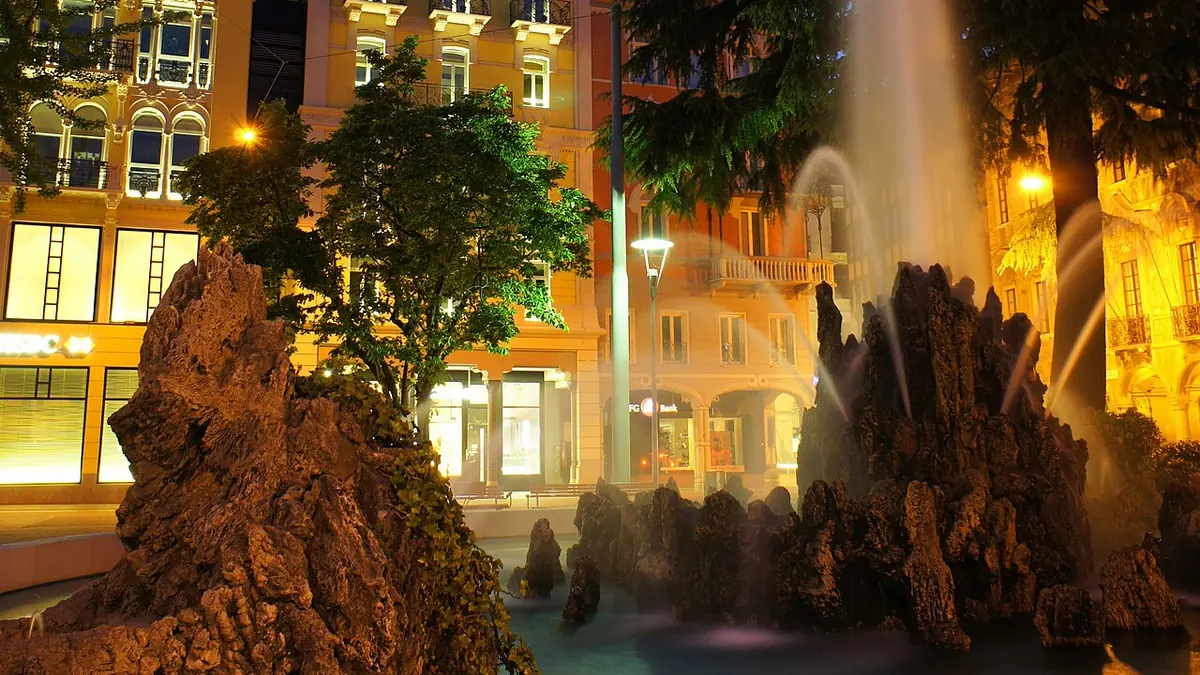
The third episode on trading reconstructs the journey from Lugano-based companies amid the post-USSR chaos to Russian and Ukrainian steel tycoons settled on Lake Ceresio.
Context
In brief
- Third episode dedicated to trading in Lugano
- Lugano-based companies do business amid post-USSR chaos
- Russian and Ukrainian steel magnates on the Ceresio
Key facts
- What → trading
- Location → Lugano and Ceresio
- First phase → business dealings of Lugano-based companies amid post-USSR chaos
- Second phase → settlement of Russian and Ukrainian steel magnates
The third episode in the series on trading places Lugano at the center of an economic story linked to the wild East. The source’s outline is clear: first, Lugano-based companies do business amid post-USSR chaos; then Russian and Ukrainian steel magnates settle on the Ceresio.
The first part concerns the movement of the companies. The available material contains no names, amounts or dates: the documented fact is the activity of Lugano-based businesses amid post-USSR chaos. The second part shifts the point of observation. It is no longer the companies moving toward a business environment; it is the Russian and Ukrainian steel magnates settling on the Ceresio. The sequence is therefore the heart of the episode.
The sequence of the story
Lugano initially appears as the place from which local companies trade amid the disorder described by the source. It later becomes the place where Russian and Ukrainian steel magnates settle. The story thus brings together two distinct movements: that of economic activities and that of the settlement of the steel magnates.
The title evokes steel mills, wars and oligarchs, but the text provided does not develop individual episodes or describe specific transactions. For the Swiss reader, the verifiable point remains the connection between the Lugano financial center and the economic world of the East evoked by the story. It does not indicate whether the business dealings involved a particular company, or what the scope of the settlements was.
This delimitation matters. The source does not attribute decisions to an authority, announce a new measure or offer figures to be applied to wages, taxes or the cost of living. It recounts a trajectory: first, Lugano-based companies operate amid post-USSR chaos; then Russian and Ukrainian steel magnates choose the Ceresio as a place to settle. Names, dates, amounts and further consequences remain outside the available material. The scope is therefore precise, but it does not allow further details about the activities or settlements described to be reconstructed.
Operational details
An economic reading without additions
The most concrete economic link is not a figure, but the succession of two roles. Lugano-based companies are associated with the phase of business in the post-USSR chaos; Russian and Ukrainian steel magnates with the phase of settling on Ceresio. To analyze the history without extending it beyond the source, it is advisable to keep these two levels separate.
| Dimension | What the source says | What it does not say | | Activity | Lugano-based companies do business | Does not indicate names, amounts or transactions | | Settled subjects | Russian and Ukrainian steel magnates | Does not indicate names, dates or number | | Space | Lugano and Ceresio | Does not extend the account to other places |
The comparison also clarifies the limit of the analysis. The source describes a link between economic activity and settlement, but does not quantify the result. The sequence cannot be turned into an estimate of turnover, a figure on the labor market or a measure of the effect on residents' lives. The elements needed to do so are missing.
For a national audience, this means reading the story as a history of economic relations concentrated in Lugano, not as the announcement of a new Swiss rule. The material does not discuss taxes, wages, housing, insurance or public decisions. Consequently, it does not make it possible to establish whether and how business or settlements changed these areas.
The boundary between fact and interpretation
The fact is the indicated trajectory: first the Lugano-based companies, then the steel magnates on Ceresio. The permissible interpretation is that the episode links a business center and a personal presence. Everything beyond that, such as the identification of assets, companies, banks or economic benefits, would require information that does not appear in the material provided.
Even a reader who wants to compare the story with the present must keep the two levels distinct. comparatore CHF/EUR may serve for a general monetary comparison, but the source does not indicate amounts or currencies. costo della vita in Svizzera concerns another verification and cannot be derived from this reconstruction. They are reference tools, not additional evidence about the account.
Useful tools to protect your net income
To reduce FX leakage, compare CHF-EUR exchange options and banks for cross-border workers.
Key points
A four-step verification
For those who want to use the reconstruction in an economic in-depth analysis or in a discussion about Switzerland, the procedure must start from the data actually available. The source is sufficient to identify a sequence, not to compile a dossier on people, companies or amounts.
From the text to the record
1. Define the scope. Note that this is the third episode on trading and that the places indicated are Lugano and Lake Ceresio. 2. Separate the subjects. Write in one column the Lugano-based companies, associated with business dealings amid the post-USSR chaos, and in another the Russian and Ukrainian steel tycoons, associated with settling on Lake Ceresio. 3. Mark the limits. Leave blank the fields relating to names, dates, amounts, specific transactions and consequences, because the available material does not provide them. 4. Avoid deductions. Do not turn the account into news about taxes, salaries, housing, banks or public measures: none of these elements is described in the source.
This sequence is also useful for the individual reader. If the goal is to understand whether the story changes a personal choice, the first check is to ask what specific data would be needed. A tax assessment would require tax information; an income assessment would require amounts; a territorial assessment would require information about settlements. None of these details is present in the text provided.
The same criterion applies to online comparisons. A dichiarazione delle imposte cannot be compiled starting from this reconstruction alone, just as an income comparison cannot be inferred from the reference to the companies' business dealings. The content does, however, make it possible to establish the two steps without adding names or numbers. For a personal comparison about income, use the calcolatore stipendio.
Source: laregione.ch
Frequently Asked Questions
- What does the third episode say about trading in Lugano?
- The third episode tells of two phases: first the Lugano companies do business in the post-Urss chaos; then the Russian and Ukrainian steel masters settle on Ceresio. The source therefore presents Lugano both as a place connected to trading activities and as a place of settlement. The material provided does not add company names, digits, dates or details on individual transactions.
- Which parties are identified in the matter?
- The first group indicated is formed by the Lugano companies, associated with business in the post-Urss chaos. The second is composed of the Russian and Ukrainian masters of steel, described as people who settle on Ceresium. The source does not identify the individual subjects and does not specify the number of companies or owners involved.
- Does the source indicate effects on taxes, wages, or the cost of living?
- No. The available material does not indicate company or person names, dates, amounts, specific transactions, or effects on taxes, wages, and cost of living. For this reason, the story can only be described in its two essential passages: the affairs of the Lugano companies in the post-Urss chaos and the settlement on Ceresio of the Russian and Ukrainian masters of steel.