Because the heat drives up prices and climate inflation (cross-border guide)
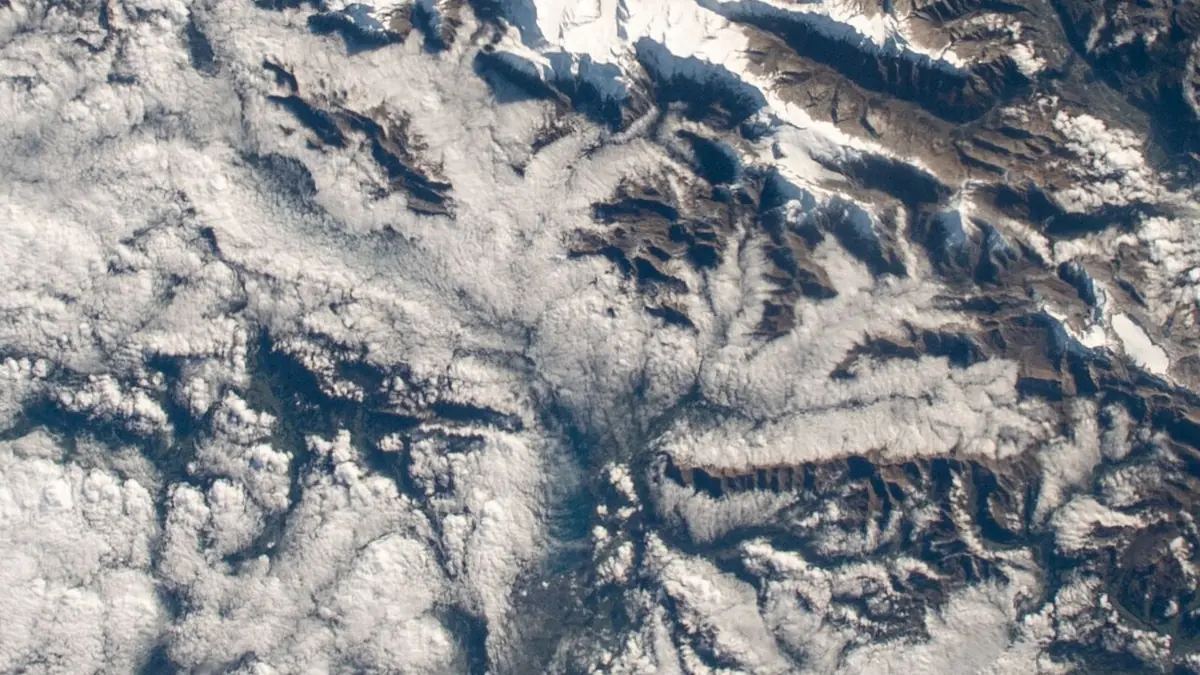
From the Rhine drought to the shopping cart, climate change creates new inflation and forces central banks to act.
Context
In a nutshell
- The scarcity of goods due to drought increases prices.
- Food costs in supermarkets are expected to rise.
- Central banks are studying new control tools.
- The cost of food could go up between 1.5% and 1.8% per year.
Key facts
- What: Climate inflation and rising prices
- When: Starting next year
- Where: Switzerland and Europe
- Who: Central banks and ECB
- Amount: 2% (inflation threshold), 3% (Eurozone inflation in 2027), 1.5% and 1.8% (food cost increase), 6% (goods on the road)
One of the fundamental laws of economics states that the scarcity of a good increases its price. This rule applies today to various products, from fuels to agricultural ones, due to the drought affecting Europe. Experts predict that as a result of the so-called climate inflation that in recent weeks in Switzerland has already had its impact on the price of fuels, the cost of shopping in supermarkets will increase starting next year. In the past, the war in the Middle East has put a lot of pressure on prices. That conflict has led to an increase in energy and fertilisers. Today the main concern is climate change. Water scarcity across Europe reduces harvests and drives up prices. Global warming could cause worse damage than wars.
With the Italian translation of the English Climateflation you
Operational details
The critical impact on agriculture and crops
The lack of rainfall for prolonged periods and heat waves also have a significant impact on agriculture in both Switzerland and much of Europe. The effects, although not yet fully quantifiable, are already measurable on pastures, crops, farms, pastures and the availability of fodder, resulting in increased costs for the entire production sector. Summer crops, in particular maize, potatoes, sugar beets and sunflowers, are among the most affected by the prolonged summer drought. Recently it was learned that more than 1,100 farms have already reported drought damage to Hail Switzerland, the company that protects the sector in case of weather adversity. The situation is so serious that it has led the Confederation to grant extraordinary support to the Swiss agricultural sector to mitigate the economic losses suffered by local producers.
This contraction in agricultural supply fits into a broader economic framework in which the ECB and international financial institutions closely monitor signals coming from food commodity markets. The lack of land products and climate inflation in general are of great concern to central banks, starting with the European one. Until now, financial institutions have considered these increases as isolated events, without implementing targeted interventions
Useful tools to protect your net income
To reduce FX leakage, compare CHF-EUR exchange options and banks for cross-border workers.
Key points
Strategies and tools to deal with rising prices
Faced with this economic scenario characterised by climate inflation and generalised increases affecting the food supply chain and fuels, consumers and economic operators must carefully evaluate their financial and spending strategies. To monitor the evolution of the cost of living, the impact of inflation on your purchasing power and to better plan family expenses or manage your budget in Switzerland, you can regularly consult the economic analysis tools available online. If you want to check how costs vary and plan your personal finances based on economic and salary changes, you can use the calcolatore stipendio to get a clear picture of your net income.
Financial planning becomes critical in a context where the prices of basic goods, fuels and agricultural products are under upward pressure due to drought and climate change in Europe. Swiss families are called upon to manage their household budget more carefully, taking into account the price increases announced for next year in supermarkets and the transport costs related to the difficulties of navigating the Rhine. In addition to the economic calculation tools, it is advisable to follow the evolution of federal policies and the extraordinary support granted by the
Source: rsi.ch
Frequently Asked Questions
- What is the climate inflation mentioned by the experts?
- The Italian translation of the English Climateflation refers to the increase in prices caused by the physical effects of climate change on the economy, as explained by Isabel Schnabel of the ECB.
- What are the sectors most affected by drought in Europe and Switzerland?
- The hardest hit sectors are river logistics, due to the exceptionally low level of the Rhine holding back freight transport, and agriculture, with estimated damage to summer crops such as corn, potatoes, sugar beets and sunflowers.
- What predictions do central banks make about food inflation?
- ECB Chief Economist Philip Lane predicts rising food inflation. Oxford Economics estimates a 3% rise in the Eurozone in 2027, while an ECB and Potsdam Institute study forecasts annual increases between 1.5% and 1.8% by 2035.
Related articles
- All articles: Franc and prices
- Inflazione climatica: perché il caldo fa salire i prezzi in Svizzera
- Emergenza climatica: il dibattito sul Piano energetico ticinese
- Caldo non frena i consumi di carne ma la siccità potrebbe far salire i prezzi
- Di più Svizzeri chiedono misure contro riscaldamento climatico
- Frontaliere: strategie pratiche cambio euro-franco svizzero