Nursery in Geneva: cantonal fees and subsidies
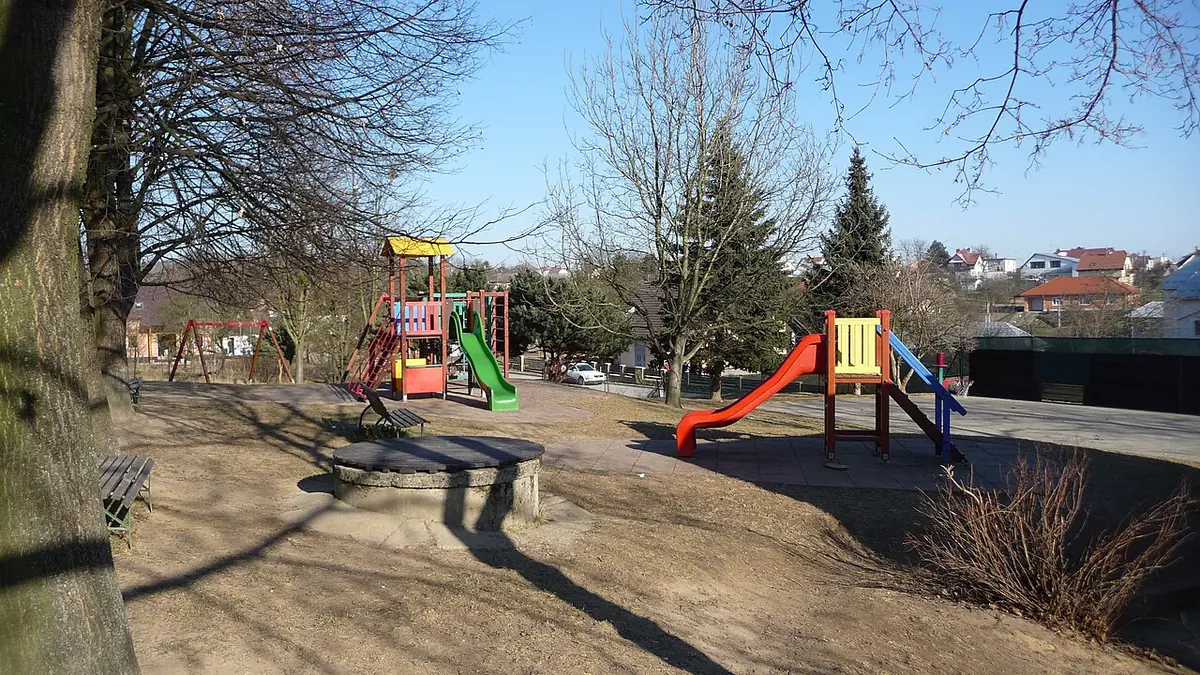
In Geneva kindergartens, day families and after-school have modulated rates on taxable income. Cantonal subsidies reduce the share borne by families.
Context
In a nutshell
- Extra-family custody in Geneva: modulated rates on family taxable income
- Cantonal subsidies available to reduce the actual cost of facilities
- Nurseries, day families and after-school are part of the canton's official network
- The application is submitted to the competent cantonal service before the start of the service
Key facts
- What : Cantonal childcare fee scheme based on income and family composition
- When: Not yet specified in the source for the year of entry into force of the barème
- Where: Canton of Geneva, recognized custodial facilities in the territory
- Who: Resident families with children of custodial age, beneficiaries of cantonal subsidies
- How it works: Progressive calculation linked to taxable income, with subsidies that reduce the share borne by the family
- Types covered: Kindergartens, day families and after-school
The Canton of Geneva organizes the custody of children through a network of recognized structures — nurseries, day families and after-school services — whose cost for families is not fixed, but calculated with a progressive system linked to taxable income and the composition of the family unit. The declared objective of the cantonal tariff mechanism is to make custody accessible also to families with medium-low incomes, modulating economic participation on the basis of effective contributory capacity.
The calculation of the
Operational details
The logic of the Geneva model reflects a principle widespread throughout the Confederation: childcare is considered a service of public interest, and its funding combines family participation with subsidiary intervention by public authorities. The income-based sliding-scale tariff prevents the cost of childcare from becoming a barrier to employment for families with young children, a topic also central to federal debates on female employment and the cost of living.
In practical terms, two families with children of the same age, living in the same neighbourhood and enrolled in the same facility may pay very different amounts. The difference depends entirely on declared taxable income and family composition. A single-earner family with one child enrolled full-time in a nursery will have its contribution calculated on disposable income after deductions, while a dual-earner household will be placed in a higher tariff bracket, for the same number of childcare hours.
Comparison between the three childcare arrangements
The three main forms of extrafamilial childcare recognised in Geneva meet different needs and have different hidden costs for the community. The nursery (asilo nido) welcomes pre-school-age children with qualified educational staff and generally extended hours. Day family care (famille de jour) offers care in a family setting, with a limited number of children and more flexible hours. The after-school care (parascolaire) is intended for school-age children and covers the afternoon slots.
From the perspective of family finances, the cantonal subsidy reduces net expenditure in inverse proportion to income: the lower the taxable income, the higher the share covered by the subsidy. The mechanism makes the cost of childcare comparable, proportionally, between families in different income brackets, even though the absolute figure remains different.
Hypothetical calculation scenario
Let us assume a family with two children enrolled in a nursery and an after-school programme. The household taxable income places the family in a middle tariff bracket. The daily rate charged by the facility is not paid in full by the family: the cantonal subsidy covers the difference between the full cost of the service and the share borne by the parents as determined by the sliding scale. The result is a lower monthly childcare expenditure than the same family would face in the absence of the progressive mechanism.
Recommended tools
For an updated estimate, use the net salary calculator and the CHF-EUR exchange comparator.
Key points
To access the reduced tariff regime and cantonal subsidies for childcare in Geneva, resident families must follow a precise procedure, managed entirely by the cantonal administration. The application must be submitted before the start of the service at the designated cantonal counter, which verifies the requirements and calculates the applicable rate.
Step-by-step application procedure
The first step consists of gathering income and family documentation: recent tax return, certification of household members, and proof of residence in the Canton of Geneva. The second step is choosing a childcare facility recognized by the canton — nurseries, day families, or after-school care — and agreeing on the attendance calendar and schedule with them.
The third step involves submitting the subsidy application to the competent cantonal office, attaching the documentation collected and the contract or enrollment confirmation with the facility. The cantonal administration calculates the applicable rate based on taxable income and family composition, and communicates to the family the amount of the share to be paid and the extent of the subsidy.
The fourth step concerns payment: the family pays the facility only the share determined by the cantonal calculation, while the subsidy is paid directly to the facility or to the family according to the methods provided by the canton. Any significant change in family income or household composition must be communicated promptly for the rate to be redetermined.
Deadlines and updates
The tariff regime and subsidy criteria are periodically updated by the canton. Families already receiving benefits must submit an annual income declaration to maintain the right to the reduced rate. Failure to meet deadlines may result in the restoration of the full rate until the situation is regularized.
📊 To navigate the cost of living in Switzerland and simulate the impact of childcare on the family budget, the net salary calculator tool helps assess the actual contributory capacity after mandatory salary deductions.
For those dealing with choosing a facility, the page dedicated to childcare in Switzerland provides useful information on quality criteria for nationally recognized facilities and on cantonal differences.
Official sources: Cantonal tax multipliers and rates (FTA)
Frequently Asked Questions
- How does the childcare fee scheme in Geneva work?
- In the Canton of Geneva, the recognized structures — kindergartens, day families and after-school — apply a progressive rate linked to family taxable income and the composition of the nucleus. The share borne by parents grows with income, while families with medium-low incomes can benefit from a reduced rate or full coverage through the cantonal subsidies provided for extra-family custody.
- What types of custody are recognized by the canton?
- The network recognized by the Canton of Geneva includes three main formulas: the kindergarten, for preschool children with qualified educational staff and generally extended hours; the daytime family, which offers custody in a family context with more flexible schedules; the after-school, intended for school-age children for the afternoon bands.
- How do I apply for Cantonal Custody Allowance?
- The application for the subsidy must be submitted before the start of the service at the competent cantonal office, attaching the required income and family documentation and confirmation of registration with a recognised structure. The cantonal administration calculates the applicable rate and informs the family of the amount to be paid and the amount of the subsidy. Any significant change in income or household composition must be reported promptly.
- How much does a family pay with the full rate?
- Families who do not qualify for the subsidy pay the full rate set by the facility. This amount varies depending on the type of service (nursery, daytime family, after-school), the age of the child and the number of days of weekly attendance, according to homogeneous criteria applied by the structures belonging to the cantonal network.
- How often should the subsidy application be updated?
- The tariff regime and the subsidy criteria are updated periodically by the canton. Already-eligible households must file an annual income tax return to maintain entitlement to the reduced rate. Failure to meet deadlines may result in reinstatement of the full rate until the position is regularized.
Related articles
- All articles: Family and school
- Asilo nido Zugo: tariffe progressive e sussidi per le famiglie
- Asilo nido Basilea Città: costi e sussidi
- Custodia bambini Appenzello Esterno: tariffe, sussidi e deduzioni
- Asilo nido San Gallo: tariffe, sussidi e procedura
- Asilo nido e custodia bambini nel Canton San Gallo: costi