Buying Zug house: prices, mortgage and costs
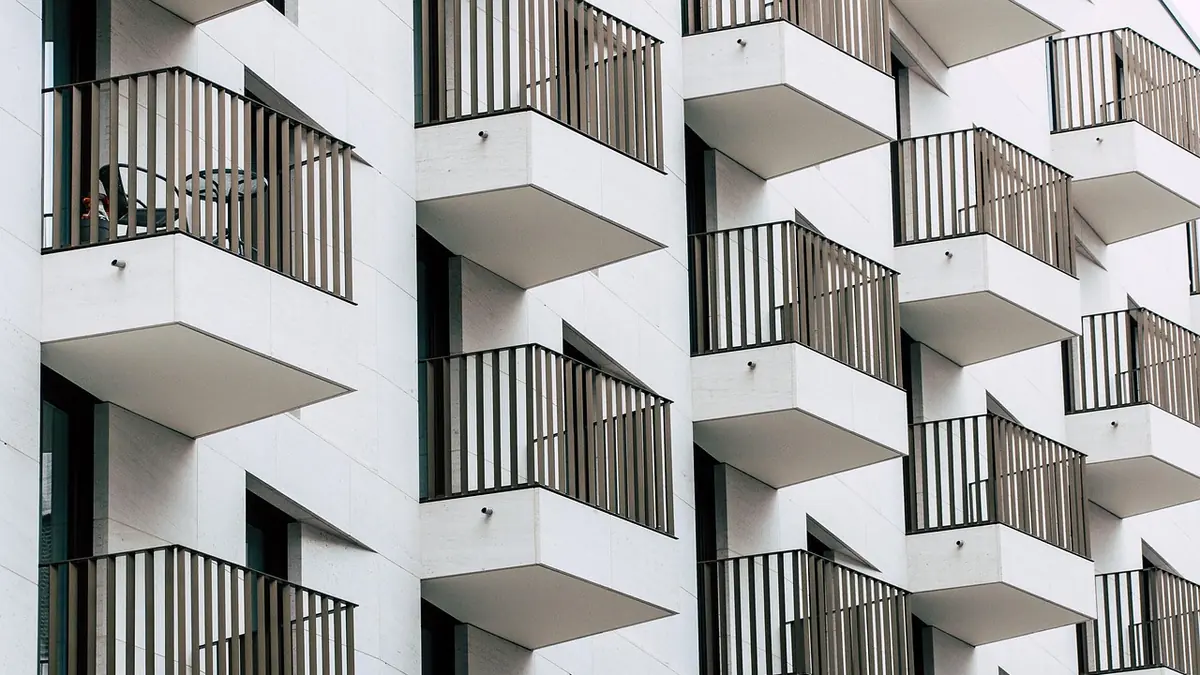
Complete guide to buying real estate in the Canton of Zug: transfer costs, own funds, mortgage loan and cantonal taxes.
Context
In brief
- Buying a house in Switzerland requires equity capital and an assessment of mortgage affordability.
- The transfer tax and notary fees vary by canton and municipality; the Canton of Zug follows its specific cantonal regulations.
- Real estate taxation involves three levels: federal (DIT), cantonal and municipal, with different multipliers for each jurisdiction.
Key facts
- What: Property purchase in Switzerland through a federal and cantonal administrative procedure
- Tax levels: federal DIT + cantonal + municipal (each canton has its own multipliers)
- Competences: FTA/ESTV manages the DIT; cantonal administrations manage local taxes
- Essential requirement: Equity capital to access bank mortgages
- Actors: Notary, banks, Land Registry, cantonal tax offices
- Reference rate: SNB sets the national key rate for mortgages
Three levels of taxation in the purchase process
Buying a house in Switzerland involves a complex interaction between three administrative levels: federal, cantonal and municipal. The taxation burden on real estate transactions reflects this three-pillar structure. At the federal level, the direct federal tax (DIT) applies, which targets the income and capital of property owners. At the cantonal and municipal level, complementary taxes apply to the transfer of real estate ownership.
In the Canton of Zug, as in every Swiss canton, the transfer tax is governed by specific cantonal laws. The cantonal administration sets rates, exemption thresholds and the collection procedure; municipalities can add their own local multiplier. This means that two property purchases of the same economic value, carried out in different cantons, will generate significantly different tax burdens.
The FTA (Federal Tax Administration) and the ESTV (Conference of Cantonal Finance Directors) coordinate the tax system at the national level, but cantonal laws remain sovereign with regard to local taxes. Those buying a house in the Canton of Zug must therefore consult the cantonal tax office to find out exactly the charge applicable to the transfer of ownership in their municipality.
Equity capital and mortgage access: affordability assessment
A central aspect of buying property in Switzerland is the availability of equity capital and the financial capacity to service the mortgage over time. Swiss banks require a minimum amount of equity capital — defined by each institution's lending policy — before granting a mortgage for the acquisition of a residential property. Mortgage affordability is assessed on the basis of the buyer's income and their ability to make monthly payments over decades. A salary calculator can help estimate the net disposable income and the capacity to service the mortgage.
This assessment process is national — it follows Swiss banking standards and guidelines issued by the Swiss National Bank (SNB) — even though each bank applies its own selection criteria and interest rate pricing. Those intending to acquire a home in the Canton of Zug must therefore present a solid financial plan to local banks, or to institutions elsewhere in Switzerland, to access financing.
Operational details
The role of the notary and transfer fees
The transfer of real estate ownership in Switzerland is governed by federal law (Code of Obligations, CO) and by complementary cantonal regulations. The deed of sale — the public transfer document — must be drafted and signed before a notary, whose task is to verify the identity of the parties, the absence of undeclared mortgage debts, and the formal regularity of the contract. Notary fees are borne by the buyer and vary by canton: each canton has its own notary tariffs set by local legislative decrees.
Alongside notary fees, there are administrative charges related to the transfer of ownership rights at the Land Registry office (municipal/cantonal jurisdiction). These amounts also depend on the value of the property and on local regulations. There is no single federal tariff; each canton defines its own collection procedures.
Mortgage loan and interest rates
The mortgage loan is the main financing instrument for the purchase of residential properties in Switzerland. Once the property has been identified and the required documentation has been collected (pay slips, bank statements, tax returns), the client negotiates the interest rate and the term of the loan with the bank. The Swiss National Bank (SNB) sets the reference rate (key rate) of Swiss monetary policy; mortgage rates follow correlated movements, but each bank applies its own spread and its own commercial policy.
A hypothetical situation: a buyer who has sufficient own funds and a stable income can negotiate a fixed-rate mortgage for 10–20 years. During this period, the mortgage service — the monthly payment of principal and interest — remains constant. Once the term expires, the borrower will need to renegotiate the mortgage or repay the debt using other sources. Contact the Swiss banks in the Canton of Zug or in your area to discuss the available financing options and current rates.
Before signing: energy assessment and technical survey
Before signing the purchase contract, a prudent buyer requests a technical survey of the property to verify its structural condition, plumbing and electrical systems, and other structural risk factors. Moreover, Switzerland has introduced energy efficiency requirements: every building must declare its energy status according to cantonal regulations (which can vary significantly). These checks are not uniformly imposed by federal law, but they are advisable and sometimes required by banks as a condition for financing. The technical survey protects the buyer from hidden renovation costs and allows for a more realistic assessment of the economic sustainability of the investment.
Recommended tools
For an updated estimate, use the net salary calculator and the CHF-EUR exchange comparator.
Key points
Step-by-step procedure for purchasing a property
1. Search and negotiation: Identify the property through a real estate agent or online portal, and negotiate the price with the seller. This phase has no federal deadlines — it is purely commercial.
2. Bank pre-qualification: Contact one or more banks and request a mortgage pre-qualification. The bank will verify your income, existing debts, and available own funds, and will communicate the maximum amount that can be financed.
3. Purchase offer: Once the price has been agreed upon, the client or the agent drafts a written offer (sometimes it is a purchase promise subject to various conditions, including financing). The offer defines the price, the delivery date, and any suspensive conditions.
4. Verification of ownership at the Land Registry: Before committing, the buyer (through a notary or agent) verifies that the seller is actually the owner and that there are no hidden mortgages or encumbrances. This is a federal duty of diligence and is registered with the cantonal/municipal Land Registry office.
5. Signing of the deed before the notary: Once the financing has been confirmed by the bank and the documents have been verified, the parties go to the notary to sign the transfer deed. The notary draws up the deed, verifies the identity of the contracting parties, confirms the absence of disputes, and signs the deed.
6. Registration in the Land Registry: Within a short period (variable by canton), the notary files the deed with the competent Land Registry office. The registration legally transfers ownership to the new owner.
7. Mortgage disbursement and payment: After registration in the Registry, the bank disburses the mortgage and pays the seller. From this moment, the buyer is the owner and must begin paying the monthly mortgage.
Practical tools: where to find information and calculate your purchasing capacity
To assess your payment capacity and the sustainability of the mortgage, it is useful to consult online calculation resources. You can also check information on the cost of living in Switzerland to understand the total impact of the purchase on your overall budget.
Consult the cantonal Land Registry office of Zug for exact notary fees, property transfer tax rates, and the local property registration procedure. Cantonal real estate agencies and notary firms provide up-to-date information on current financing rates and banking conditions.
Finally, it is advisable to consult a notary specialized in real estate law or a cantonal tax advisor to understand exactly what the tax and administrative burdens will be in your specific case.
Start evaluating your financial situation: Use our calculator to estimate your financing capacity and the monthly sustainability of the mortgage based on your available net income.
Frequently Asked Questions
- What is the difference between pass-through tax and notary fees?
- The transfer tax is a cantonal tax on the value of the transfer of ownership; it is collected by the tax administration and depends on the specific cantonal rate of Zug. Notary fees are professional fees of the notary for the drafting and signing of the deed; they vary per canton according to rates set by local regulations. Both are borne by the buyer in the standard purchase agreement.
- How much do you need to have of your own funds to access the mortgage loan?
- There is no uniform federal percentage. Each bank defines its own minimum own funds requirement based on its internal credit policy. It is advisable to have at least 20% of the purchase price as own funds for more favourable financing conditions; some banks accept lower percentages if the customer presents other guarantees or a stable income. Contact the banks of the Canton of Zug directly to find out their specific criteria.
- Is the mortgage interest rate fixed for the duration?
- No, it depends on the contract negotiated. You can choose a fixed rate (which remains unchanged for e.g. 10 years, then renegotiates at the market rate) or a floating rate (updated periodically according to the SNB/SNB reference rate). Fixed rates offer monthly payment certainty; floating rates expose you to future upside risk but generally start lower.
- Within how long must the notary file the deed with the Land Registry?
- Terms vary by canton. Generally, the deposit is required within 30–60 days of signing, but it is important to check the specific deadline at the land registry office of the Canton of Zug. The notary is responsible for this administrative procedure and must ensure compliance with deadlines.
- What documents do I need to apply for a mortgage?
- Usually: paycheck (last 2–3 months), bank statements, tax returns of the last 2 years, pre-qualification letter from the real estate agent, and sometimes a technical appraisal of the property are required. Each bank may request additional documentation based on the buyer's personal situation. It is advisable to contact the bank in advance to receive the complete list.