Brienz: Tiefencastel and Alvaneu will be relocation sites
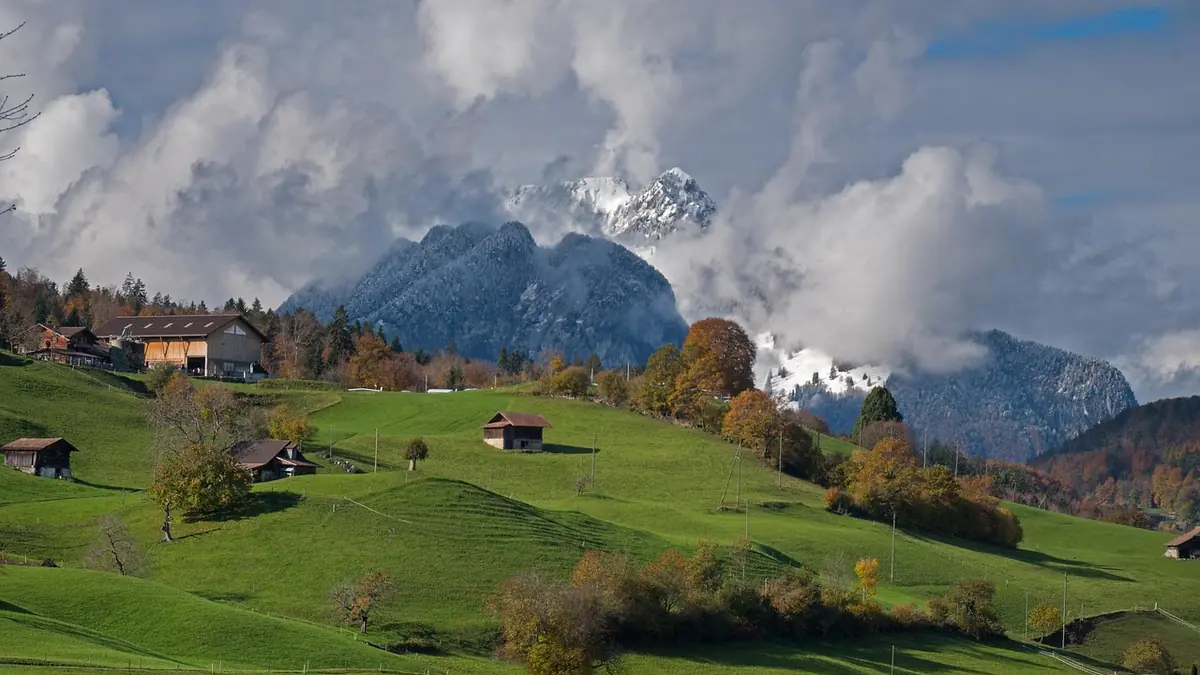
Tiefencastel and Alvaneu designated as reception sites for the 42 residents of Brienz affected by the risk of historic landslide. CHF 82.5 million approved.
Context
In a nutshell
- Albula/Alvra Assembly designates 2 relocation sites for Brienz/Brinzauls residents
- 42 transfer requests unanimously approved by the 42 voters present
- Credit of CHF 82.5 million for the territorial security project
Key facts
- What: Designation of Tiefencastel and Alvaneu as relocation sites for residents
- Where: Municipality of Albula/Alvra (GR), village of Brienz/Brinzauls
- Who: Municipal Assembly, 42 owners of main and secondary homes
- Amount: CHF 82.5 million (credit approved in July)
- Reason: Historical risk of landslide
- Approval: Unanimously, last night
- Stabilization: Drainage tunnel allowed residents to return
The decision of the municipal assembly
The municipal assembly of Albula/Alvra (GR) designated last night Tiefencastel and Alvaneu/Alvagni as relocation sites for the residents of Brienz/Brinzauls, the village historically affected by the risk of landslide. The decision was approved unanimously by the 42 voters present, communication manager Christian Gartmann confirmed to Keystone-ATS.
The Municipality has received 42 transfer requests from primary and secondary homeowners in Brienz/Brinzauls who intend to relocate. In July, the municipal assembly already approved a gross loan of CHF 82.5 million to finance the overall relocation project.
The need for relocation sinks the
Operational details
The impact on budgets and territorial planning
A loan of CHF 82.5 million represents an extraordinary budgetary commitment for a small community. This amount probably covers compensation to the owners, infrastructure in the new sites (roads, public services), and administrative management of the overall project.
At the cantonal level (Graubünden), the financing of such onerous operations involves critical choices in the allocation of public resources. If the canton participates in the costs, it means a reduction of funds from other sectors. The source does not specify how the cost is divided between federal, cantonal and municipal contributions: an aspect that determines the actual tax impact on Swiss taxpayers at various administrative levels.
Urban planning decisions that involve relocations of entire housing units represent rare and complex interventions. They require coordination between territorial development plans, geological safety regulations, protection of housing assets, and administrative governance at the municipal and cantonal levels. In the case of Brienz, the drainage tunnel represented a preliminary technical solution that allowed the return of residents; however, the relocation responds to a long-term territorial security strategy, chosen by the administration as the definitive solution to the risk of landslides.
What it means for the territory of Graubünden
The approval of the
Useful tools to protect your net income
To reduce FX leakage, compare CHF-EUR exchange options and banks for cross-border workers.
Key points
What happens now: administration and procedure
Following the formal designation of the two sites last night and the approval of the credit in July, the municipal administration of Albula/Alvra must proceed with concrete implementation phases. Although the source does not specify exact deadlines, it is reasonable to expect that the Municipality will publish detailed official communications, specifying: exact location of the plots, available sizes, existing infrastructure (water, gas, energy, telecom), access roads, proximity to essential facilities (schools, hospitals, shops).
Each owner who submitted a request (42 in total) will need to formalize their intention within the timeframe established by the administration. This will be followed by an assessment phase of the current properties in Brienz, to determine compensation or public subsidies for reconstruction at the new site. The source does not specify the precise compensation mechanism, but it is a critical phase to ensure equity.
The owners will then need to plan their transfers independently, possibly with the help of surveyors or architects, to design the new dwelling on the assigned plot. Construction times, obtaining permits, and implementation require coordination on potentially multi-year timescales. During this transition, some people may need temporary housing solutions.
Implications for mobility, cost of living, and quality of life
A crucial factor often overlooked in relocations is the impact on the daily quality of life of residents. Tiefencastel and Alvaneu may offer different geographic locations compared to Brienz, with potential impacts on three concrete aspects.
The first is mobility: commute times from the new sites compared to work centers, hospitals, schools, and shops could increase significantly. If residents work in other municipalities or in cities, the greater distance would result in higher costs and longer daily commute times.
The second is local cost of living: municipal rates for energy, waste, public services, and local taxation vary from municipality to municipality. At the new site, property management costs could differ from Brienz. The source does not provide details on these aspects, but they remain issues that the authorities will need to address in the operational phase, potentially supporting residents with additional information and incentives.
The third concerns community networks: relocating means leaving a cohesive community to integrate into new residential contexts. This has implications for social cohesion, local associative life, and the sense of belonging of residents.
Deadlines and tools for further information
Interested owners should regularly consult the official website of the Municipality of Albula/Alvra for updates, official announcements, and administrative forms. Direct contact with the municipal administration remains the most reliable channel for receiving complete documentation, clarification on procedures, and support in transfer decisions.
Those wishing to better understand how urban planning operations of this scale affect local taxation and public budgets can use the tax calculator, which shows how cantonal and municipal amounts vary based on residence. Many cantons publish detailed public reports on extraordinary credits; these documents are accessible to citizens and allow tracing how public resources are allocated. For those specifically interested in housing construction and territorial safety issues, universities such as ETH Zurich and the University of Italian Switzerland maintain research centers and publications dedicated to the topic of territorial planning and geological risk mitigation.
Source: tio.ch
Frequently Asked Questions
- Why do Brienz residents have to move?
- The village of Brienz/Brinzauls in the Municipality of Albula/Alvra has historically been affected by a landslide risk. Residents had to leave their homes on several occasions and for months waiting for stabilization. Although a drainage tunnel helped reduce the hazard, the administration chose relocation as a long-term structural solution to ensure the geomorphological safety of the area.
- What are the target sites for relocation?
- The municipal assembly of Albula/Alvra has designated Tiefencastel and Alvaneu/Alvagni as official relocation sites. These two municipalities offer concrete alternatives for the transfer of housing in areas considered safe from a geological point of view. The choice of two sites allows the 42 owners concerned different transfer options.
- What is the budget for the relocation project?
- In July, the municipal assembly approved a gross loan of CHF 82.5 million to finance the overall relocation project. This amount is likely to cover owner compensation, infrastructure at the new sites, and administrative management. The decision was approved unanimously by the 42 voters present.
- How many owners requested the transfer?
- The Albula/Alvra administration has received 42 transfer requests from primary and secondary homeowners in Brienz/Brinzauls who intend to relocate to the designated sites. All requests were unanimously approved by the municipal assembly.
- What are the next steps after approval?
- After the formal designation of the two sites, the municipal administration of Albula/Alvra will proceed with concrete implementation phases, including the publication of details on the location of the lots, infrastructure present and access roads. Each owner will have to formalize his intention within the timeframe established by the administration, a capital assessment will follow to determine compensation, and finally the planning of the transfer.