AI helps Swiss shoppers but stalls at checkout
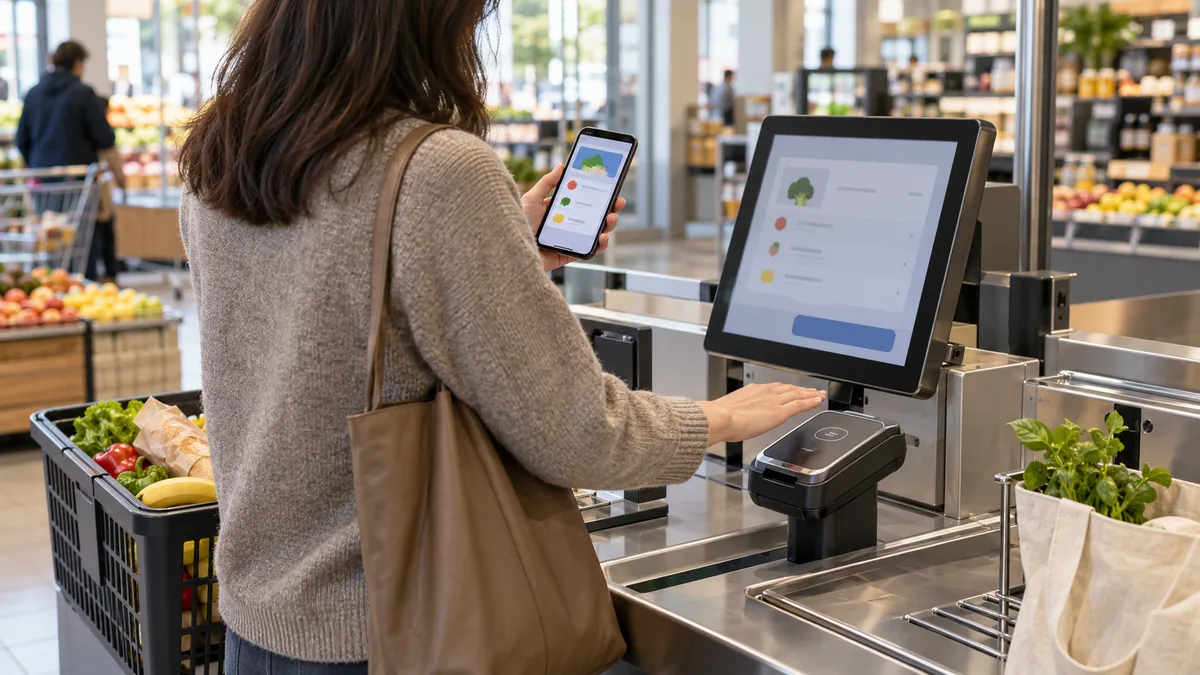
In the first, the assistant can help search and choose; in the second, the user wants to retain control over the expenditure. The willingness to delegate does not disappear, but remains tied to a financial threshold set in advance.
Context
TL;DR
- Almost 70% of Swiss people use AI for a purchase
- 49% say that AI influences the choice
- 67% want to retain autonomous payment
- Only 17% accept a fully AI-driven purchase
Key facts
- Source → Visa study
- Survey → online survey published Thursday
- Sample → more than 1'200 people in Switzerland
- Age range → 18-65 years
- AI use → nearly 70% to prepare a purchase
- Influence on choice → 49% of users
- Autonomous payments → 67% of respondents
- Fully autonomous purchase → 17% of respondents
Nearly 70% of Swiss people have already used AI-based assistants to prepare a purchase. This is shown by an online survey published Thursday, conducted on behalf of Visa among more than 1'200 people living in Switzerland, aged 18 to 65.
For nearly one in two (49%) of those who use these tools, AI strongly influences the purchase decision. Among the same users, one in ten has already bought the very product recommended by AI. For some respondents, therefore, the assistant guides the consumer all the way to the specific choice of item.
The link between recommendation and the exact purchase makes the reported influence visible: for some users, the suggestion does not remain merely an abstract comparison. The threshold changes, however, when the choice has to become a payment.
The trust threshold is reached at checkout
Trust decreases at the payment stage: 67% of respondents prefer to handle it themselves in every case. Only 17%, by contrast, would accept a fully autonomous purchase, including payment.
One third of respondents, equivalent to 33%, would accept giving the AI agent some freedom in completing the purchase, provided that the amount was set in advance and generally remained limited. 24% would allow autonomous purchases, including payment, up to 50 francs; above 100 francs, the share would fall to 2,5%.
The figures distinguish two stages of shopping. In the first, the assistant can help search and choose; in the second, the user wants to retain control over the expenditure. The willingness to delegate does not disappear, but remains tied to a financial threshold set in advance.
The study thus captures a behavior already present among Swiss consumers, without describing a generalized shift to automated payments. Visa commissioned the survey; the results measure respondents' preferences, not a change in payment rules.
Operational details
The most concrete data point for reading the survey concerns the type of purchase. AI assistance is expected above all for complex purchases: bookings for travel and transport reach 33%, while purchases of electronics and technology products reach 28%. For weekly shopping, the share is 20%. The distribution indicates that the assistant is more often associated with a choice involving several options than with a recurring purchase.
| Area | Share indicated in the study |
|---|---|
| Bookings for travel and transport | 33% |
| Electronics and technology products | 28% |
| Weekly shopping | 20% |
| Risk of losing control over spending | 55% |
| Misuse of payment data | 51% |
The problem is not only the recommendation
The 55% of respondents are primarily concerned about losing control over spending, while 51% identify misuse of payment data as a risk. Taken together, these figures explain why trust may be higher in the research phase and lower when the assistant approaches authorization of the spending. The practical question is not only whether the suggested product is appealing, but also how much leeway to give the agent and which data are included in the payment process.
For a Swiss consumer, this distinction makes it possible to separate comparison from delegation. An assistant can be used to organize information about a trip, transport, an electronic device or a technology product; the act of spending, however, remains the point at which reservations become most visible. Weekly shopping, at 20%, appears less associated with assistance than the complex categories identified by the survey.
The study highlights a generational divide: Generation Z turns to AI more than previous generations. Comparing suppliers using AI is approved by 82% of young respondents, compared with 71% of older people. This greater openness does not, however, eliminate the demand for security and control: Generation Z demands the same level in both respects. The figure suggests that familiarity with the tool and willingness to delegate payment are not equivalent.
Key points
Anyone who wants to use an AI assistant for shopping can organize the process so as to keep decision-making support and payment authorization separate. The survey results make it possible to turn this distinction into a practical sequence, without assigning AI the same role in every purchase.
Before confirmation
1. Define the task. Determine whether the assistant should help decide what to buy, where to buy it, or compare suppliers. The initial request should remain focused on research and guidance, not automatically become an order.
2. Set the scope. Indicate which purchase you are preparing for and what amount you are willing to consider. A preset limit makes clear the threshold within which potential autonomy is evaluated.
3. Separate advice and order. Treat the recommended product as a proposal to verify before making the final choice. AI’s influence on the decision does not amount to accepting a fully autonomous purchase.
4. Decide who pays. If the goal is to retain control, keep the payment step manual. If partial delegation is being considered, authorization must remain tied to the limit established beforehand.
5. Check two risks. Before confirmation, ask whether the transaction could lead to losing control over spending and whether payment data could be misused. These are the two main reservations that emerged from the survey.
This sequence makes it possible to use AI as an assistant, without automatically turning a recommendation into a transaction. The function can stop at comparison, preparation, or suggestion; the decision to pay remains a separate step. The user can thus choose a level of assistance consistent with the preset amount and their own need for security.
The method keeps the boundary between convenience and delegation clear: first define what to ask, then delimit autonomy, and finally confirm the payment. To connect purchase management with everyday expenses, consult costo della vita in Svizzera.
Source: rsi.ch
Frequently Asked Questions
- What percentage of Swiss people use AI to prepare for a purchase?
- Almost 70% of respondents (over 1'200 people between the ages of 18 and 65) have already used AI-based assistants to prepare for a purchase, according to the study conducted on behalf of Visa. This figure indicates that the majority of Swiss consumers rely on AI during the research and comparison phase before making a purchase.
- How much does AI influence the purchasing decision according to users?
- Among users who turn to AI, 49% say that AI strongly influences their purchasing decision. In addition, one in ten people has already purchased exactly the product recommended by AI, showing that the suggestion can lead directly to the transaction for a significant proportion of respondents.
- How willing are Swiss people to delegate payment to AI?
- 67% want to retain autonomy over payment, only 17% are open to a fully autonomous purchase, while one third (33%) would grant some autonomy within a predefined limit. For example, 24% would authorize purchases of up to 50 francs, and only 2.5% for amounts above 100 francs.
Related articles
- Serfontana: impianto fotovoltaico per il parcheggio
- Guida completa per cercare lavoro in Svizzera dall'estero
- Il Consiglio federale intende mantenere l'attuale margine di manovra sulla neutralità
- Frontaliere assistente sociale in Ticino: stipendio e requisiti
- Patente di guida nel Canton Soletta: conversione ed esami