Ticino industry: 15 collective layoffs in 18 months, -900 cross-border commuters
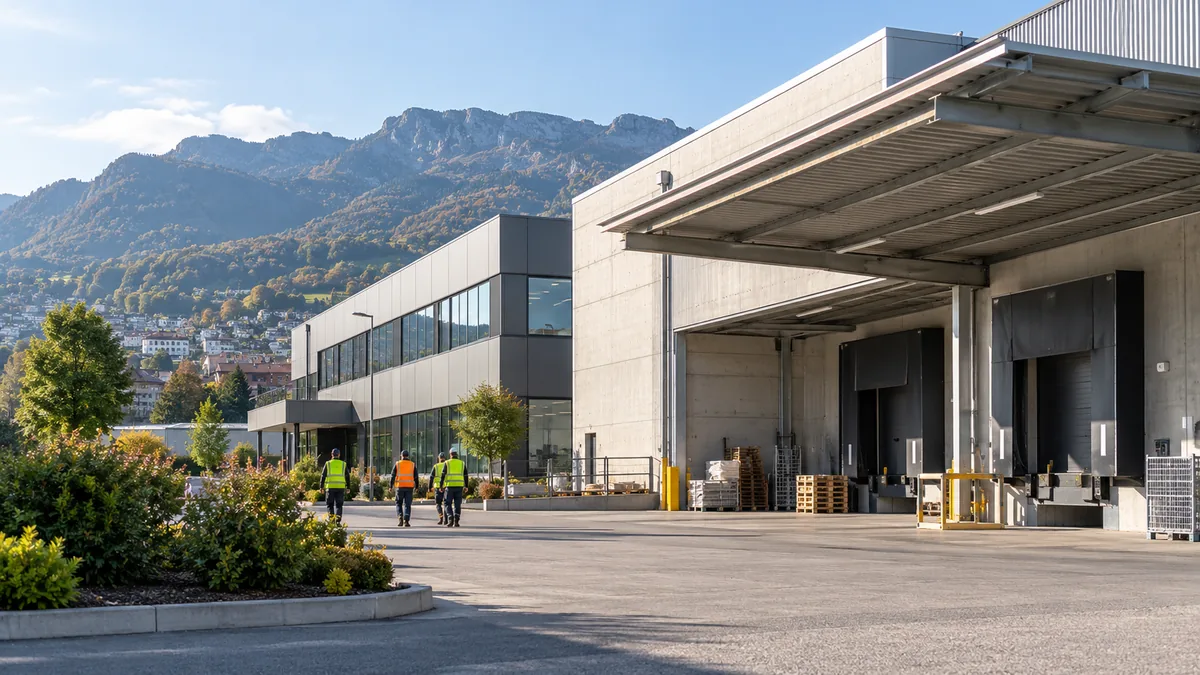
In the last 18 months, numerous collective layoffs in Ticino 15 collective layoffs followed over a year and a half Approximately 900 fewer cross-border commuters in two
Context
TL;DR
- In the last 18 months, numerous collective redundancies in Ticino
- 15 collective redundancies tracked over a year and a half
- Around 900 fewer cross-border workers over two years
- Satisfactory orders, but without guaranteed continuity
Key facts
- Layoff period → last eighteen months
- Collective layoffs followed → 15
- Fewer cross-border workers → approximately 900 in two years
- Director interviewed → Stefano Modenini
- Academic partner mentioned → SUPSI
Over the last eighteen months, in Ticino, collective layoffs in the industrial sector have been numerous and have fueled concern about the future of the sector. The analysis, however, offers a less straightforward reading: the origin of the situation is probably to be found in management’s strategic choices rather than in economic conditions.
The account begins with the warnings circulating in recent months. The media buzz associated the industry’s difficulties with the announcement of US tariffs, the strength of the Swiss franc, the increase in energy and transport costs caused by wars. The text specifies that the tariffs actually affected a very limited proportion of Swiss companies. The factors mentioned in the interview with Stefano Modenini also include the automotive crisis and the interruption of some transport routes.
Orders and layoffs: two signals together
Modenini, director of the Associazione industrie ticinesi, describes a situation that is less concerning today than it seemed at the beginning of the year. A large proportion of companies, he reports, have a satisfactory order book for the coming months. Stability, however, does not amount to a guarantee of continuity: the wording used in the interview brings the two elements together without erasing the uncertainties.
Over the last year and a half, Modenini has followed fifteen collective layoffs. Half were linked to the industrial sector, while the others concerned the services sector. The figure describes the events he followed and falls within the same time frame as the eighteen months mentioned at the beginning. The account of the layoffs, therefore, coexists with an order book that, for most companies, appears satisfactory in the short term.
The issue involves two parties: Modenini offers the employers’ perspective, while Daniele Duma, head of GF’s melting department in Novazzano, describes the reality of his own company from the workers’ side. The future of Ticino’s industry is therefore examined both through business decisions and through the experience gained in production departments.
Operational details
Strategy matters as much as economic conditions
The central point of the in-depth analysis is the distinction between what happens in the short term and the choices that guide a company for the following years. A collective redundancy, Modenini explains, does not necessarily depend on a cyclical or economic crisis. A company may decide to diversify production or give preference to other production sites. In both cases, the region is compared with other regions.
| Short-term signal | Strategic horizon |
|---|---|
| Satisfactory order book for the coming months | Future-oriented development plans |
| Tariffs, franc, energy, transport and communication routes | Diversification or other production sites |
| Stability without a guarantee of continuity | Attractiveness of the region compared with other regions |
The value of this comparison is to distinguish between two dimensions that may overlap in the public alarm. The order book gives a snapshot of the prospects for the coming months; decisions regarding production and sites, on the other hand, concern the following years. The source does not present the stability of orders as a guarantee of continuity, nor does it consider a collective redundancy automatic proof of a cyclical crisis.
The region as an industrial parameter
The discussion of framework conditions makes the relationship between the company and the region concrete. Modenini cites legal stability, taxation, costs and the availability of labor. Improving these conditions, according to the interview, means reducing the risk that a company will leave the region. The assessment of attractiveness therefore concerns not only the immediate cost, but also the possibility of organizing operations in subsequent years.
The same reasoning applies to innovation. The Swiss industrial sector is recognized worldwide for its technical quality and innovative capacity, but introducing innovation requires investments in tools, training and process updates. The source describes companies at different stages: some still have to begin digitization, while others are integrating artificial intelligence.
As for public instruments, the Innovation Act provides funding, but the interview points to the need to do something different and to put in place targeted instruments for small and medium-sized enterprises. Collaboration with academic partners, such as SUPSI, is instead described as positive. The framework thus combines technical quality, vocational training, research and process updates: these are the elements that the source places alongside management's strategic choices.
Key points
Labour and the border: the documented scope
The staff shortage links the issue of cross-border workers to the difficulties facing industry. The labour shortage is identified as one of the sector's main challenges and, especially in Ticino, the problem is exacerbated by the introduction of the tax agreement with neighbouring Italy that governs the taxation of cross-border workers. Modenini is also asked to consider the relationship with the demographic crisis and the agreement's possible deterrent effect on higher-income workers interested in employment in Ticino.
The reported response begins with a figure in the statistics on cross-border workers: over two years, approximately 900 female and male workers were lost, partly for age-related reasons. This passage is relevant to the canton of Ticino because it connects workforce availability with the issue of the region's attractiveness, already identified in the interview among the conditions companies assess when deciding how to organise production. The text therefore reports, in the same passage, the figure for the loss of approximately 900 female and male workers and the indication of age-related reasons.
The date of the agreement and tax treatment
To avoid confusion over the timeline, the separately verified reference, distinct from the source, corrects the wording “new 2026 tax agreement”. The New Agreement on Cross-Border Workers was signed on 23 December 2020 and has been in force since 1 January 2024; Italy's ratification is Law 83 of 13 June 2023. The same reference specifies that withholding tax on the employment income of cross-border workers is collected only in Switzerland and that Italy avoids double taxation through the tax credit in the CE section of Form 730.
These latter elements are part of the verified reference and should not be attributed to Modenini's statements. They serve to situate in time and in tax terms the agreement referred to by the industry source; the source instead presents it in relation to workforce availability in Ticino.
The passage remains focused on cross-border work and does not become a guide to the G permit, AVS, LPP, LAMal or tax rebates. The documented scope is industrial: collective redundancies, strategic choices, innovation, training, order book and staff availability. Administrative procedures or benefits not described are therefore not added. The picture of Ticino's industry emerges from the interplay between companies' decisions, the training required by innovation and the availability of female and male workers.
Source: ocst.ch
Frequently Asked Questions
- How many collective layoffs have there been in Ticino's industry in the last 18 months?
- According to Stefano Modenini, director of the Ticino Association of Industries, 15 collective layoffs have been followed over the past year and a half, half of them in the industrial sector and the other half in the service sector.
- How many cross-border workers has Ticino lost in two years?
- The source reports a loss of approximately 900 cross-border workers over two years, also for age-related reasons, as emerged from the statistics cited in the interview with Modenini.
- Do current orders guarantee continued employment?
- Modenini specifies that a large proportion of companies have a satisfactory order book for the coming months, but that stability does not amount to a guarantee of continuity in the medium to long term.
- What is the position on the 2020-2024 cross-border workers tax agreement?
- The New Cross-Border Commuters Agreement was signed on December 23, 2020 and has been in force since January 1, 2024 (Italian ratification: Law 83/2023). The source links it to labor availability but does not detail its procedural aspects.
- What factors influence companies' production choices according to Modenini?
- Legal certainty, taxation, costs, labor availability and the area's attractiveness compared with other regions are the parameters that companies assess when making decisions about diversification or other production sites.