Living in Lugano: What's the real cost in 2026?
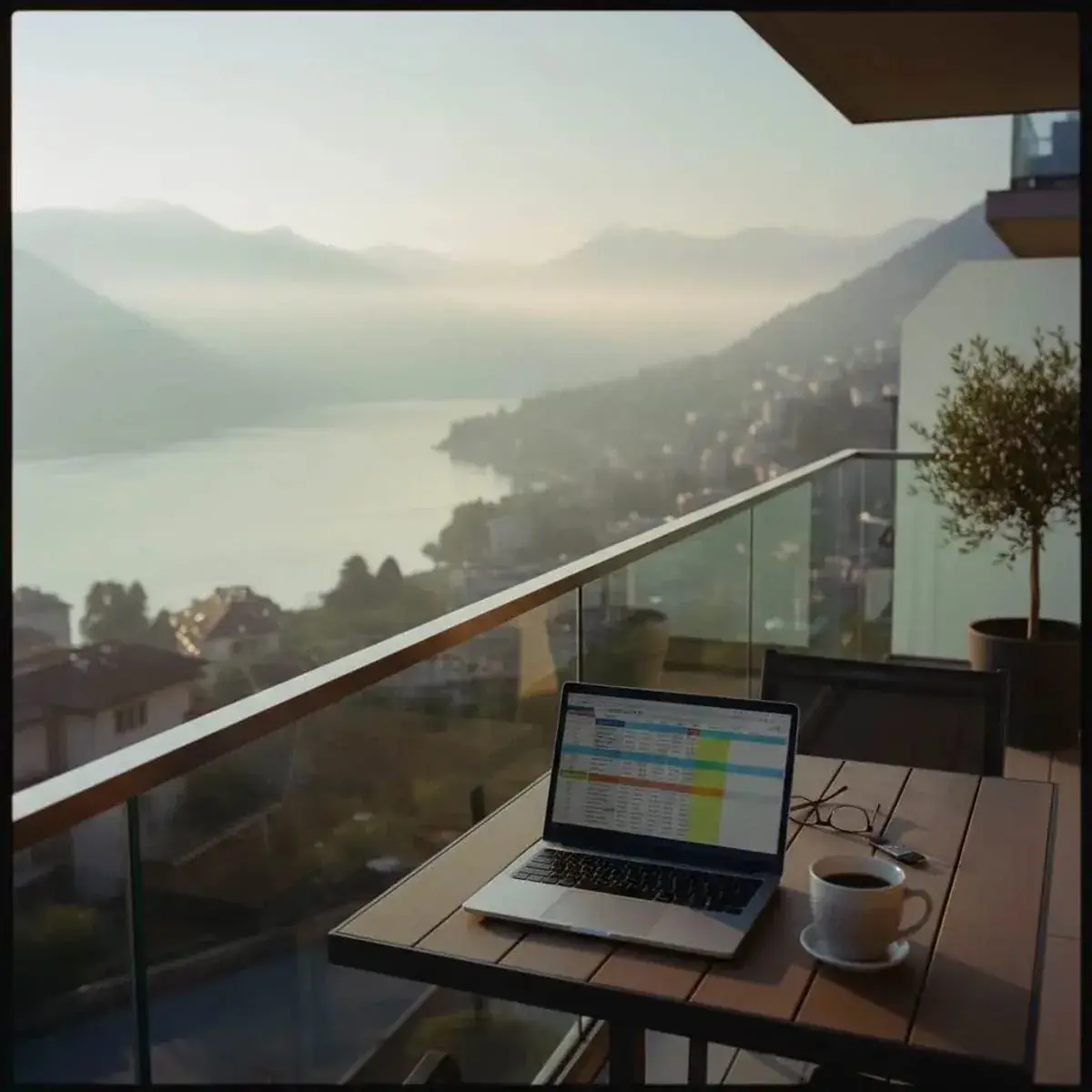
Detailed 2026 cost analysis for a cross-border worker moving: rents from 1,500 CHF, LAMal from 450 CHF, transport, and groceries. Here's what to budget for.
Context
TL;DR
- Lugano's rent is expensive, starting at 1,400-1,600 CHF for a 2.5-room apartment.
- Health insurance (LAMal) costs 450-650 CHF/month for an adult in Lugano even with the maximum 2,500 CHF deductible (2026).
- Parking in Lugano can cost 150-250 CHF/month, public transport pass is 750 CHF/year.
- Tax regime changes for residents: withholding tax still applies with a B permit; Lugano's municipal tax multiplier is 80% in 2026.
Key facts
- Rent (2.5-room): 1,400-1,600 CHF/month excluding utilities
- Health Insurance: 450-650 CHF/month for an adult in Lugano with a 2,500 CHF deductible (2026)
- Parking Cost: 150-250 CHF/month for a garage space
- Public Transport: 750 CHF/year for an Arcobaleno pass (zone 100)
- Serafe Fee: 335 CHF/year for radio and television license
- Tax Multiplier: 80% for Lugano in 2026
- Monthly Budget: 3,145 CHF for a single person in Lugano
- Remaining Income: 1,350 CHF after fixed expenses for a single person
The question circulates daily at the Brogeda and Ponte Tresa border crossings: is it really worth taking the plunge and moving to Ticino? Working in Lugano is an opportunity, but living there requires careful financial planning. The charm of the lake and Swiss efficiency come at a price, and for a cross-border worker accustomed to an Italian cost of living, the impact can be significant. Let's analyze the main expense items that a cross-border worker must face if they decide to move their residence across the border in 2026.
Rent: The First Major Hurdle
Lugano's real estate market is the most expensive chapter. Forget the rents in the provinces of Como or Varese. For a modern 2.5-room apartment (one-bedroom) in semi-central areas like Viganello or Cassarate, the budget starts at 1,400-1,600 CHF per month, excluding utilities. If you're aiming for a 3.5-room apartment (two-bedroom) for a couple or a small family, the figure quickly rises to 1,800-2,300 CHF. More prestigious areas like Paradiso or the historic center easily exceed 2,500 CHF. Additionally, there's the security deposit, usually equivalent to three months' rent, which ties up a significant amount of initial capital. It's an expense that accounts for at least 30-40% of an average Ticino salary.
Health Insurance: Mandatory LAMal
As a resident, enrolling in the Swiss health insurance system (LAMal) becomes mandatory, replacing the mixed model many cross-border workers are used to. With the 2026 premiums approved by the FOPH, an adult (aged 26 and over) living in Lugano (premium region 1), without accident cover, pays between 450 and 650 CHF per month even with the maximum deductible of 2,500 CHF (the ordinary deductible is 300 CHF: with it the standard model costs 645-769 CHF). The average adult premium in Ticino in 2026 is 582.60 CHF per month. This amount is individual: a childless couple will spend at least 900 CHF per month just for basic health coverage, about 1,165 CHF with two average premiums.
Operational details
Once the two main costs, rent and health insurance, are covered, the monthly budget must contend with a series of other fixed and variable expenses, often underestimated by those living in Italy. The daily management of life in Lugano requires a different financial mindset.
Transport, Taxes, and Utilities: The Hidden Costs
Owning a car in Lugano is a luxury. Besides the cost of fuel, the cantonal circulation tax (the 'bollo') and significantly more expensive third-party liability insurance, the real problem is parking. A parking space in a garage can cost between 150 and 250 CHF per month. The alternative is public transport: an annual Arcobaleno pass for the Lugano area (zone 100) is around 750 CHF. Household utilities, such as electricity and heating, have costs similar to Italy, but you must add the Serafe radio and television license fee, mandatory for every household and amounting to 335 CHF per year.
📊 The Change in Tax Regime The transition from a cross-border worker (with a G permit) to a resident (with a B permit) involves a radical change in taxation. With a B permit, however, you do not leave the withholding tax system: in Ticino, foreign workers resident in the canton without a settlement permit (C) remain subject to tax withheld at source from their salary. Subsequent ordinary assessment, with an annual tax return, is mandatory if gross employment income exceeds 120,000 CHF a year; below that threshold you can request it by 31 March of the following year, and the request cannot be withdrawn. In ordinary assessment the municipal tax is calculated by applying the municipal multiplier to the basic cantonal tax: for Lugano it is 80% in 2026 (77% until 2025), a value to be carefully considered in your calculations. The ristorni, the compensation the canton pays to Italian border municipalities on cross-border workers' taxes, no longer concern you, and the entire tax management falls under Swiss jurisdiction.
Key points
Putting together the pieces of the financial puzzle is the only way to understand if moving to Lugano is sustainable. Let's run a simulation for a single person with a net salary of 4,500 CHF.
Example Monthly Budget (Single, 2026)
- Rent (2.5-room apt): 1,500 CHF
- Health Insurance (LAMal): 450 CHF
- Groceries: 550 CHF
- Transport (public transport pass): 65 CHF
- Utilities (electricity, internet, Serafe): 180 CHF
- Personal expenses and leisure: 400 CHF
- TOTAL FIXED EXPENSES: 3,145 CHF
With a net income of 4,500 CHF, about 1,350 CHF would remain for taxes (to be set aside monthly only under ordinary assessment: with withholding tax the deduction is already made on the payslip), savings, and unforeseen events. The ability to save is drastically reduced compared to living as a cross-border worker, but you gain in quality of life and time by eliminating the commute. The choice is therefore deeply personal and linked to one's priorities.
💡 Practical Tip Before signing a rental agreement, it is crucial to analyze not only the cost of living but also all the bureaucratic and fiscal implications of the change in status. The decision to move is not just an economic one, but a real life project. To help you navigate this complexity, our complete guide to living in Switzerland offers detailed checklists and insights into every aspect, from residence permits to daily financial management.
(Sources: Frontaliere Ticino internal analysis based on USTAT data for rents and expenses; FOPH for 2026 LAMal premiums; Ticino Tax Division for the municipal multiplier and withholding tax; OFCOM for the Serafe fee. LAMal premiums, multiplier, tax regime and fee verified in September 2026.)
For a precise calculation of your net salary as a cross-border worker, use our comparator: the most complete tool to compare your take-home pay between G and B permits, with all tax and social deductions updated to 2026.
Frequently Asked Questions
- How much does the rent in Lugano cost for a 2.5-room apartment?
- The budget starts from 1,400-1,600 CHF per month, excluding expenses, for a modern 2.5 rooms in semi-central areas such as Viganello or Cassarate.
- How much does RC car insurance in Lugano cost on average for a mid-range vehicle?
- In Lugano, car RC insurance for a mid-range vehicle can cost between 1,200 and 1,800 CHF annually, depending on the insurer and driver profile.
- What are the average costs of domestic users in Lugano?
- The utilities such as electricity, heating and internet in Lugano cost about 180-250 CHF per month, depending on the size of the house and consumption. The radio and television fee Serafe is 335 CHF per year, to be added to the monthly expenses.