Glarus bans cars on Sundays: will Ticino give it a try?
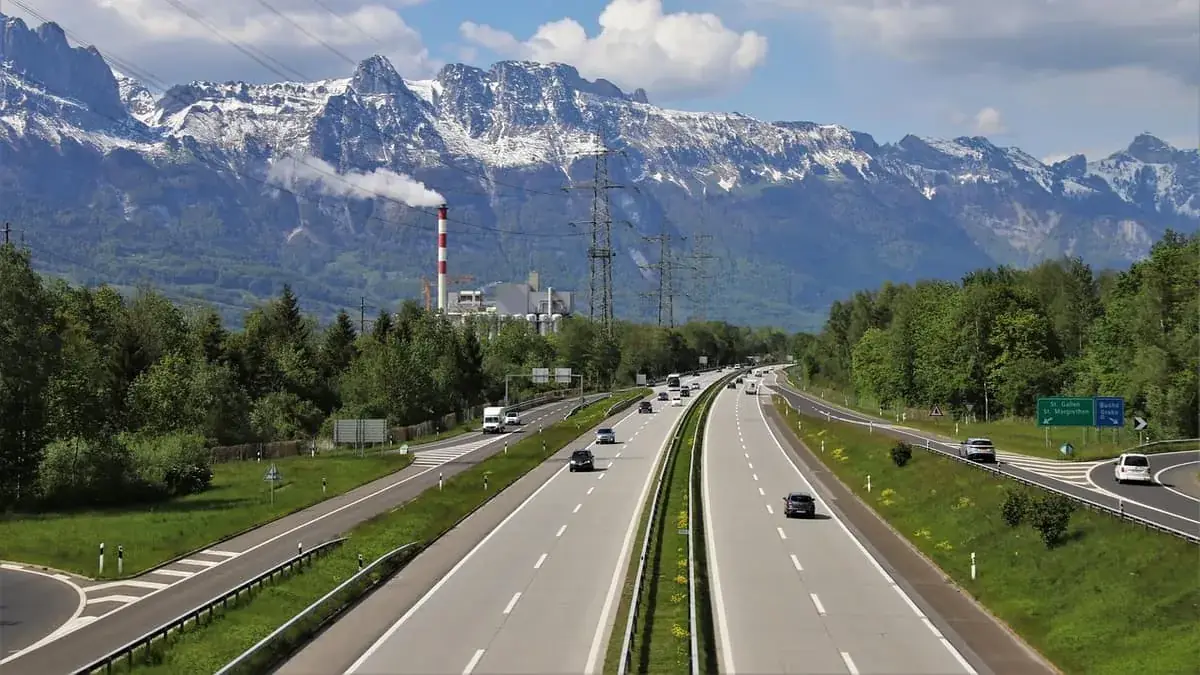
The Canton of Glarus reintroduces car-free Sundays to reduce tourist overcrowding. In Ticino, discussions are underway on whether to implement similar measures: Val Verzasca, Bellinzona, and Lugano are weighing the pros and cons.
Context
TL;DR
- Glarus bans cars on 3 Sundays to reduce tourist congestion.
- Ticino considers similar measure for Verzasca Valley.
- Lugano faces daily traffic issues, may test car-free Sundays.
- Cross-border workers may see indirect effects on traffic.
Key facts
- Cosa: Car-free Sundays to reduce tourist congestion.
- Quando: Three Sundays a year in Glarus.
- Dove: Glarus, Ticino (potential).
- Chi: Alessandro Speziali, Juri Clericetti, Roberto Badaracco.
- Importo: No specific cost mentioned, but significant organizational costs expected.
- Scadenza: No formal procedure initiated in Ticino yet.
In Glarus, for three Sundays a year, cars will be banned from Lake Klöntal. The aim is to reduce excessive tourist flows in an already congested area. The measure, introduced at cantonal level, has reignited the debate in Ticino as well: a similar initiative could be applied in our canton, where tourism is a strategic pillar of the local economy.
A divisive model: cutting traffic to protect the territory
The Verzasca Valley, one of Ticino’s natural gems, is often mentioned as a potential candidate for testing car-free Sundays. Alessandro Speziali, Head of Development Projects for the Verzasca Valley, highlights the practical challenges: «This would mean filling at least the first part of the valley with convoys of buses to transport tourists to that point. And at least as far as Vogorno. After that, you have to wonder how to encourage tourists to visit the more remote parts of the valleys.» The valley is home to many residents, which further complicates the adoption of traffic restrictions.
Bellinzona and its valleys: tourism isn’t yet at critical levels
Juri Clericetti, Managing Director of Bellinzona and Valleys Tourism, believes the region doesn’t suffer from over-tourism but welcomes initiatives that promote more sustainable use of the territory. «It would be desirable to close a specific area to motorised traffic for one engine-free Sunday. This would allow people to enjoy our tourist offering and the natural beauty in a sustainable, carefree, and peaceful way. It would be interesting if public transport supported these initiatives, for example with discounts.» Clericetti points to existing initiatives like SlowUp and Freipass Lucomagno, which show how soft mobility can be integrated into territorial enhancement.
Lugano: congested traffic, a test worth evaluating
In Lugano, road congestion is a daily issue. Roberto Badaracco, Head of the Department of Sport, Culture, and Events, confirms that the city has seen extraordinary tourist flows in recent years, especially along the shores of Lake Ceresio. «Given Lugano’s traffic congestion, designating car-free Sundays could make the city centre more attractive thanks to greater calm and tranquillity. This would benefit not only tourists but also locals. So I wouldn’t rule out such initiatives, but they should be limited to three times a year.» Badaracco stresses the importance of finding a balance and testing the impact before implementing such measures.
Operational details
The idea of car-free Sundays in Ticino is not a sudden one. The debate fits into a broader context of growing attention to environmental sustainability and the management of tourist flows—issues that are becoming priorities even for the local population. However, the territorial differences between Ticino’s valleys and the canton of Glarus are substantial: while in Glarus the issue is linked to overcrowding in a specific area like Lake Klöntal, in Ticino the challenge concerns a more balanced distribution of tourists across the territory.
Before vs after: what would change for cross-border workers and residents
Currently, Ticino has no cantonal regulation in place for car-free Sundays. The only exceptions are local events like SlowUp, which closes certain roads to traffic on specific Sundays, or initiatives promoted by individual municipalities. According to Speziali, 'an initiative like this would allow us to enhance the territory and rediscover it in a slower way.' However, feasibility depends on the ability to manage tourist flows without penalizing valley residents, who already complain about daily traffic congestion.
Practical scenarios: how it could work in Ticino
If Ticino were to introduce car-free Sundays, the first candidates would likely be the most touristy but least populated areas, such as Lake Vogorno or parts of the Riviera. Clericetti suggests that public transport should be strengthened in conjunction with these closures: 'For example, with ticket discounts or additional services on the affected days.' In Lugano, on the other hand, closing some roads in the historic center could be a more realistic option, given the high population density and the presence of commercial activities.
The role of cross-border workers: traffic and accessibility
For cross-border workers who cross the Italian-Swiss border daily, especially via the Brogeda or Gaggiolo crossings, a reduction in Sunday traffic could have indirect effects. While local road conditions could improve, the management of tourist flows in specific areas might create disruptions at other times of the week. Additionally, closing tourist roads could influence visitors’ choice of destinations, shifting attention to less frequented valleys that may be less equipped to handle large numbers.
Costs and benefits: who pays the transition?
Car-free Sundays come with significant organizational costs: from managing alternative routes to communicating with tourists and coordinating with public transport. To date, it has not been specified who would cover these expenses. However, Glarus’ experience shows that the economic impact could be positive if tourists were better distributed across the territory, avoiding peaks of congestion in already overcrowded areas.
Comparison with the Swiss model: what does the law say?
Swiss road traffic regulations fall under cantonal jurisdiction, but there is a federal framework that governs temporary road closures for events or environmental reasons. In Ticino, any decision in this regard would require coordination between the Department of Territory and Environment, the municipalities involved, and possibly public transport companies. At present, however, no formal procedure has been initiated to assess the introduction of car-free Sundays.
Recommended tools
For an updated estimate, use the net salary calculator and the CHF-EUR exchange comparator.
Key points
If Ticino were to decide to experiment with car-free Sundays, what would be the concrete steps to implement them? Here’s a step-by-step procedure based on existing experiences and proposals from public debate.
Step 1: Identify candidate areas
Not all Ticino valleys would be suitable for a trial. Areas with lower population density but high tourist traffic, such as the upper Verzasca Valley or parts of the Riviera, could be among the first candidates. According to Juri Clericetti, “it would be interesting to start with a specific area, perhaps in collaboration with local municipalities, to assess the impact on residents and tourists.”
Step 2: Involve public transport
A key element for the success of these initiatives is integration with public transport. In Bellinzona and the valleys, for example, it is suggested to “offer discounted tickets or additional services on the affected days.” In Ticino, transport companies like ARST and FART could be involved to ensure efficient connections to traffic-restricted zones.
Step 3: Communicate with tourists and residents
Communication must be timely and widespread. Tourists arriving from Italy via the Brogeda or Gaggiolo crossings should be informed in advance through signage, official websites, and dedicated apps. Residents of the affected valleys must also be engaged: “It’s essential to clearly explain which roads will be closed and what alternatives are available,” emphasizes Alessandro Speziali.
Step 4: Trial for three Sundays a year
Roberto Badaracco from Lugano proposes limiting the trial to three Sundays a year to assess the effects without causing excessive inconvenience. “The important thing is to find a balance and test the impact.” This approach would allow for concrete data collection on tourism, environmental, and economic effects.
Step 5: Monitor and evaluate results
After the trial, it will be crucial to analyze the collected data: number of visitors, tourist satisfaction, impact on traffic on other days, and reactions from the local population. Only then can a decision be made on whether to extend the initiative to other areas of the canton.
📊 Useful tools for cross-border commuters
For those who cross the border daily, mobility is a critical aspect. If car-free Sundays were introduced, it could be helpful to check public transport schedules or alternative routes in advance. On our website, you can find:
- Public transport timetable calculator between Ticino and Northern Italy
- Interactive map of open border crossings
- Guide to mobility alternatives for commuters
⚠️ What if the trial doesn’t take off?
If the first edition’s results are not satisfactory, the measure could be revised or abandoned. However, the current debate shows that the issue of sustainable tourism is set to grow. Cross-border commuters, in particular, could indirectly benefit from a better distribution of tourist flows, with fewer queues at border crossings and greater accessibility to less congested areas of Ticino.
Source: ticinonews.ch
Frequently Asked Questions
- Could the Canton of Ticino really introduce car-free Sundays like in Glarus?
- No formal procedure has been initiated at this time. However, the debate is lively, and valleys such as Verzasca or Riviera have been mentioned as potential candidates. The decision would depend on coordination between the Department of Territory and Environment, local municipalities, and public transport companies.
- Which areas in Ticino would be best suited for a trial?
- Less densely populated areas with high tourist traffic, such as the upper part of the Verzasca Valley or certain sections of the Riviera, have been suggested as possible candidates. However, feasibility would depend on the ability to manage flows without disadvantaging residents.
- How would tourists arriving by car from Italy be managed?
- Tourists would need to be informed well in advance through road signs, official websites, and dedicated apps. Additionally, integration with public transport (such as ARST and FART) would be essential to provide viable alternatives.
- How many Sundays a year would be closed to traffic in the event of a trial?
- Roberto Badaracco from Lugano has proposed a limit of three Sundays per year to assess the effects without creating excessive inconvenience. This approach would allow for concrete data collection on the impact on tourism and the environment.
- Who would cover the organizational costs of these car-free Sundays?
- No details have been specified yet. However, the experience in Glarus shows that costs could be offset by economic benefits from a more balanced distribution of tourists across the territory.
Related articles
- All articles: Taxes
- Domeniche senza auto in Svizzera: il Ticino verso una nuova
- Landsgemeinde di Glarona: austerità e ambiente al voto
- Landsgemeinde Glarona: cosa cambia per frontalieri e residenti
- Landsgemeinde Glarona 2026: aliquota fiscale e alloggi al centro dei dibattiti
- Incidente in Valle Verzasca: motociclista grave