Change of employer for border workers: G permit and 2026 procedure
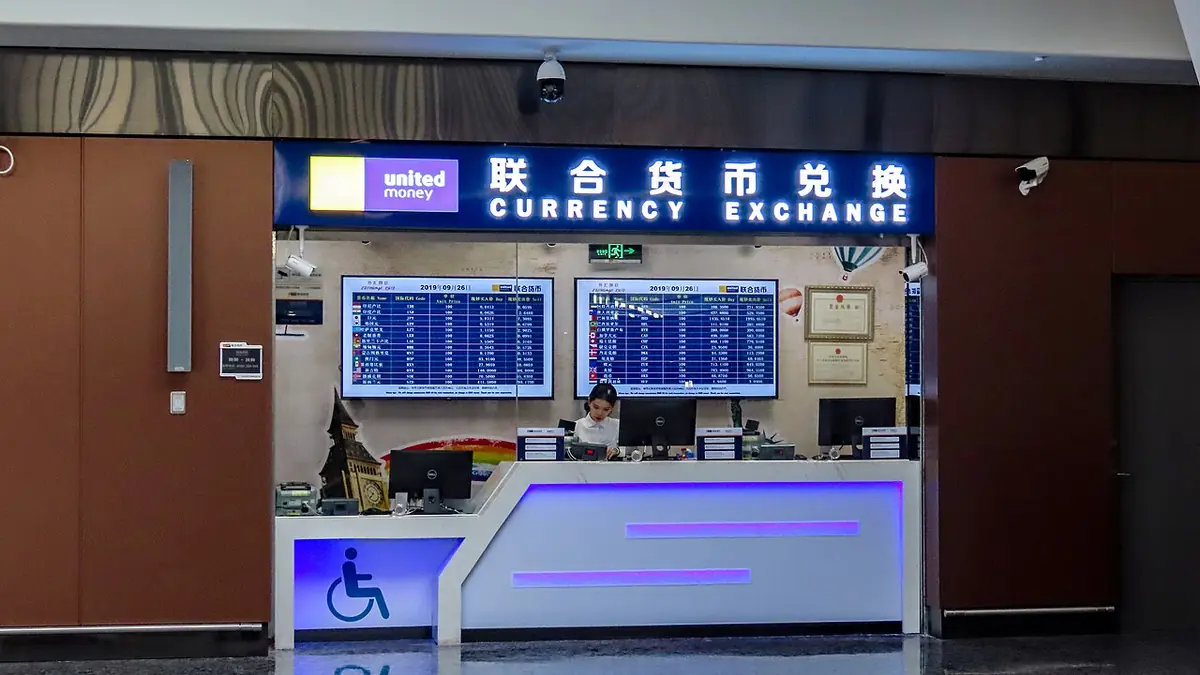
2026 Guide to the change of employer for border workers: notice, renewal of the G permit, continuity of contributions, tax at source and updated documents.
Context
TL;DR
- The new agreement is in force from 1 January 2024
- Old frontier workers: exemption of €7,500 until 2033
- New frontier workers: deductible of €10,000
- AVS/AI/IPG: 5.3% to be paid by the employee
Key facts
- Agreement: signed on December 23, 2020
- Italian ratification: Law 83 of 13 June 2023
- Income tax: withheld only in Switzerland
- Double taxation: credit in the EC framework of 730
- KVG: right of option for cross-border commuters G
- AD/AC: 1.1% with cap at CHF 148'200
December 23, 2020 is the date of signature of the New Cross-Border Agreement. The agreement entered into force on 1 January 2024 and was ratified in Italy with Law 83 of 13 June 2023. For this reason, the wording new tax agreement 2026 should be read as a reference to the year of the guidance, not as the date of entry into force.
For the cross-border worker who changes employer in 2026, the procedure to be monitored combines four steps: respecting the notice, managing the renewal of the G permit, maintaining continuity of contributions and updating the documents. They are the four operating points of the corner of this guide; it is therefore not enough to look at the new salary.
The tax framework that accompanies the change
Tax on earned income is withheld only in Switzerland for cross-border workers. Italy avoids double taxation with the tax credit indicated in the EC framework of 730. The Italy-Switzerland Double Taxation Convention was signed on 9 March 1976; Switzerland is not a member of the EU or EEA.
The rule reported does not present a withholding in both countries: it indicates only the Swiss withholding and the Italian tax credit. In the lexicon of the Ticino-Italy relationship the term rebates also appears; here the verified tax rule is that of the Swiss withholding tax and the Italian credit.
The tax distinction to be kept in the documentation is that between old and new cross-border workers. Workers who were already cross-border workers before 17 July 2023 are old: the exemption of €7,500 in the transitional regime 2024–2033 applies to them. New cross-border commuters have an excess of €10,000. The time reference indicated is 17 July 2023, while the change of employer is the procedure to be managed in 2026.
The operational photography is therefore double: working document, with G permit and notice; tax and social security framework, with withholding tax, AVS and LPP. The cross-border worker who works in the Canton of Ticino must update the first data without losing sight of the second, even if the daily journey crosses a pass like Brogeda. The change of employer falls within this framework: 2026 is the year of the procedure, not that of a new entry into force of the agreement.
Operational details
The most useful comparison, after the change of employer, is the first pay slip. The rates indicated by the source are not interchangeable and must be read together with the item to which they refer.
| Voice | Data to check |
|---|---|
| AVS/AI/IPG | 5.3% paid by the employee |
| AD/AC | 1.1%, with cap CHF 148'200 |
| LAINF | 0.7–1.5% |
| BVG | 7–18% by age group, from age 25 |
AVS/AI/IPG is the item with an explicitly indicated employee share: 5.3%. AD/AC is indicated at 1.1%, with a cap of CHF 148'200. For LAINF the source reports a range of 0.7–1.5%; for LPP it indicates 7–18% depending on the age group, starting from 25 years. In the step, these values serve as a grid for reading the new pay slip, not as an automatic sum to be applied without distinguishing the individual items.
The before-after comparison must be made between the final pay slip of the previous relationship and that of the new job, recording deductions and periods. The source offers percentages and thresholds, not an individual net figure: therefore the useful data is the coherence of the items reported, not a standard figure constructed on the table.
Who administers the withdrawal
Tax rates, including federal and cantonal ones, are established by federal and cantonal laws. At the federal level they are administered by AFC/ESTV, while for the cantonal level the cantonal tax administrations intervene. UFAS, which concerns social security and AVS/AI, does not set tax rates; the same goes for BFS, which collects statistical data.
For the Italian IRPEF from 2026, the indicated framework is 23% up to €28,000, 33% from €28,001 to €50,000 and 43% over €50,000, according to Law 199/2025, art. 1 c. 3. For 2024–2025 income, the rates reported are 23%, 35%, and 43%. The comparison between years must be kept separate from the Swiss withholding tax.
KVG is a separate chapter
KVG is health insurance, not a health tax. Cross-border workers with a G permit have the right of option; for adults, the indicated deductibles range from CHF 300 to CHF 2,500. When changing employer, this item must be kept separate from tax withholdings and AVS/LPP social security: they are different chapters of the cross-border worker's documentation.
Key points
The change of employer is best handled as a documentary sequence, not as a single update at the end. The practical track must link the notice, the G permit, the contributions and the tax and health documentation.
Operation Sequence
1. Line up the dates of the ending report and the new report. Enter the notice period provided by the job and keep the documents linked to both phases. The sequence must make the passage between output and input legible.
2. Update the permit file G. Treats the renewal of the document together with the change of employer and verifies that the data of the new report is consistent in the documentation to be updated. Check the name of the employer and the dates on the documents.
3. Protect contributory continuity. Compare the final payroll of the previous relationship with the first of the new employment, looking for the items AVS/AI/IPG, AD/AC, LAINF and LPP. For social security reading, you can add the calcolatore AVS/LPP to the verification of documents.
4. Please double-check your tax perimeter. The distinction between old and new frontier workers depends on the reference of 17 July 2023: before that date, the group of old frontier workers is valid, with an exemption of €7,500 in the transitional regime 2024–2033; for new ones, the excess of €10,000 is indicated. It also verifies that the source tax remains read together with the 730 CE framework tax credit, without a withholding tax in both countries.
5. Keep LAMal separate. Remember that it is health insurance, that border crossing G is entitled to an option and that adult deductibles range from CHF 300 to CHF 2,500. For taxation, the administrative reference indicated is AFC/ESTV at the federal level and the cantonal tax administrations; not UFAS or BFS.
For document control, refer to Permesso G/B. Then complete the file with contract, notice, updated permit, payroll and tax references. The goal is to arrive at the new occupation with consistent documentation and with the framework of the agreement read according to the correct dates.
To estimate the effect of deductions on the new salary, use the calcolatore fiscale
Frequently Asked Questions
- Is the frontier worker's income taxed in both countries?
- No. The rule reported provides for withholding tax to be withheld at source only in Switzerland. Italy avoids double taxation with the 730 CE framework tax credit. The Italy-Switzerland Double Taxation Convention was signed on 9 March 1976. The change of employer requires you to double-check tax documents, but the source does not introduce a second Italian withholding tax on the same income.
- Who is an old frontier worker and what deductible applies?
- Old frontier workers are those who were already such before July 17, 2023. For them, an exemption of €7,500 is provided for in the transitional regime 2024–2033. The new frontier workers, on the other hand, have a deductible of €10,000. The distinction must therefore be verified with respect to the date indicated, not replaced with the date of the change of employer in 2026.
- What rates to check on the new paycheck?
- The source indicates AVS/AI/IPG at 5.3% for the employee and AD/AC at 1.1%, with a cap of CHF 148'200. It also reports LAINF at 0.7–1.5% and LPP at 7–18% by age group from the 25th year. This data is used to compare the items of the previous report and the new employment, without automatically adding them together as if they were a single deduction.
- Is LAMal a tax linked to the change of employer?
- LAMal is health insurance, not a health tax. Border workers with a G permit have the right of option. For adults, the deductibles shown are between CHF 300 and CHF 2,500. In the control of the change of employer, the LAMal item must be kept separate from the tax at source and the AVS/LPP contributions, because the source presents them as distinct areas.
Related articles
- All articles: G permit
- Cambio datore per frontalieri: permesso G e continuità 2026
- Guida al cambio datore di lavoro per frontalieri: preavviso, rinnovo permesso G, continuità contributiva e documenti da aggiornare.
- Cambio datore di lavoro per frontalieri single nel 2024
- Cambio datore di lavoro: permesso G 2026 single
- Vivere a Tubre e lavorare in Grigioni da frontaliere