Arcisate: World War II bomb found
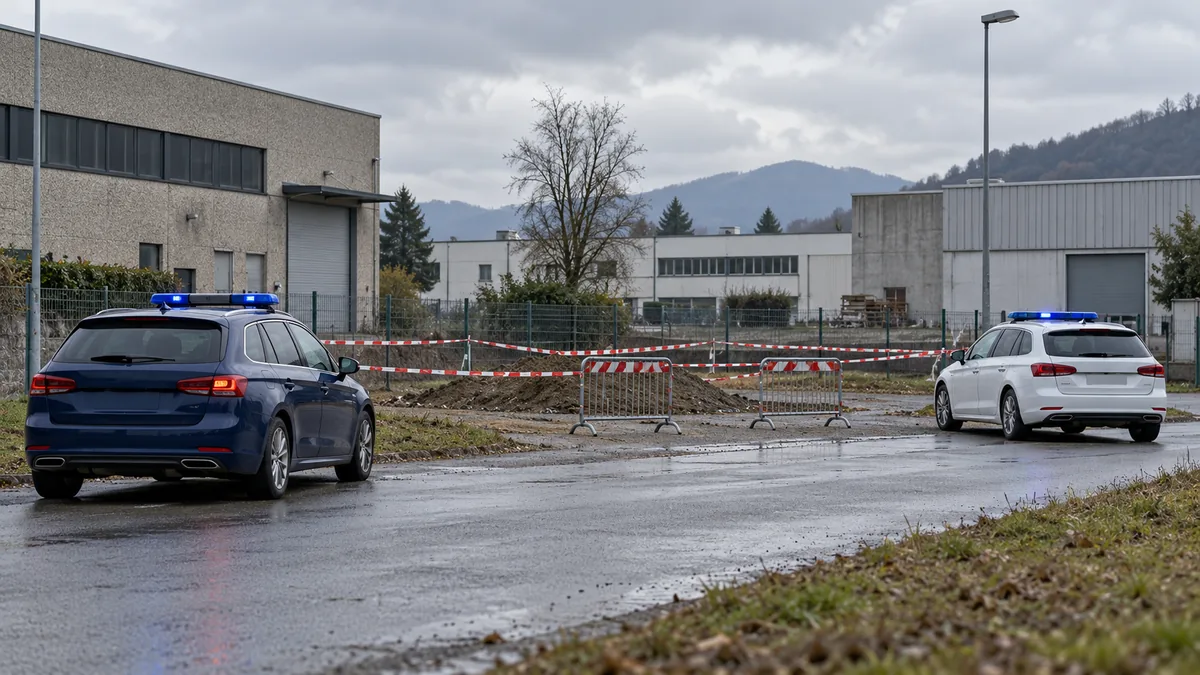
During the morning of Saturday, October 17, an active construction site in the industrial area of Arcisate uncovered military ordnance dating back to World War II.
Context
TL;DR
- Explosive ordnance found in Arcisate
- Discovery on the morning of Saturday, October 17
- It is believed to be a mortar bomb
- Area cordoned off and secured
Key facts
- What → military ordnance dating back to World War II
- When → morning of Saturday, October 17
- Where → industrial area of Arcisate
- Hypothesized type → mortar bomb
- Intervention → Local Police and Carabinieri from the Arcisate Station
- Immediate measures → area cordoned off and secured
- Historic site → old powder magazine destroyed during World War II
- Follow-up → removal, transfer and possible detonation
The discovery at the construction site
During the morning of Saturday, October 17, an active construction site in the industrial area of Arcisate uncovered military ordnance dating back to World War II. The item was found in the area affected by the activities, while work was underway.
Initial indications describe the object as a possible mortar bomb. The source in fact uses cautious wording: it would be a mortar bomb. The classification is presented as a hypothesis in the first report of what happened.
After the discovery, Local Police officers and Carabinieri personnel serving at the Arcisate Station arrived at the scene. Law enforcement cordoned off the area and made it safe. The intervention concerned the point where the artifact emerged and the surrounding space involved in the work.
The account of the incident thus focuses on three elements: the construction work underway, the presence of a remnant of war and the immediate response of law enforcement. The first element places the discovery in the industrial area; the second traces the ordnance back to World War II; the third explains the cordoning off and securing of the area.
The discovery took place in a specific area of Arcisate and not in a place indicated generically. The Local Police and the Carabinieri from the Arcisate Station are the operators who intervened at the scene, while the possible nature of a mortar bomb remains the description given for the artifact. The initial picture is therefore that of an area isolated after the ordnance emerged during the work.
Operational details
The history of the area
The connection with the old powder magazine
The location where the explosive ordnance emerged has an aspect that goes beyond the area's industrial function. A powder magazine once stood in the area, destroyed during World War II. The source connects the discovery to this history of the site and describes the old structure as the feature of particular historical interest associated with the area.
The destruction of the powder magazine itself may be connected to the emergence of the mortar bomb. The possibility that the ordnance was scattered as a result of the explosion that affected the structure during the conflict has not been ruled out. The possible connection is therefore built around two stages identified in the reconstruction: the explosion of the structure and the subsequent dispersal of the bomb.
The wording remains hypothetical. The source does not present the dispersal as an established fact, but links it to the fact that the powder magazine was destroyed during the war. The reference to the mortar bomb is likewise phrased cautiously, using the wording it is believed to be.
The site's historical value therefore arises from the overlap between the construction area and the place where the old powder magazine stood. The object emerged in an area noted for its particular historical interest, and this coincidence is why the discovery is also recounted from the perspective of local history.
The account provided does not yet attribute a definite origin to the bomb, but points to a possible connection with the events that affected the powder magazine. The explosion of the structure, its destruction during World War II, and the possible dispersal of the ordnance are the elements that make up the context of the incident.
The link between the area's past and the object's emergence during the work therefore remains the central point of the context: the old powder magazine was destroyed during the conflict, while the mortar bomb may have been scattered at that time. The source nevertheless presents the relationship between the two facts as conditional.
Key points
The planned operations
Removal, transfer and detonation
The Prefecture of Varese and the relevant units of the Italian Army were informed of the incident. The technical follow-up to the discovery is therefore entrusted to the operations that will be carried out by the military personnel on the device.
The source indicates that the military personnel will handle the subsequent stages, from removal through transfer to a suitable location. Detonation can be carried out at that location under safe conditions. The sequence described does not stop at moving the object, but also includes the subsequent step planned for detonation.
| Phase | Operation indicated | | Removal | Intervention by military personnel on the device | | Transfer | Movement to a suitable location | | Detonation | Possible execution under safe conditions |
In the meantime, the discovery area remains under the control of law enforcement. The control continues pending the intervention of the specialists, to whom the operations indicated for managing the object are linked. The situation at the site therefore remains regulated by the presence of law enforcement while awaiting the transition to the technical phase.
The aftermath of the incident is marked by the shift from the control measures already in place to the operations entrusted to the military personnel. The Prefecture of Varese and the relevant units of the Italian Army have been informed, while removal and transfer are among the activities that will be carried out on the device. The suitable location planned for the transfer is also where safe detonation may take place.
Until the specialists intervene, the source indicates that the situation in progress is the control of the area by law enforcement. The subsequent operations are outlined in their stages: removal, transfer to a suitable location, and possible detonation under safe conditions. Their execution remains tied to the intervention of the assigned military personnel.
Source: varesenews.it
Frequently Asked Questions
- What was found and where?
- During the construction work on the morning of Saturday, October 17, in the industrial area of Arcisate, a war bomb dating back to World War II, probably a mortar bomb, emerged. The area affected by the construction site was immediately demarcated and secured by the patrols of the Local Police and the Carabinieri of the Arcisate Station.
- What were the actions following the discovery?
- After the discovery, law enforcement maintained control of the site while the Prefecture of Varese and the relevant departments of the Italian Army were notified. The military will take care of the removal of the device, its transfer to a suitable place and, if necessary, the explosion in safe conditions.
- Why is the place of discovery historically significant?
- The point where the device emerged coincides with the ancient powder keg of Arcisate, destroyed during World War II. The hypothesis is that the bomb may have been dispersed by the explosion of that structure, linking the find to the local military history of the area.