Rentals in Switzerland 2026: real estate market in Lucerne
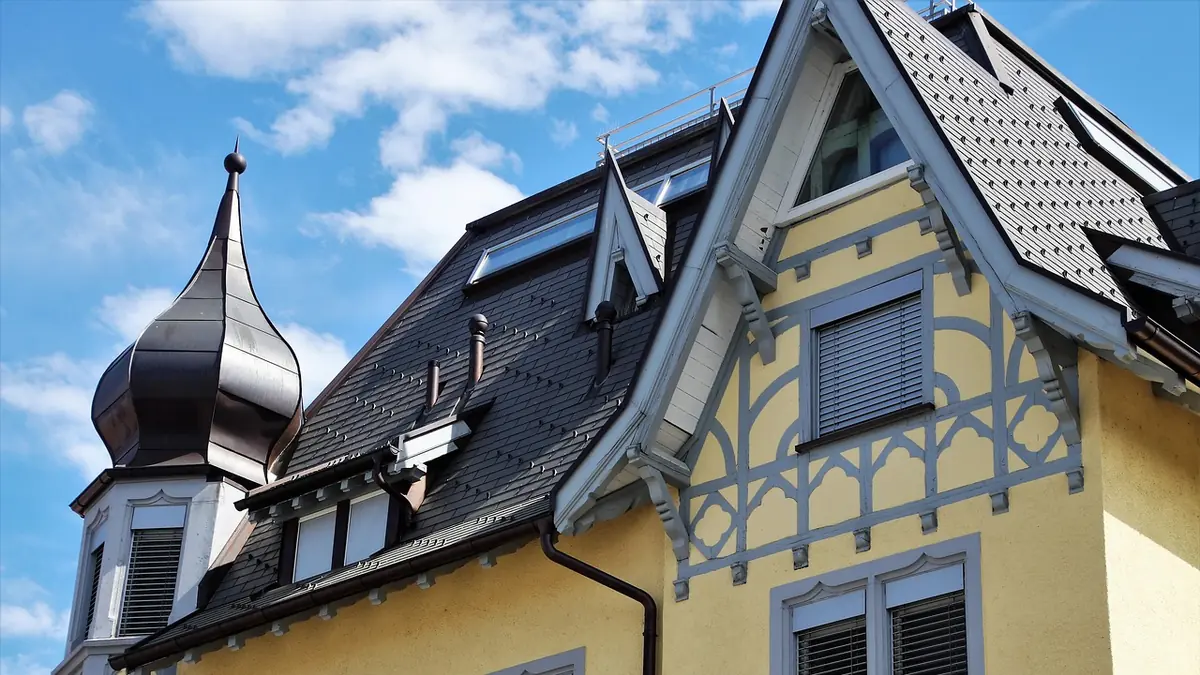
Rentals in Switzerland in 2026: a deposit of up to three months, an escrow account and 30 days to contest the termination notice. Focus on the canton of Lucerne.
Context
In brief
- Maximum security deposit: three months' rent
- Blocked account in the tenant's name
- Landlord's termination notice: official cantonal form
- Challenge within 30 days
Key facts
- Scope → federal law, same in every canton
- Reference → CO art. 253 et seq.
- Security deposit → maximum three months; blocked account in the tenant's name
- Landlord's termination notice → official cantonal form
- Challenge → within 30 days before the conciliation authority
The Swiss rental market in 2026 can be viewed on two levels: average prices by canton and the rules governing the relationship between landlord and tenant. The focus on the canton of Lucerne serves to connect the national comparison to a cantonal reality, without changing the basic legal framework.
Tenancy is regulated by federal law referred to in CO art. 253 et seq., and the rules are the same in every canton. For those looking for a home in Lucerne, this means that essential rights concerning the deposit and termination do not depend on a different tenancy law than in the other cantons. The operational difference indicated by the source concerns the form: the landlord's termination notice is valid only if drawn up on the official cantonal form.
The security deposit has a precise cap: it may not exceed three months' rent. It must also be placed in a blocked account in the tenant's name. This should be checked before considering the move-in process closed, because the amount and the account holder are two distinct elements of the rule.
The landlord's termination notice
When a landlord's termination notice arrives, the time limit to bear in mind is 30 days for challenging it before the conciliation authority. The check concerns not only the date: the formal document is also decisive, because the source requires the official cantonal form. The rule applies within the federal tenancy framework, while the form retains a cantonal dimension.
The comparison of average prices and the review of the termination notice are therefore two separate checks: one describes the market by canton, while the other applies a formal rule governing the tenancy relationship. UST/BFS statistics serve to interpret statistical data and not to set tax rates. For a family's overall budget, rent remains an item in costo della vita in Svizzera, to be examined together with the other expenses without confusing rent with taxes or contributions.
Operational details
The real cost beyond rent
The comparison between Lucerne and the other cantons is not limited to the average rent. Housing costs should be included in the cost of living and considered together with mandatory expenses and disposable income. The source clearly separates premiums, contributions and taxes: this distinction avoids attributing to rent costs that belong to other categories.
| Item | Rule indicated by the source | Interpretation for the comparison |
|---|---|---|
| Rent | Average prices by canton | Separate the rent from the rest of the budget |
| LAMal/KVG | Mandatory for residents; within 3 months; per-capita premiums by canton or region | Calculate the premium separately from salary |
| Taxation | IFD, cantonal and municipal; each canton has its own law and multiplier | The municipality applies the multiplier to the cantonal tax |
| Social security and employment | AVS/AHV, LPP/BVG and AD/AC affect salary | Look at disposable income |
Understanding net income
Salary deductions follow different rules. AVS/AI/IPG amounts to 5.3% for the employee and 10.6% in total including the employer. AD/AC is 1.1% up to the annual maximum. LPP/BVG is calculated on the coordinated salary: the reference rate is 7% between ages 25 and 34, 10% between 35 and 44, 15% between 45 and 54 and 18% from age 55 until the reference age.
LAMal/KVG, on the other hand, is mandatory health insurance for residents, to be taken out within three months of arrival. The premium is per capita, varies by canton or region and may be subject to a cantonal reduction; it is neither a tax nor a salary contribution. When comparing a home in Lucerne, this item should therefore be treated separately from the rent and the payslip.
Taxation also involves distinct areas of responsibility. AFC/ESTV administers direct federal tax and VAT; the cantonal administrations handle cantonal and municipal taxation. UFAS/BSV concerns social security and does not set taxes, while UST/BFS produces statistics. To check overall sustainability, one can supplement this with a guide to LAMal e cassa malati, without turning a premium or a tax rate into a rental price.
Useful planning tools
To estimate your pension strategy, use the pension planner and the pillar 3 simulator.
Key points
Practical procedure for the tenant
Four checks before and after the contract
The first step is to build a consistent comparison: note the rent requested for the home in question and place it alongside the reference for average prices by canton. For a decision between different locations, add the items that the source distinguishes from rent: LAMal/KVG premiums, taxation and salary deductions. The result must show the monthly cost of housing separately from the rest.
1. Security deposit. Verify that it does not exceed three months' rent. Ask that the deposit be held in a blocked account in the tenant's name. Do not confuse the amount limit with the account-holder requirement: both are part of the federal rule.
2. Termination notice form. If the communication comes from the landlord, check that it is on the official cantonal form. For a contract in the canton of Lucerne, the reference remains federal tenancy law, but the document must comply with the cantonal form indicated by the source.
3. Deadline. If the termination notice must be challenged, calculate the 30-day deadline and address the challenge to the conciliation authority. Do not replace this step with a simple tax check or a statistical figure: UST/BFS and AFC/ESTV have different responsibilities.
4. Budget. Before choosing, compare disposable income, not just the rent. AVS/AI/IPG, AD/AC and LPP/BVG deductions follow their own rules; LAMal/KVG is mandatory for residents and has per-capita premiums. This check makes the cost of living clear without attributing tax or social security responsibilities to tenancy rules.
If the issue concerns the validity of the termination notice, the practical point is to respect the deadline and contact the competent conciliation authority. If it concerns the budget, separate rent, insurance and taxes instead: direct federal tax, cantonal tax and municipal tax belong to three distinct levels. To relate income to expenses, complete the check with calcolatore stipendio e imposte.
Frequently Asked Questions
- What is the security deposit limit in Switzerland?
- The security deposit may not exceed three months of rent. It must be placed on a escrow account in the tenant's name. The rule is part of the federal lease law provided for by CO art. 253 et seq. and applies in the same way in each canton, therefore also in the canton of Lucerne.
- Does the rental discipline change in the canton of Lucerne?
- The right of lease is federal and equal in each canton. In the case of cancellation by the lessor, however, the validity requires the official cantonal form. For this reason, the same basic regulations as the other cantons apply in Lucerne, but the cantonal form of communication must be verified.
- How long does it take to challenge the landlord's cancellation?
- The dispute of the lessor's cancellation must be submitted within 30 days to the conciliation authority. The term is linked to the dispute procedure and must be kept separate from the control of the form: the source requires both compliance with the deadline and the use of the official cantonal form for the cancellation of the landlord.
- What costs should be separated from the fee in the comparison?
- For the balance sheet, the rent must be separated from premiums and taxes. LAMal/KVG is mandatory for residents, is stipulated within three months of arrival and has per capita premiums per canton or region. The tax has three levels: direct federal, cantonal and municipal tax; each canton has its own law and multiplier.