Solar eclipse in Cardada: two hundred enchanted people
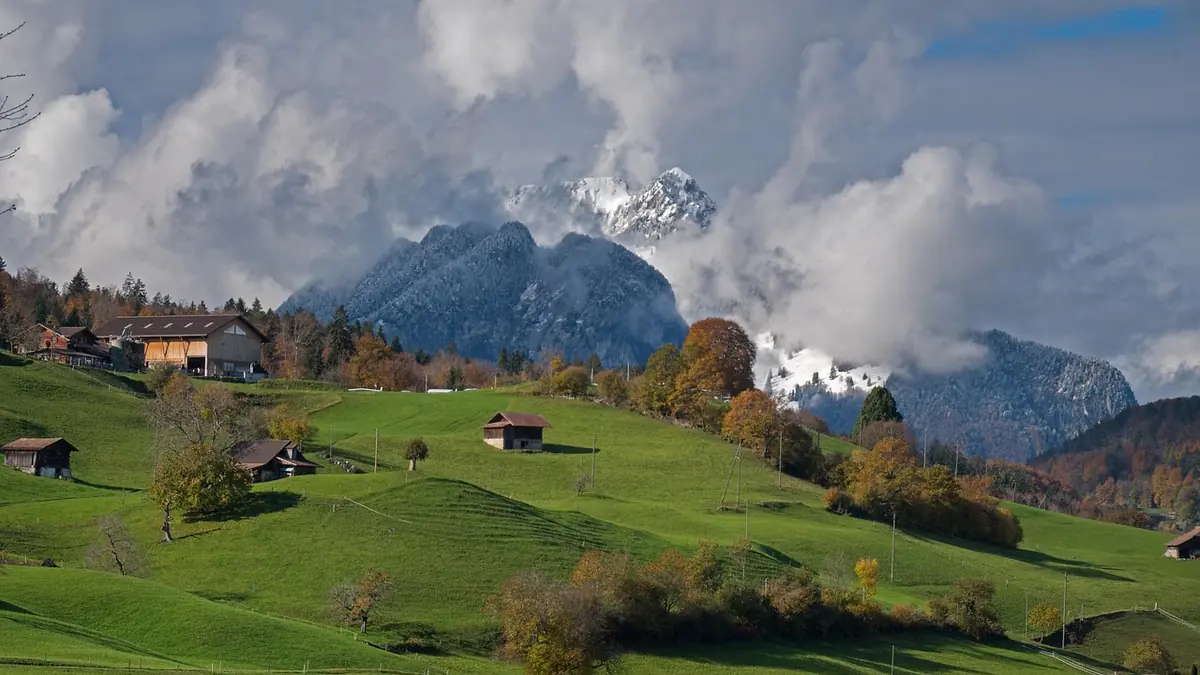
Two hundred people traveled to Cardada to observe the solar eclipse of August 12, 2026, with a partial eclipse of 91%.
Context
In a nutshell
- Two hundred people went to Cardada to observe the solar eclipse of August 12, 2026.
- The 91% partial eclipse has been observed by many.
- The next total solar eclipse will take place on September 3, 2081.
A unique day for eclipse lovers
The solar eclipse of 12 August 2026 was a unique event for the inhabitants of the Canton of Graubünden and for visitors from all over Switzerland. Two hundred people went to Cardada, a town located at about 2,612 meters above sea level, to observe this natural phenomenon. The partial eclipse of 91% was observed by many, who were able to admire the Sun covered by a ring of shadow.
Preparations and safety
Before observing the eclipse, it is important to prepare and know the safety rules. According to Switzerland, 70% of eclipse observers injure themselves every year, mostly from looking directly at the Sun without eye protection. This is a serious hazard, as it can cause permanent injury to the eyes. Therefore, it is essential to use 100% protective goggles or eclipse filters.
Operational Challenges
Observing a solar eclipse requires careful planning and constant attention. Here are some operational challenges to consider:
- Safe observation : Make sure to use 100% protective goggles or eclipse filters.
- Location: choose a place with good visibility and low density
Operational details
The solar eclipse of August 12, 2026 was a unique and spectacular event observed by two hundred people in Cardada, a tourist resort located in the Canton of Ticino, about 1,500 meters above sea level. The effort of climbing to the top was rewarded by an extraordinary spectacle, with exceptional colors of the sunset.
The solar eclipse is a natural phenomenon that occurs when the moon is between the earth and the sun, blocking sunlight and creating a shadow on the earth's surface. This event was accurately predicted by astronomers, who calculated the position of the moon and sun to create a perfect shadow over the Ticino region.
The structure of the Ticino mountains has helped to create a unique atmosphere for the eclipse. The mountain tops blocked the sunlight, creating a deep and intense shadow that allowed you to observe the moon in all its splendor.
The solar eclipse is an event that requires some planning and preparation. Local authorities worked together with astronomers to create a contingency plan in case of bad weather or other adverse weather conditions. The emergency plan provides for the closure of roads and the creation of an evacuation plan in case of need.
The visit to Cardada for the solar eclipse was a unique and unforgettable experience for the two hundred people present. The atmosphere was full of emotions and the view of the moon in all its glory was
Useful tools to protect your net income
To reduce FX leakage, compare CHF-EUR exchange options and banks for cross-border workers.
Key points
If you want to observe the solar eclipse, remember to go up in altitude and check the weather forecast to know if the clouds could obscure the view. The next total solar eclipse will take place on September 3, 2081.
On 21 August 2017, Cardada, a village at high altitude in the Graubünden region, hosted around two hundred people who witnessed the total solar eclipse. This event demonstrated the importance of carefully planning astronomical observations in Switzerland, where weather conditions can vary rapidly.
Preparing for the eclipse
To ensure a positive experience during the eclipse, it is essential to prepare in advance. Here's a checklist of things to do:
- Consult the weather forecast for the observation area
- Check weather conditions and the possibility of clouds
- Choose a place with good visibility
- Wear sunglasses or a filter to protect your eyes
- Have a binoculars or telescope to observe the eclipse in detail
Regulations and rules
Switzerland has a number of regulations and regulations to ensure the safety and protection of the environment during astronomical observations. For example:
- The Federal Airspace Act (LufTV) of 8 October 1957 states that aerospace activities, including astronomical observations, must be conducted in such a way as not to disturb aviation safety.
- The Federal Protection Act
Compare the CHF/EUR exchange rate in real time across providers: save up to 1.5% on monthly transfer fees.
Source: rsi.ch