Short-time work: the Federal Council envisages a gradual return to normality
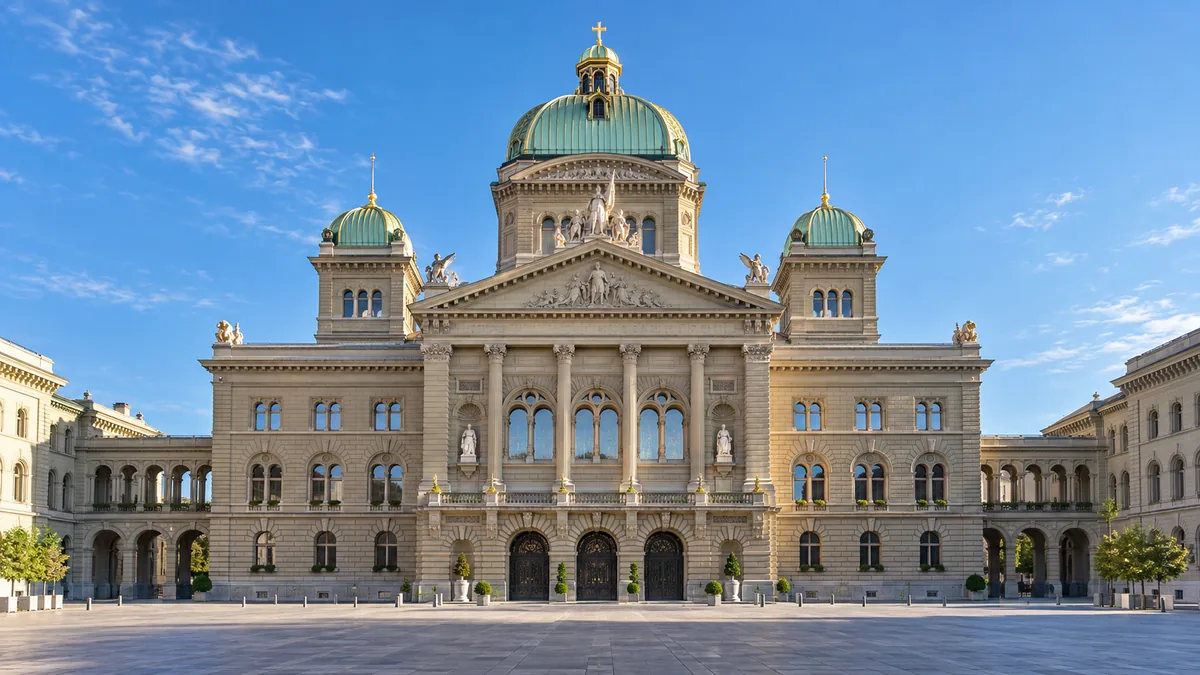
The Federal Council intends to gradually normalize the ILR Maximum duration: 24 months until January 31, 2027 Expected growth: 1,7% in 2026 and 1,6% in 2027
Context
TL;DR
- The Federal Council intends to gradually normalize ILR
- Maximum duration: 24 months until January 31, 2027
- Forecast growth: 1,7% in 2026 and 1,6% in 2027
- From 2028, the waiting period returns to three days
Key facts
- Date → 21 October 2026
- Place → Bern
- Instrument → short-time work compensation (STC)
- Current maximum duration → 24 months
- Ordinary duration → 12 months
- Current waiting period → one day
- Expiry of current duration → 31 January 2027
- Department in charge → EAER
On 21 October 2026, in Bern, the Federal Council discussed the framework conditions for short-time work compensation (STC). The Executive intends to gradually normalize the instrument because the economic situation has improved.
During periods of economic difficulty, short-time work helps preserve the stability of companies and employment. Through STC, unemployment insurance (UI) temporarily covers a substantial share of remuneration for hours not worked. The measure therefore concerns companies that suffer unavoidable losses of work.
Decision and timeline
Within the limits set by law, the Federal Council can adjust the framework conditions, intervening primarily on the maximum duration for receiving STC and the waiting period. During crises, the duration is extended and the waiting period shortened; when the economic situation improves, both parameters are gradually brought back to the ordinary levels provided for by law.
For now, STC can be received for a maximum of 24 months, rather than the ordinary 12 months; the waiting period is one day, compared with the three normally provided for. The extension to 24 months remains valid until 31 January 2027. In December 2026, in light of the economic situation and the economic outlook, the Federal Council will assess whether to renew the extension from February 2027 and to what extent. It will also examine other measures to bring the duration back to the ordinary 12 months during 2027, depending on economic developments.
Operational details
The comparison between rules and economic conditions
Reading the data requires keeping separate the units used in the press release: months and days describe the parameters of ILR, while economic outlooks report annual growth rates. The comparison can be summarized as follows:
| Parameter or data | First value | Second reference |
|---|---|---|
| Maximum ILR duration | 24 months | 12 standard months |
| Waiting period | one day | three days from 2028 |
| Growth of the Swiss economy | 1,7% in 2026 | 1,6% in 2027 |
Two parameters, two horizons
The maximum duration indicates the time horizon within which the benefit may be received; the waiting period, by contrast, is expressed in days. The press release describes both as framework conditions that can be modified by the Federal Council depending on the economic situation. The current rule combines a duration extended to 24 months with a waiting period reduced to one day. The return to the standard reference points is instead staggered across different deadlines: the duration will be reassessed in December 2026, while the three-day waiting period will return from 2028.
From an economic perspective, the Confederation's outlook of September 17, 2026, indicates growth of the Swiss economy of 1,7% in 2026 and 1,6% in 2027. The arithmetic difference between the two forecasts is 0,1 percentage points: 1,7% minus 1,6%. This is a comparison between two annual estimates referring to different periods.
The same source forecasts that unemployment and short-time work will continue to decline. These data, together with the positive outlook, give the Federal Council room to begin a gradual normalization. However, the text does not present an immediate change to all the parameters: it distinguishes the assessment of the duration, scheduled for December, from the return of the three-day waiting period, set to take effect from 2028. For hours not worked, AD meanwhile continues to temporarily cover a large part of the salary payments provided for under ILR.
Key points
Risks and next steps
The improved outlook does not eliminate the risks identified by the Confederation: geopolitical tensions, high energy prices and uncertainty over trade policy. For this reason, the Federal Council will closely monitor economic developments and maintain dialogue with the social partners and the business community.
A decision that still depends on the data
The duration of ILR beyond January 31, 2027, has not yet been determined. In December 2026, the Federal Council will assess whether to extend the maximum duration again from February 2027, and to what extent. It will also consider further measures to return it to the standard twelve months during 2027. The assessment will take into account the economic situation at the time and the economic outlook.
The change to the waiting period will follow its own timetable. Since the end of the COVID-19 pandemic, companies’ contribution to short-time work costs has been limited to one waiting day; from 2028, the “deductible” will return to the standard three days. To change the duration and waiting period, it will be necessary to amend the Ordinance on Unemployment Insurance (OADI). The Federal Council has assigned this task to the Federal Department of Economic Affairs, Education and Research (DEFR); a public consultation is planned for the first months of 2027.
Access for companies
According to the press release, short-time work will remain accessible in the future to all companies experiencing unavoidable losses of work. Companies that already benefit from ILR or intend to do so can submit the application and/or statements online via the “Short-time work application/calculation” eService on the lavoro.swiss portal. Overall, the picture points to a gradual return to the standard parameters, accompanied by an assessment of the economic situation and a public consultation.
Source: seco.admin.ch
Frequently Asked Questions
- What is the current maximum duration of the reduced working hours allowance (ILR)?
- The maximum duration for receiving ILR is currently set at 24 months, compared with the ordinary 12 months provided for by law. This extended arrangement expires on January 31, 2027. In December 2026, the Federal Council will assess whether to extend this duration further or begin returning to 12 months during 2027, depending on economic developments.
- When will the waiting period for companies change?
- The current waiting period is one day. Starting in 2028, the deductible period will return to the standard three days. This change is part of the gradual normalization of ILR framework conditions, which the Federal Council intends to pursue because the economic situation has improved, with growth of 1,7% forecast for 2026.
- How can companies apply for short-time work?
- Short-time work remains available to all companies affected by unavoidable losses of work. Companies can submit applications and calculations online on the lavoro.swiss portal, using the specific eService «Application/calculation for short-time work». Unemployment insurance (UI) temporarily covers a large part of the wages for the hours not worked.