Referendum against new nuclear power plants in Switzerland
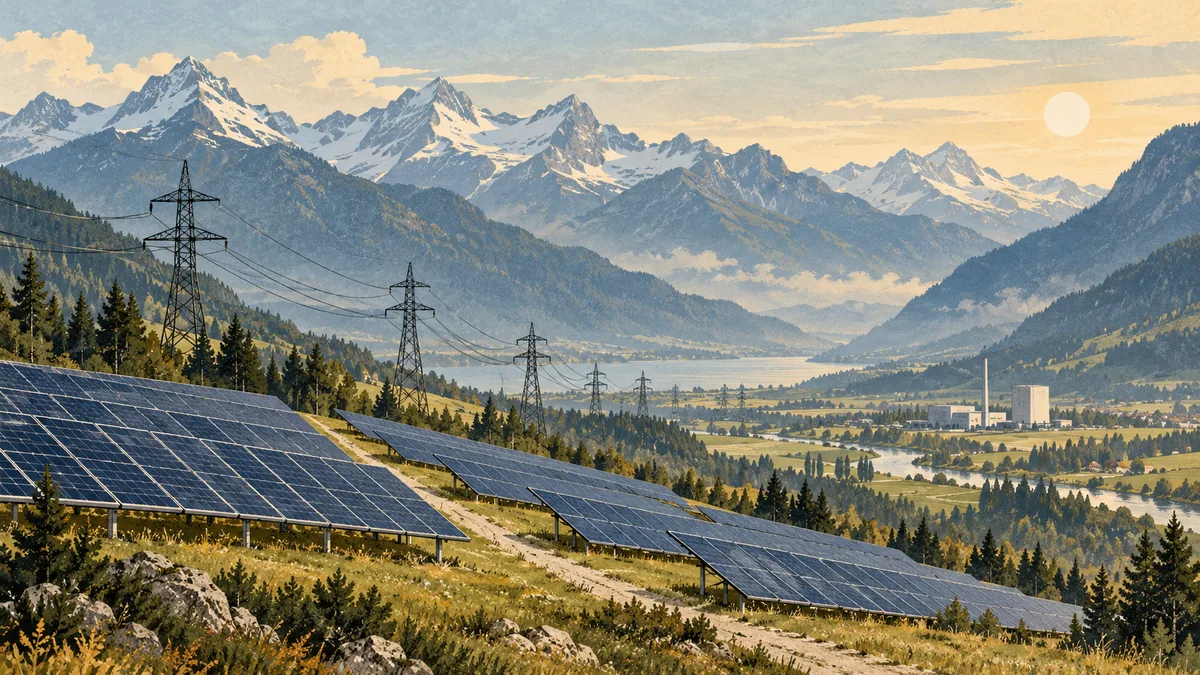
More than 131.800 signatures delivered to Bern by SP, Verdi, GLP and part of Centro to maintain the ban on nuclear power; vote possible on February 28, 2027.
Context
TL;DR
- More than 131.800 signatures against new nuclear plants
- SP, Greens, GLP and part of the Centre in Bern
- Winter shortfall is around 6,8 TWh
- Possible vote on February 28, 2027
Key facts
- Signatures → more than 131.800
- Location and parties → SP, the Greens, GLP and part of the Centre
- Nuclear share → just under 30% of domestic electricity production
- Winter shortfall → around 6,8 TWh in 2025–26
- Possible vote → February 28, 2027
The submission of the signatures
More than 131.800 signatures were submitted in Bern by an alliance of left-wing and centrist parties that wants to prevent Switzerland from lifting the ban on building new nuclear power plants. Greenpeace reported on the submission, carried out on Tuesday by representatives of the Socialist Party, the Greens, the Green Liberals and part of the Centre.
The political objective is to maintain the ban already in force. Lisa Mazzone, president of the Greens, described nuclear energy as an outdated and expensive technology that leaves future generations highly radioactive waste. Her position places the signature drive within the debate between investment in renewables and a return to nuclear power.
The discussion starts from a fact concerning the national electricity system as a whole. Nuclear energy currently accounts for just under 30% of Switzerland's domestic electricity production. During the winter months, however, the country cannot produce enough electricity to meet demand and relies on imports. The shortfall was around 6,8 TWh in the winter of 2025–26, equivalent to around one fifth of the country's winter consumption.
The two positions on winter
Vanessa Gassler-Meury, a member of the committee of the Stop the Blackout initiative, argues that the problem will worsen when the existing nuclear power plants are shut down. In her view, renewables alone are not enough: solar power is intermittent, while nuclear provides a constant supply. For this reason, nuclear energy would be particularly important in winter, when reliable, low-carbon electricity is needed.
The pro-solar camp, by contrast, emphasizes the capacity that is already growing. Last winter, solar energy produced more than 2 TWh, an amount equivalent to the additional winter electricity production expected from the planned expansion of hydropower by 2040. Renewable energy supporters fear that lifting the ban would slow investment in solar power. Jürg Grossen, president of the Green Liberals, submitted a parliamentary motion to maintain solar subsidies. Priska Wismer-Felder, a National Council member from the Centre in Lucerne, supports the referendum and calls for resources to be focused on renewables. If the ballot goes ahead, the vote could be held as early as February 28, 2027.
Operational details
What's at stake for the electricity system
For anyone living or working in Switzerland, the practical point is to distinguish three levels: domestic production already available, the winter shortfall and the additional capacity expected from renewables. The source does not put these figures on the same footing, and this is precisely where part of the political debate lies.
Different numbers, different questions
| Measure | Reported figure | What it indicates |
|---|---|---|
| Nuclear share | Just under 30% of domestic production | The current weight of nuclear energy |
| Winter shortfall | Around 6,8 TWh in 2025–26 | Reliance on imports in the cold months |
| Solar energy | More than 2 TWh last winter | A growing renewable contribution |
| Hydropower | Expected additional winter production by 2040 | A planned expansion of renewables |
A nuclear share of just under 30% describes the current weight of the technology in domestic production. The 6,8 TWh shortfall, on the other hand, describes what is missing in winter relative to demand and is covered by imports. The more than 2 TWh produced by solar last winter measure renewable capacity already in place; the figure linked to hydropower concerns an additional target by 2040.
This distinction avoids two automatic conclusions. Solar growth is not presented as eliminating the winter shortfall. At the same time, the nuclear share alone does not resolve the choice of how to manage the closure of existing plants. Stop the Blackout's position focuses on the continuity of winter supply; referendum supporters focus on renewables and fear that new plants will slow investment in solar.
The debate also has a resource-allocation dimension. For Priska Wismer-Felder, opening the door to nuclear construction now would mean spreading investments too thinly; Jürg Grossen has called for maintaining solar subsidies. The source does not quantify the value of subsidies, investments or any individual economic effects. Those who want to keep the energy dossier separate from other economic items can consult costo della vita in Svizzera and calcolatore stipendio.
Useful tools to protect your net income
To reduce FX leakage, compare CHF-EUR exchange options and banks for cross-border workers.
Key points
How to follow the dossier
The practical path for a reader is primarily informational: the source describes the submission of the signatures and indicates a possible voting date, but does not yet present an outcome. To avoid confusing the steps, proceed as follows.
Five useful steps
1. Consider February 28, 2027, the nearest date indicated for a possible consultation, not a certain date: the source specifies that the vote depends on whether the referendum proceeds. 2. Identify the choice under discussion: retain the ban on new nuclear power plants or repeal it. This is not the same as already knowing the outcome of the vote. 3. Keep the dossier’s four indicators separate: just under 30% of domestic nuclear generation, approximately 6,8 TWh of winter shortfall in 2025–26, more than 2 TWh of solar in the last winter, and an additional hydropower target by 2040. 4. Read the arguments in light of the most challenging season: on the one hand, nuclear energy as a constant, low-emission source; on the other, solar and other renewables as investment priorities. 5. Follow the two political elements already indicated by the source: Jürg Grossen’s parliamentary motion to maintain solar subsidies and Priska Wismer-Felder’s position in favor of the referendum.
This outline makes it possible to assess the arguments without attributing to the dossier figures it does not contain. The amounts of subsidies, costs for new power plants, or individual economic effects are not reported. The source therefore does not make it possible to turn the possible vote into a personal financial forecast. The operational fact remains the possible consultation on February 28, 2027, and the issue the campaign should place at the center: winter electricity supply.
For a personal check, use calcolatore stipendio.
Source: lenews.ch
Related articles
- All articles: Agreements and politics
- Referendum riuscito: 125'000 firme contro nuove centrali
- Nuove votazioni in Svizzera: nucleare, 13ma AVS e salari
- Di più aziende elettriche, scarsa voglia di costruire centrali nucleari
- Centrali nucleari: rischio per migliaia di posti lavoro
- Nuovo impianto nucleare: da 14 a 43 miliardi di franchi