Oil: from Kurdistan to Israel via Lugano
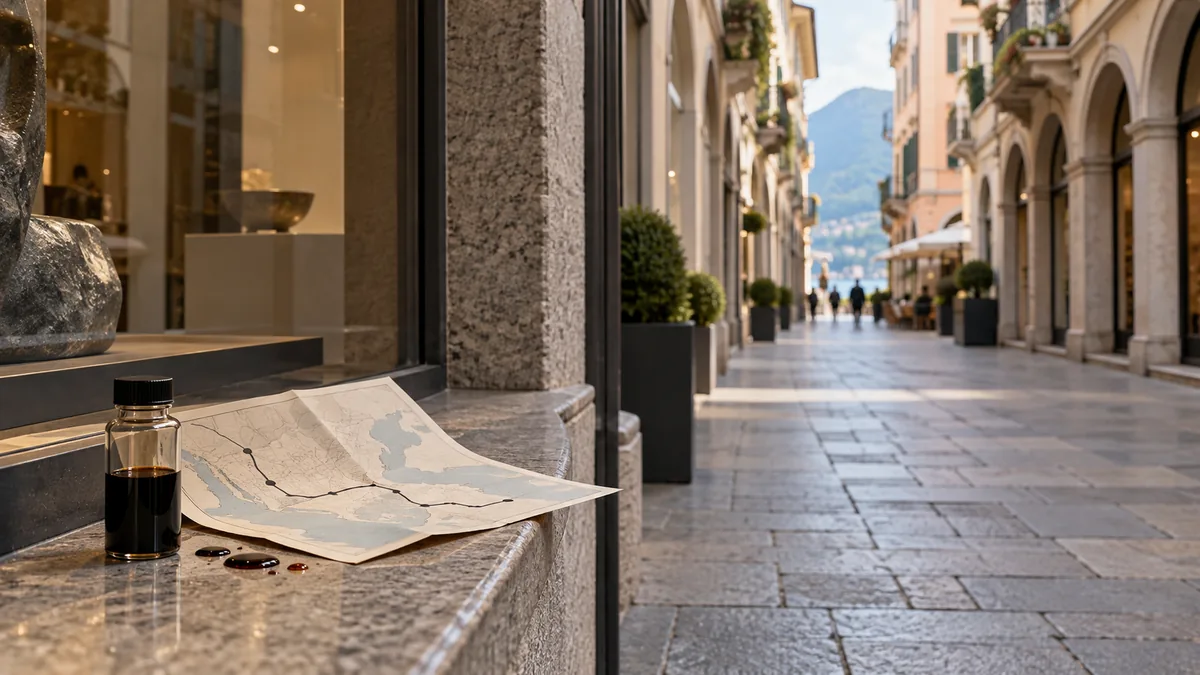
Fifth journey through Ticino’s raw-materials world: from Kurdistan to Israel, via Lugano, tracing the crude oil trade and Via Nassa in the story.
Context
TL;DR
- Fifth journey into Ticino's world of commodities
- The route links Kurdistan, Lugano and Israel
- At the center is the crude oil trade
Key facts
- → Kurdistan Route, Lugano, Israel
- Crude Oil → Trading Theme
- → Fifth trip to Ticino of raw materials
The fifth trip to Ticino of raw materials follows a route declared without ambiguity: from Kurdistan to Israel, passing through Lugano. The theme is the crude oil trade. The source thus presents its new path, relating an origin, a passage and a destination within the same story.
The title adds a second coordinate: via Nassa. The winding oil roads, evoked in the opening, are therefore not just a reminder of the subject matter. They serve to take the reader from a route that starts from Kurdistan and arrives in Israel to a point precisely named in the title. The subtitle keeps Lugano at the centre of the declared route.
A journey told by coordinates
The choice of words defines the cut. The source speaks of a journey and uses the verb let's set sail, inviting us to follow the traces of the crude oil trade. Neither a price table nor a measure to be applied is presented: the text builds a narrative itinerary around oil and raw materials.
The number five indicates the position of this story in the series of trips dedicated to the Ticino of raw materials. It is an explicit editorial fact. The available material does not list the other trips; therefore the reader may withhold the number, but not attribute to the series content that is not described here.
For those who live or work in Switzerland, the contact point indicated is Lugano. However, the source does not assign the city an additional role with respect to the declared passage, nor does it appoint companies, operators, quantities, prices or dates. The verifiable perimeter remains so precise: Kurdistan, Lugano, Israel and crude oil trade. Everything else would require information that this text does not provide.
Operational details
Practical significance for the Swiss reader
The link to Switzerland provided by the text is concrete but limited. The material names Lugano and places the city within a route linking Kurdistan and Israel. It does not announce a federal or cantonal decision, indicate a change for families or businesses, or provide a data point with which to measure an immediate effect. The soundest reading is therefore to recognize the geographical and economic connection without turning it into a consequence that the source does not state.
The reading framework
| Element | Explicit information |
|---|---|
| Route origin | Kurdistan |
| Named stop | Lugano |
| Destination | Israel |
| Commodity at the center | Crude oil |
| Editorial frame | Fifth journey into Ticino's world of commodities |
This grid separates the levels. Kurdistan, Lugano and Israel are the coordinates of the route; crude oil is the object of trade; the fifth journey is the format through which the text presents the in-depth feature. Via Nassa, on the other hand, belongs to the title and reinforces the local reference, without adding any figures or operator names on its own.
For a national reader, the distinction helps avoid two logical leaps. The first would be to move from a described route to an effect on prices. The second would be to read Lugano's presence as proof of a role that the material provided does not assign to it. The source invites the reader to follow the traces of the trade, but it neither quantifies the trade nor describes its consequences.
The practically useful part is therefore a minimal map. Anyone looking for a precise economic figure finds textual coordinates and a clear topic; what they do not find, however, is a figure, a deadline or an administrative action. This does not diminish the value of the journey described: it simply establishes the boundary between what the text says and what the reader must not add. To explore further without forcing the content, it is best to stick to the words indicated by the source: commodities, crude oil, Kurdistan, Lugano, Israel and via Nassa.
Key points
How to proceed with the reading
The source does not open a case, specify a deadline, or request a document. Therefore, the concrete action that the text allows is an orderly verification of the information, useful to anyone who wants to follow an economic topic without confusing the account with an operational notice.
Four steps
1. Start with the title. Note the reference to the winding roads of oil and to via Nassa, without replacing it with another route. 2. Read the subtitle. That is where the fifth journey into Ticino of raw materials, the route from Kurdistan to Israel, and the passage through Lugano appear. 3. Isolate the topic. The commodity indicated is crude oil, and the activity being followed is its trade. Do not add figures, companies, or prices to the text that are not present. 4. Stop at the verifiable perimeter. If a sentence introduces a date, quantity, operator, or effect on the territory, that sentence cannot be attributed to this material without another source.
This method is simple, but it makes the news readable for people who live or work in Switzerland. The reader immediately recognizes the local element, Lugano, and retains the direction of the route without mistaking the narrative for an administrative procedure. The presence of via Nassa remains the one declared by the title; the reference to Ticino remains that of the editorial framework; crude oil remains the subject of the trade being followed.
What cannot be calculated
The text does not give rise to a calculation concerning costs, amounts, or deadlines. It does not mention an office to contact, a decision to apply, or an indicated effect on work or families. Adding these elements would turn an account of the winding roads of oil into a different article.
Once the four steps have been completed, any further investigation must start from new verifiable information. The material provided here does not allow going beyond the narrative route indicated; maintaining its boundaries is the only way to rewrite it without transforming it.
Source: laregione.ch
Frequently Asked Questions
- What path does the story of the crude oil trade take?
- The route indicated by the source starts from Kurdistan, passes through Lugano and arrives in Israel. The text presents it as the fifth trip to Ticino of raw materials and invites you to follow the traces of the crude oil trade. The title adds the reference to the winding oil roads and via Nassa.
- Why does Lugano appear on the route described?
- Lugano is the passage indicated in the subtitle, which places the city between Kurdistan and Israel. The source does not add the name of a trader, a price, a volume or a date. Therefore, the role of Lugano should be read as the coordinate of the story, without attributing other effects to it.
- What does fifth trip mean?
- The formula defines the text as the fifth journey in Ticino of raw materials. The material provided does not list other trips and does not indicate dates or content. The number five can therefore be used as an editorial framework, along with the route from Kurdistan to Israel via Lugano.
Related articles
- Ginevra: 1.500 in piazza pro Palestina, chieste sanzioni a Israele
- Petrolio in cambio di miliardi: il potere nascosto dei trader svizzeri
- Export di greggio: Medio Oriente sopra i livelli pre-guerra
- Betancourt, il 'viceré di Caracas' indagato a Zurigo e il passaggio da Lugano
- Svizzera indifesa: ritardo difesa missilizia e IVA