Neutrality initiative: how the Grisons voted (cross-border guide)
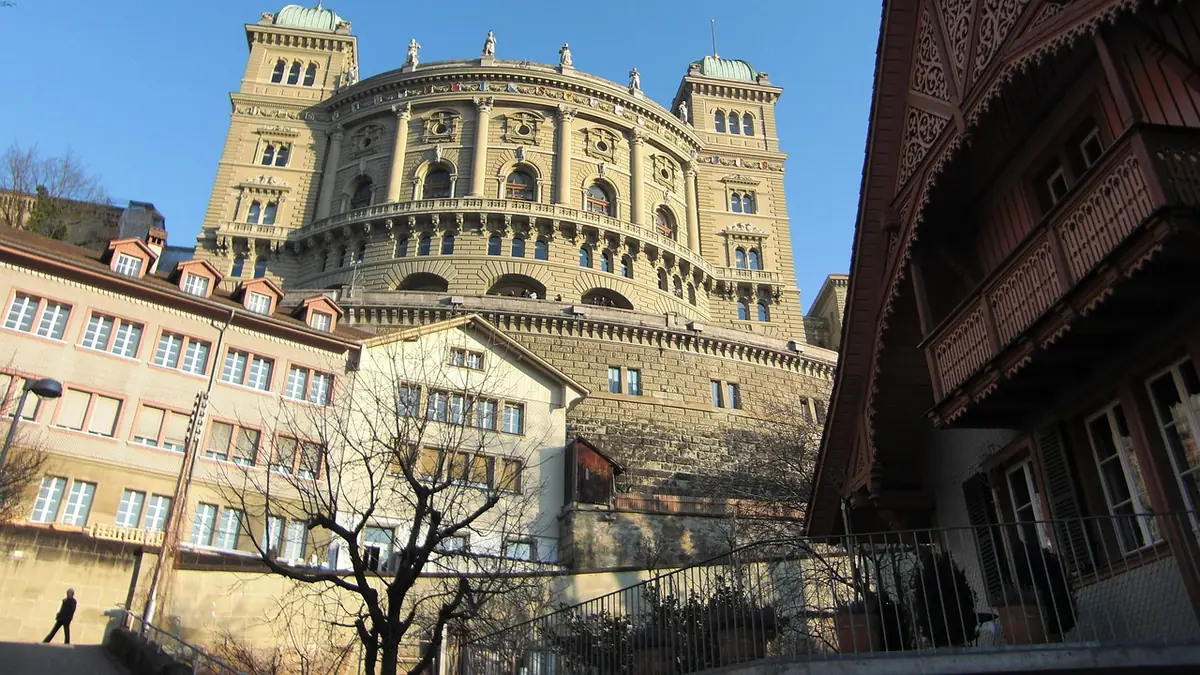
Fifteen municipalities in Graubünden approved the neutrality initiative. Contrary to the national 70,2% no vote, the yes vote reached 67% in Santa Maria.
Context
In brief
- 15 municipalities in Graubünden out of 100 said yes
- Santa Maria in Val Calanca reached 67%
- In Switzerland, 70,2% voted no
- In the canton, no votes amounted to 66,6%
- Initiative → initiative on neutrality
- Promoters → Pro Svizzera and some UDC figures
- Favorable municipalities in Graubünden → 15 out of 100
- Santa Maria in Val Calanca → 67% yes
- Grono → over 58% yes
- Brusio → 53,2% yes, 216 people
- National result → 70,2% no
- Cantonal result → 66,6% no
Fifteen municipalities in Graubünden out of 100 approved the initiative on neutrality, promoted by Pro Svizzera and some UDC figures. The figure is in stark contrast to the national vote, in which no votes reached 70,2%. Most of the favorable municipalities are located in Italian-speaking Graubünden. The Keystone-ATS news agency gathered explanations from some mayors.
Santa Maria and the valley’s vote
In Santa Maria in Val Calanca, the yes vote reached 67%, the clearest result among the municipalities mentioned. Independent mayor Francesco Bogana, who has led the locality of 115 inhabitants for 18 years, ruled out an interpretation tied solely to the parties. In his view, what weighed were the fear of being weak in the face of problems affecting Europe and the world and the awareness, developed in a small valley, of the difficulties Switzerland could encounter if it were no longer neutral.
Bogana said he was shocked by the national 70,2% no vote. His interpretation is that neutrality «is not divisible, it is total», and that a more neutral Switzerland represents a guarantee. He also linked the result to proximity to Italy: Santa Maria is closer to the neighboring country than other Swiss municipalities and, according to the mayor, closely observes problems that could also become its own.
Moesano and Valposchiavo
In Grono, the yes vote exceeded 58%. Samuele Censi, PLR mayor of the municipality of nearly 1’600 inhabitants, attributed the result to fears about international developments, proximity to Italy and the issue of organized crime, which in his view also contributed to the rift between the region and Chur. In Brusio, the yes vote was 53,2%, or 216 people. UDC mayor Davide Migliacci pointed to the strength of his party in the municipality and the border with Italy as keys to understanding the result.
In addition to Santa Maria in Val Calanca, Grono and Brusio, Furna, Rossa, San Vittore, Samnaun, Mesocco, Roveredo, Lostallo, Cama, Soazza, Castaneda, Buseno and Luzein approved the initiative. At the cantonal level, however, the initiative was rejected with 66,6% of the vote.
Operational details
How to read the gap between voting levels
The most useful data for understanding the outcome is the comparison between three levels. In Switzerland, 70.2% voted no; in Graubünden, the no vote was 66.6%, while 15 municipalities out of 100 said yes. The municipal result does not replace the national one: it shows where the proposal found local support.
| Level | Data | What it indicates |
|---|---|---|
| Switzerland | 70.2% no | national majority opposed |
| Graubünden | 66.6% no | cantonal majority opposed |
| Graubünden municipalities | 15 out of 100 yes | local exceptions |
| Santa Maria, Grono, Brusio | 67%, over 58%, 53.2% | three favorable results |
The mayors’ perspectives
The statements collected by Keystone-ATS do not offer a single explanation. Bogana referred to the fear of being weak and the idea of total neutrality. Censi mentioned Moesano’s attention to Ticino in federal votes, international concerns and organized crime. Migliacci pointed to the weight of the UDC in Brusio, as well as the direct perception of Italian problems, including crime and security.
The comparison distinguishes measured data from interpretations. Bogana does not attribute the yes vote solely to the parties; Censi links it to international concerns, not to a party; Migliacci, on the other hand, considers the strength of the UDC in the municipality decisive. Geographic location recurs in all three readings, but with different emphases: a small valley, proximity to Italy and a direct border.
For those living in Switzerland, the source therefore provides a practical criterion for interpretation: do not use the national result alone to describe every territory. The available text focuses on the outcome and local motivations; it does not describe individual administrative steps. To supplement the political data with a personal check, one can consult costo della vita in Svizzera, keeping the two aspects separate.
Useful tools to protect your net income
To reduce FX leakage, compare CHF-EUR exchange options and banks for cross-border workers.
Key points
How to use the data without confusing levels
The most prudent procedure for anyone reading about a federal vote starts with the result, not the explanations. The source does not describe individual administrative steps. The concrete action is therefore to verify the scope of the data and not to attribute consequences to the initiative that the article does not describe.
A five-step check
1. Mark the level. Write down whether the data concerns Switzerland, the Canton of Grisons, or a Municipality. The 70.2% 'no' vote, the 66.6% 'no' vote at the cantonal level, and the 'yes' votes of individual municipalities are not interchangeable results. 2. Record the number together with the location. A 67% figure referring to Santa Maria in Val Calanca cannot be used to describe the entire country. The same applies to the 53.2% in Brusio and the result in Grono, which was over 58%. 3. Separate result and interpretation. The percentages are the outcome of the vote; the explanations come from the mayors. Bogana speaks of total neutrality and fear of international problems, Censi points to the proximity to Italy, and Migliacci also points to the strength of the UDC. These are local interpretations. 4. Check the list. To understand the scope of the counter-trend, check if the Municipality appears among the 15 Grisons municipalities in favor: the source cites Furna, Rossa, San Vittore, Samnaun, Mesocco, Roveredo, Lostallo, Cama, Soazza, Castaneda, Buseno, and Luzein, in addition to the three cases discussed. 5. Set the limit of the information. The article reports the outcome and the motivations collected by Keystone-ATS, but it does not describe individual administrative steps. Therefore, a personal procedure should not be built based solely on the news.
This method also helps to distinguish a political position from an immediate effect on daily life. If the reader is performing a separate check of their own budget, they can consult the tax return and the cost of living in Switzerland, without using them to interpret the results of the vote.
To continue with a practical check of your income, use the salary calculator.
Source: swissinfo.ch
Frequently Asked Questions
- What was the outcome of the vote on the neutrality initiative in Graubünden?
- At the cantonal level, the initiative was rejected with 66.6% of votes against. However, 15 out of 100 Grison municipalities approved the proposal in contrast to the national figure, which saw 70.2% no. Among the favourable municipalities, Santa Maria in Val Calanca stands out with 67%, Grono with over 58% and Brusio with 53.2%.
- What motivations prompted the Gray Commons to vote yes?
- The reasons vary among the statutory auditors. The mayor of Santa Maria, Francesco Bogana, cites the fear of being weak in the face of international problems and the idea of total neutrality. Samuele Censi, mayor of Grono, pointed out the fears on the international scene, the proximity to Italy and the concerns related to organized crime. In Brusio, Mayor Davide Migliacci underlined the political weight of the local UDC and the proximity to the Italian border.
- What other Grison municipalities have approved the initiative?
- In addition to Santa Maria in Val Calanca, Grono and Brusio, the neutrality initiative was also approved in the municipalities of Furna, Rossa, San Vittore, Samnaun, Mesocco, Roveredo, Lostallo, Cama, Soazza, Castaneda, Buseno and Luzein. Overall, 15 out of 100 Grison municipalities voted in favour of the proposal promoted by Pro Switzerland and by some representatives of the UDC.
Related articles
- All articles: Agreements and politics
- Iniziativa neutralità respinta al 71%: esito delle urne in Svizzera
- Iniziativa neutralità: bocciata dal 70,2% degli elettori
- Iniziativa sulla neutralità bocciata dal popolo svizzero
- Neutralità svizzera: il voto sull'iniziativa
- Risultati votazioni 27 settembre 2026 in Svizzera