Buying a house in Appenzello Interno: mortgage and taxes (cross-border guide)
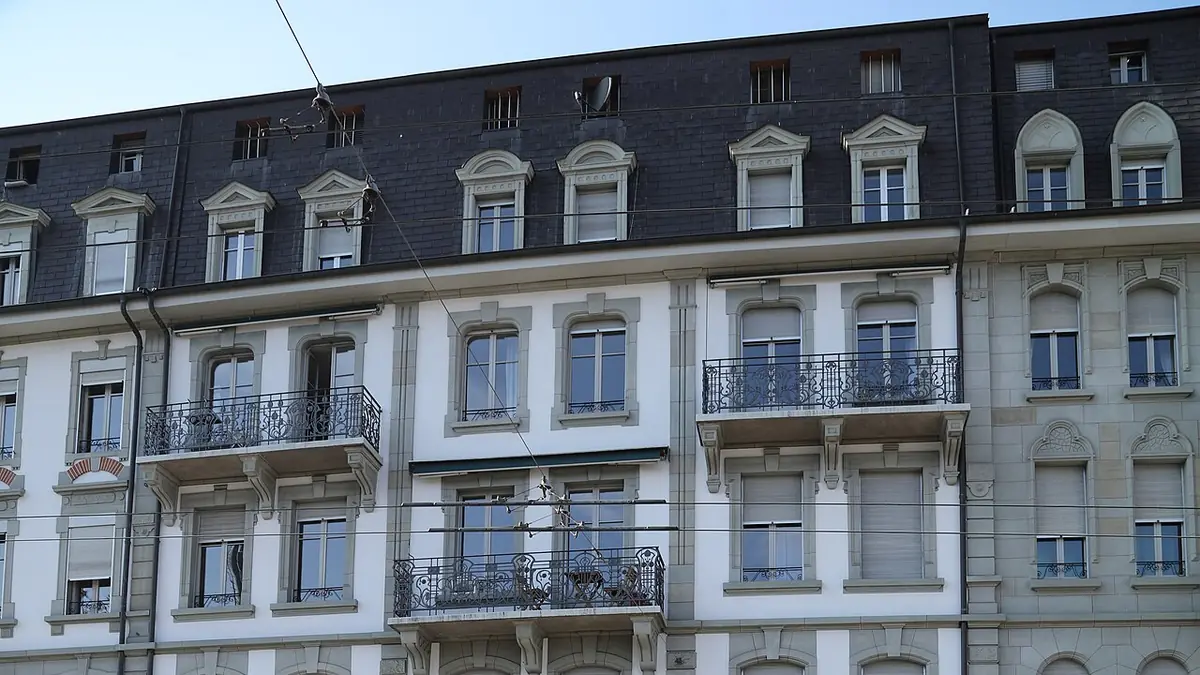
Guide to buying a property in Appenzello Interno. Analysis of costs, transfer taxes, notary fees, mortgage and financial sustainability.
Context
In brief
- Buying a house in Switzerland requires financing, tax analysis, and compliance with cantonal regulations
- Transfer tax and notary fees increase the total cost of the purchase
- The mortgage depends on income, assets, and the LTV ratio (loan/value)
Key facts
- What: Buying real estate in Switzerland involves federal, cantonal taxes, and professional fees
- Where: Canton of Appenzell Innerrhoden (specific cantonal regulations)
- Who: Buyers, banks, notaries, cantonal tax authorities
- When: Purchase procedure (from the preliminary contract to registration in the land register)
- How it works: Bank evaluation based on income, assets, and debt-to-income ratio
Buying a home in Switzerland is a significant financial decision that involves multiple regulatory, tax, and banking aspects. In the Canton of Appenzell Innerrhoden, as in the rest of Switzerland, real estate acquisition procedures follow a complex path that combines federal civil law, cantonal regulations, and established banking practices.
The purchase process is not limited to the transaction price. Those intending to buy a house or apartment must consider significant additional costs: property transfer taxes, notary fees, municipal land taxes, and the costs of mortgage financing itself. These elements vary considerably depending on the canton and municipality, creating very different total cost scenarios across different Swiss regions.
…
Operational details
The sustainability of the mortgage
The bank evaluates the feasibility of the financing based on standardized criteria consolidated in the sector. The LTV ratio (Loan-to-Value, i.e., the ratio between the mortgage amount and the value of the property) is one of the main indicators. Generally, Swiss banks finance up to a defined percentage of the property value, requiring the buyer to have sufficient own funds. This practice reduces the bank's risk and protects the borrower from insolvency situations due to fluctuations in property values.
In addition to the LTV ratio, banks assess the debt-to-income ratio: how much of the buyer's gross annual income is already committed to debts and how the new mortgage payment fits into the family budget. If the property also generates income (e.g., rent from parts of the house), this can be considered in the calculation of repayment capacity. The bank also analyzes the borrower's employment stability and the possibility of income suspensions in the medium term.
Transfer tax and notary fees
The property transfer tax represents a one-time cost that cannot be avoided and that every buyer must plan as a separate item in the overall budget. Its rate varies from canton to canton, as do exemptions or reductions for specific categories of buyers (e.g., owners buying their first home). In the canton of Appenzell Innerrhoden, as in other Swiss cantons, this tax burden is added to the purchase price and must be planned in the total budget, but the exact rates vary by canton.
…
Key points
Purchase checklist
Before proceeding with the purchase, gather the following information and documents:
1. Financial solvency: Calculate your annual payment capacity based on the net income declared to the Swiss tax authorities (the federal or cantonal direct tax assessment is the reference tool). Banks will require the last 2-3 tax returns and bank statements to verify the continuity of income.
2. Mortgage amount: Determine how much you can borrow. As a first parameter, calculate 75-80% of the estimated value of the property; this is the standard practice for mortgages secured by most Swiss banks. If you have fewer personal funds, you will need to seek alternative financing options (loans from relatives, increasing personal capital over time, insurance policies as additional collateral).
3. Bank consultation: Contact 2-3 banks to obtain a pre-assessment of solvency (often free). This will give you an order of magnitude of the amount that can be financed and the interest rate conditions relative to the current financial market situation.
4. Tax situation verification: Ask the seller (through the notary) for a certificate of tax compliance with the canton and municipality. This verification is mandatory to complete the transfer without inheriting outstanding tax debts or subsequent disputes from the authorities.
…
Frequently Asked Questions
- How much equity do I need to buy a house in Switzerland?
- There is no federal minimum defined in law, but Swiss banking practice generally requires own funds equal to at least 20% of the purchase price. This means that if a property costs CHF 500,000, you need at least CHF 100,000 of available assets. Some banks allow you to finance up to 85-90% of the value with additional documentation (difference insurance, family guarantees), but it comes with higher costs and requirements.
- Is the property transfer tax the same in all cantons?
- No. Each Swiss canton applies its own transfer tax rates and rules. The Inner Appenzell Canton has specific rules that may differ significantly from other cantons such as Zurich, Bern or Geneva. It is essential to inquire with the cantonal tax administration about the precise amounts before finalising the purchase.
- Can I negotiate notary fees?
- Notary fees are fixed by cantonal professional rates and are not negotiable in their legal minimum quantum. However, you can freely choose the notary, so compare prices between professionals. Expenses vary based on the complexity of the transaction and the price of the property, and each notary is required to declare the applicable fees.
- Which LTV ratio is considered safe by a bank?
- An LTV ratio around 70-80% is considered standard and generally does not involve additional warranty requirements. If you intend to exceed 80%, the bank may ask for credit risk insurance (insolvency protection) or a guarantee from a third party. Relationships over 90% are rare and involve significant insurance premiums.
- How long does it take between signing the contract and registration in the land register?
- Generally 4-8 weeks, depending on the processing speed of the notary and the cantonal land registry office. During this period, the loan must remain confirmed by the bank and no significant changes can occur in the buyer's financial situation, under penalty of revocation of the letter of financing.