Hackers tamper with refrigeration: risk to homes
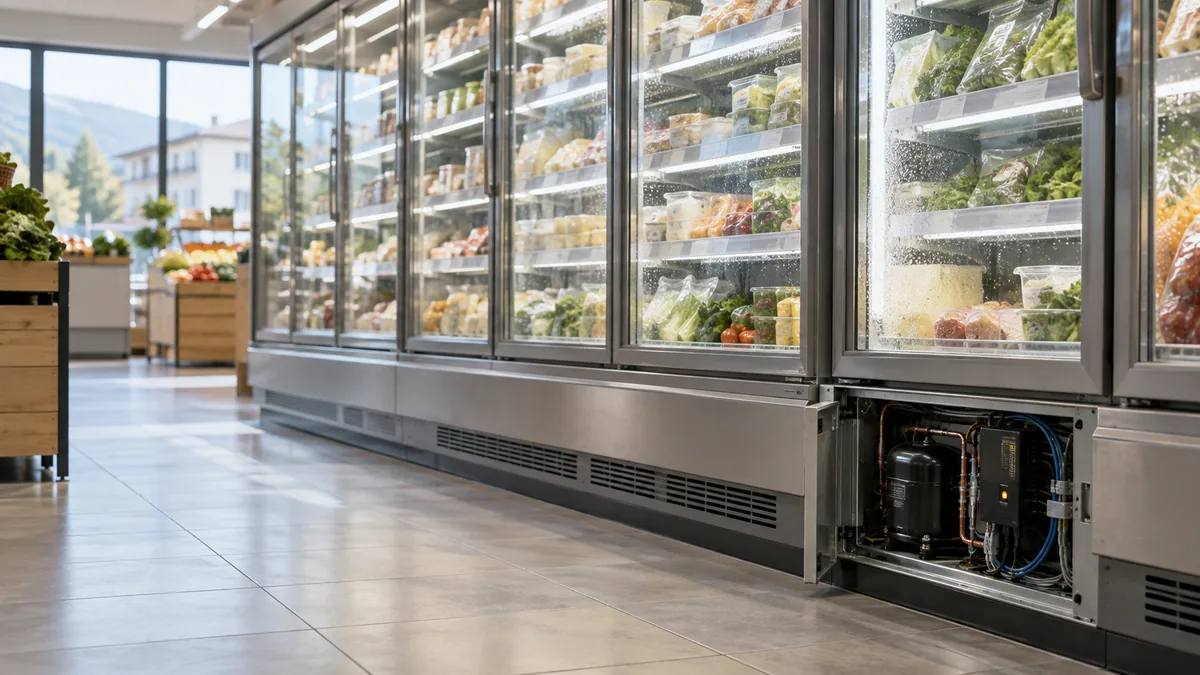
Attack on hundreds of French supermarkets Remote manipulation of refrigeration Damage amounting to millions of euros Coop and Migros: no similar attack recorded
Context
TL;DR
- Attack on hundreds of French supermarkets
- Refrigeration manipulated remotely
- Damage amounting to millions of euros
- Coop and Migros: no similar attack recorded
Key facts
- Target → refrigeration systems
- Location → French supermarkets
- Effect → higher temperatures and unusable food
- Manufacturer → Danfoss, Danish company
- Device status → obsolete generations without security updates
- Switzerland → Coop and Migros have not recorded similar cases
- Home → connected televisions, vacuum cleaners and speakers
- Expert → Jean-Marc Seigneur, University of Geneva
A cyber attack that hit hundreds of French supermarkets has brought digital security into an infrastructure linked to food preservation. The pirates remotely manipulated the refrigeration systems, causing the temperature to rise.
Large quantities of food have thus become unusable. The damage caused by the attack amounted to millions of euros, according to the description of the episode.
The case reignites attention on the security of devices connected to the internet. The sequence described by the source is concrete: a system reached remotely was manipulated, the temperature rose and the food contents were no longer usable.
For the two Swiss chains the picture is different: Coop and Migros report not having encountered attacks of the same type. Migros adds that only a few of its stores use Danfoss refrigeration systems and that, for now, there are no signs of their involvement.
The role of obsolete systems
The Danish manufacturer Danfoss, which makes many of the systems involved, explained that the affected devices are mainly of older generations and no longer benefit from security updates. The company thus drew attention to the conditions of the affected devices.
The threat also extends to private homes, where televisions, vacuum cleaners, speakers and other network-connected devices can provide an entry point for a cyber attack.
Connecting to the internet can leave any device exposed that does not have adequate protections and updates. The passage does not refer to a concrete domestic attack; instead, it signals possible exposure due to connection and insufficient protection.
This extension from commerce to homes is the national point of the story. Even for those living in Switzerland, the question is not just about refrigeration systems: it concerns the entire set of objects that can be connected to the network.
Jean-Marc Seigneur, an expert from the University of Geneva, recommends replacing default passwords, moving towards products from reliable companies and providing software and firmware updates. Finally, it invites us to evaluate whether it is really useful to make each device intelligent: each connected device introduces a further possible attack surface.
Operational details
Risk is not the same as an attack that has already occurred
The report makes it possible to distinguish three aspects. The first is the documented event: in French supermarkets, refrigeration systems were manipulated remotely, causing the temperature to rise and making food unusable. The second concerns the position of the Swiss companies mentioned: Coop and Migros have not reported similar attacks, while Migros currently has no indication that the few stores using Danfoss systems are involved. The third concerns homes: the source speaks of potential entry points, not a domestic attack that has already been documented.
Three conditions to consider together
A device connected to the network is not automatically considered compromised. The source identifies a potential vulnerability when it is not adequately protected and updated. Danfoss's clarification adds a second element: a large share of the affected devices belongs to obsolete generations that no longer receive security updates. For the reader, the difference lies between the mere presence of a connection and the protection condition indicated in the source.
| Condition | Indication in the source |
|---|---|
| Device connected to the internet | May become a potential entry point |
| Insufficient protection | The device may be vulnerable |
| Now-obsolete generation | No longer receives security updates |
| Making every device smart | Its actual usefulness should be assessed |
The relevant comparison for people living in Switzerland is not between an attack in France and a certainty in Switzerland. Coop and Migros have not reported similar cases, but the source does not present this fact as a guarantee for every connected device. At the same time, it does not describe a domestic attack that has already occurred: it mentions televisions, vacuum cleaners, speakers and other objects as potential entry points.
The practical consequence is a change in approach. The question is not only whether a device performs its function, but whether the connection provides a genuine benefit. Seigneur invites us to reflect on precisely this point: making every object smart introduces a new potential attack surface for every connected device. In this reading, the case of the French supermarkets becomes a reference point for assessing household choices without turning a possibility into an attack that has already been confirmed.
Key points
The checklist for home appliances
The practical response indicated by the source consists of four guidelines for objects connected to the network. The sequence concerns both the appliances mentioned for homes and, more generally, any device connected to the internet: vulnerability depends on not being adequately protected and updated.
“Replace default passwords, opt for products from reliable companies, and ensure that software and firmware are updated.”
1. Change the default password
The first check is to replace the default password. This measure should be considered for every object connected to the network, not just a refrigeration system. The source mentions televisions, vacuum cleaners, speakers and other household devices.
2. Choose a reliable company
When choosing a connected product, the expert recommends opting for reliable companies. This criterion is significant because Danfoss specified that a substantial share of the affected appliances comes from outdated generations that no longer receive security updates. The source does not provide a list of manufacturers or models: the guidance remains that of the expert, namely to favor reliable companies.
3. Keep software and firmware updated
The third step consists of keeping software and firmware updated. The recommendation concerns both, without separating software management from firmware management. For connected objects in the home, this is the indicated check for avoiding the vulnerability condition referred to by the source.
4. Assess whether the smart function is really needed
The fourth step concerns the initial choice. Seigneur suggests considering whether making every appliance smart is genuinely useful. If the function is not useful, the connection should not be considered automatic: every connected device adds a new potential attack surface. The checklist thus concludes with a decision before the technical one: protect and update what is connected, but first ask whether it needs to be connected.
Source: rsi.ch
Frequently Asked Questions
- What happened in French supermarkets?
- A cyber attack has hit hundreds of French supermarkets. The pirates remotely manipulated the refrigeration systems, causing the temperature to rise. Large quantities of food have thus become unusable and the damage has reached millions of euros. The episode rekindled the focus on the safety of internet-connected devices.
- Were Coop and Migros involved?
- Coop and Migros say they have not recorded similar attacks in Switzerland. Migros points out that only a few of its stores use Danfoss refrigeration systems and that, at the moment, there are no indications of their involvement. The statements concern the French case reported in the source and the Swiss situation cited.
- What household appliances are exposed?
- The risk concerns televisions, vacuum cleaners, speakers and other objects connected to the network. The source warns that, in general, any device connected to the internet can be vulnerable if it is not adequately protected and updated. A specific domestic attack is not described: the possibility of these objects becoming potential entry points is indicated.
- What measures does Jean-Marc Seigneur recommend?
- Jean-Marc Seigneur, an expert at the University of Geneva, recommends changing default passwords, choosing products from reputable companies, and keeping software and firmware up to date. He also suggests asking yourself about the actual usefulness of making each device intelligent, because each connected device adds a new potential attack surface.