Federal Council launches consultation on customs ordinances
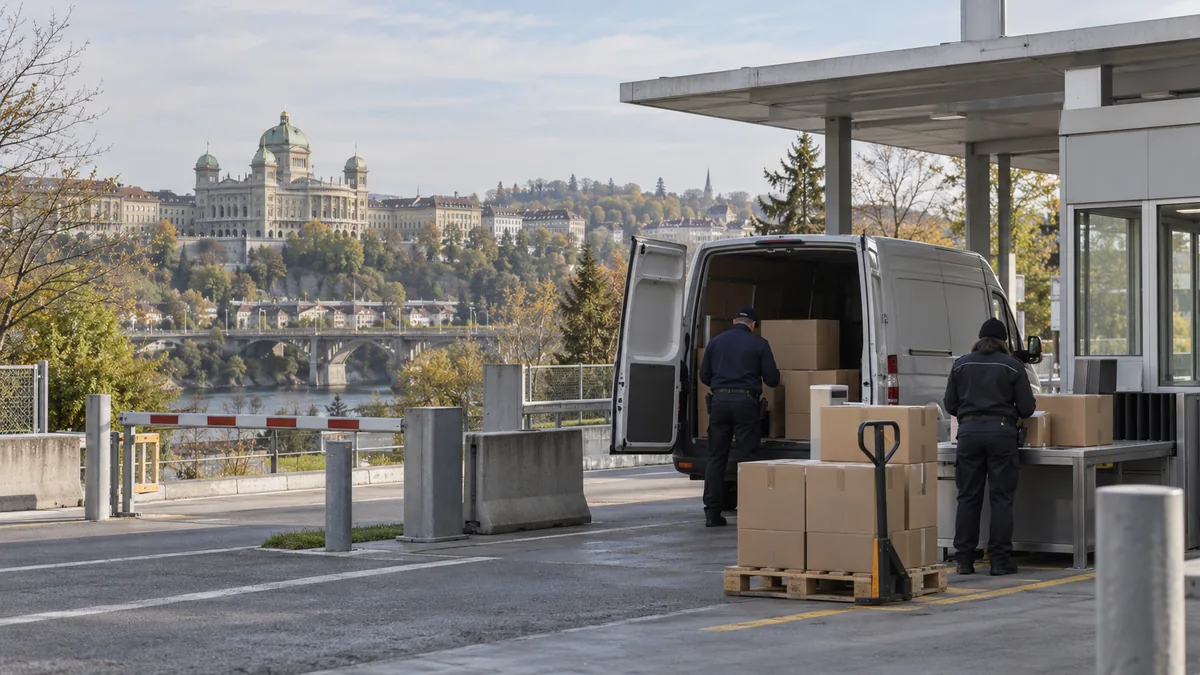
The Federal Council launches the consultation on October 14, 2026 The project concerns the total revision of customs law The consultation deadline.
Context
TL;DR
- The Federal Council launches the consultation on October 14, 2026
- The project concerns a total revision of customs law
- The consultation period ends on January 28, 2027
- The focus is the new ordinance on the tasks of the UDSC
Key facts
- What → Total revision of customs law
- Who → Federal Council
- When → October 14, 2026
- Deadline → January 28, 2027
- Legal bases → LUDSC and LTDo
- Program → DaziT
- Parliament → June 20, 2025
The Federal Council launched the consultation procedure on October 14, 2026, at its meeting in Bern, on the package of ordinances for the total revision of customs law. The decision concerns the comprehensive modernization of the legal bases and forms part of the DaziT digitalization and transformation program, also linking to the development of the organization of the Federal Office for Customs and Border Security (UDSC).
A new framework ordinance
The core of the project is the creation of a new framework ordinance: the ordinance on the tasks of the UDSC. The text aims to reduce the administrative burden for the economy and clarify the methods for harmonizing and digitalizing procedures. Simplifications are also planned for the collection of duties and for the activities through which the UDSC manages and controls the cross-border movement of goods and people.
The federal communication therefore presents a framework that combines organization, procedures and duties. The package is intended to give concrete form to the new customs legislation through several implementing acts. The consultation concerns the preliminary drafts and the documentation published for the recipients identified in the procedure.
The ordinances involved
Numerous ordinances are undergoing a total revision. The ordinance on customs will become the new ordinance on customs duties. The package also includes the ordinance on tobacco taxation, the ordinance on beer, the ordinance on motor vehicles, the ordinance on mineral oils and the ordinance on alcohol.
The timetable sets the close of the consultation for January 28, 2027. The amendments implement the LUDSC and the new LTDo through ordinances, adopted by Parliament on June 20, 2025. The LTDo governs customs duties, while the LUDSC consolidates and standardizes the UDSC's enforcement tasks in a single separate framework law.
The new provisions create the stated legal bases for simplifying, harmonizing and digitalizing customs and duty-collection processes on a large scale. The publication of October 14, 2026 accompanies the opening with the preliminary drafts, explanatory reports, a letter to the Cantons, a letter to organizations and the list of recipients of the procedure.
Operational details
What it means for procedures
For companies and operators handling goods or people across the border, the most concrete point indicated by the Federal Council is not a new amount, but how the procedures should be organized. The source links the new ordinance to three objectives: reducing the administrative burden, harmonizing the steps and digitizing the procedures. These objectives are aimed at the economy and the UDSC's activities. However, the press release does not indicate figures, rates or savings timelines.
This limitation is relevant to a practical reading of the dossier. The text announces a total revision and puts preliminary drafts out for consultation, but does not present a list of new obligations to be fulfilled immediately. The most prudent implication for those operating in cross-border traffic is therefore to distinguish between the project's stated direction and the applicable rules described in the press release.
Comparison between the current and proposed frameworks
The comparison that can be made concerns primarily the structure of the rules. The legislation approved by Parliament separates the rules governing customs duties, contained in the LTDo, from the UDSC's implementation tasks, set out in the LUDSC. The package of ordinances reflects this distinction: the customs ordinance is transformed into an ordinance on customs duties, while a new framework ordinance specifies the office's tasks and the manner in which procedures are conducted.
| Scope | Reference cited | Project direction |
|---|---|---|
| Customs duties | LTDo and ordinance on customs duties | Revision of the implementing rules |
| UDSC tasks | LUDSC and ordinance on the tasks of the UDSC | Harmonization through a framework law and the ordinances |
| Processes | DaziT Programme | Digitalization, simplification and harmonization |
What remains to be verified
The ordinances on the taxation of tobacco, beer, motor vehicles, mineral oils and alcohol are included in the package, but the press release does not indicate specific changes for each duty. The source therefore provides no new amounts or new rates to apply. The consultation is the step explicitly communicated and closes on January 28, 2027.
The dossier is also accompanied by a letter to the cantons, a letter to organizations and a list of recipients. These documents are part of the official publication together with the texts and explanatory reports. For families, workers and businesses, the concrete point is therefore the launch of a broad regulatory revision, with procedural effects still to be defined through the documents submitted for consultation.
Key points
How to follow the consultation
To read the dossier in an orderly manner, the process can be organized into five steps based on the materials provided:
1. Mark January 28, 2027 as the deadline for the consultation procedure. 2. Open the draft ordinances published on October 14, 2026. 3. Read the explanatory reports on the total revision alongside the texts. 4. Consult the letter to the Cantons, the letter to the organizations and the list of recipients. 5. Compare the ordinances with the LUDSC and LTDo adopted by Parliament on June 20, 2025.
The first reading criterion is the subject of the dossier. For the tasks and controls of the UDSC, start with the ordinance on the tasks of the UDSC, that is, the new framework ordinance. For the regulation of customs duties, the reference is the ordinance on customs duties, intended to replace the Customs Ordinance as part of the total revision.
A second approach concerns specific levies. The package includes texts relating to tobacco, beer, motor vehicles, mineral oils and alcohol. It is therefore advisable to associate each topic with the relevant draft ordinance and corresponding explanatory report, without confusing these ordinances with the general ordinance on the tasks of the UDSC.
The documentation is presented in separate archives: the draft ordinances are provided in a 5.01 MB ZIP file, while the explanatory reports are collected in a 3.31 MB ZIP file. The same publication lists the documents addressed to the Cantons and organizations and makes the list of recipients of the procedure available.
For those following the dossier from the perspective of the economy or cross-border traffic, this sequence avoids reading a single ordinance in isolation. The DaziT program in fact links the digitalization, simplification and harmonization of customs and duty collection processes. The deadline indicated by the Federal Council remains January 28, 2027; until that date, the official material to be examined is that of the consultation launched on October 14, 2026.
Source: admin.ch
Frequently Asked Questions
- What is the subject of the consultation launched by the Federal Council?
- The consultation concerns the package of ordinances for the comprehensive revision of customs law, launched on October 14, 2026, and ending on January 28, 2027. The project aims to comprehensively modernize the legal foundations as part of the DaziT digitalization and transformation program.
- What is the focus of the customs revision project?
- The core of the project is the creation of a new framework ordinance: the ordinance on the duties of the UDSC. The text aims to reduce the administrative burden on the economy and clarify the arrangements for harmonizing and digitalizing procedures, with simplifications in the collection of duties and the management of cross-border traffic.
- How to follow the consultation on customs ordinances?
- To follow the consultation, note the deadline of January 28, 2027, consult the preliminary drafts published on October 14, 2026, read the explanatory reports alongside the texts, read the letter to the cantons and organizations, and compare the ordinances with the LUDSC and LTDo adopted by Parliament on June 20, 2025.
Related articles
- All articles: Border and customs
- Disabili intellettivi, consultazione sui diritti politici
- PA30+: Consiglio federale avvia consultazione agricola 2030
- Nuovo accordo per il commercio elettronico
- Videosorveglianza nei trasporti: consultazione pubblica aperta
- PA30+: consultazione sulla nuova agricoltura svizzera