Buying a house in Canton Solothurn: prices and mortgage
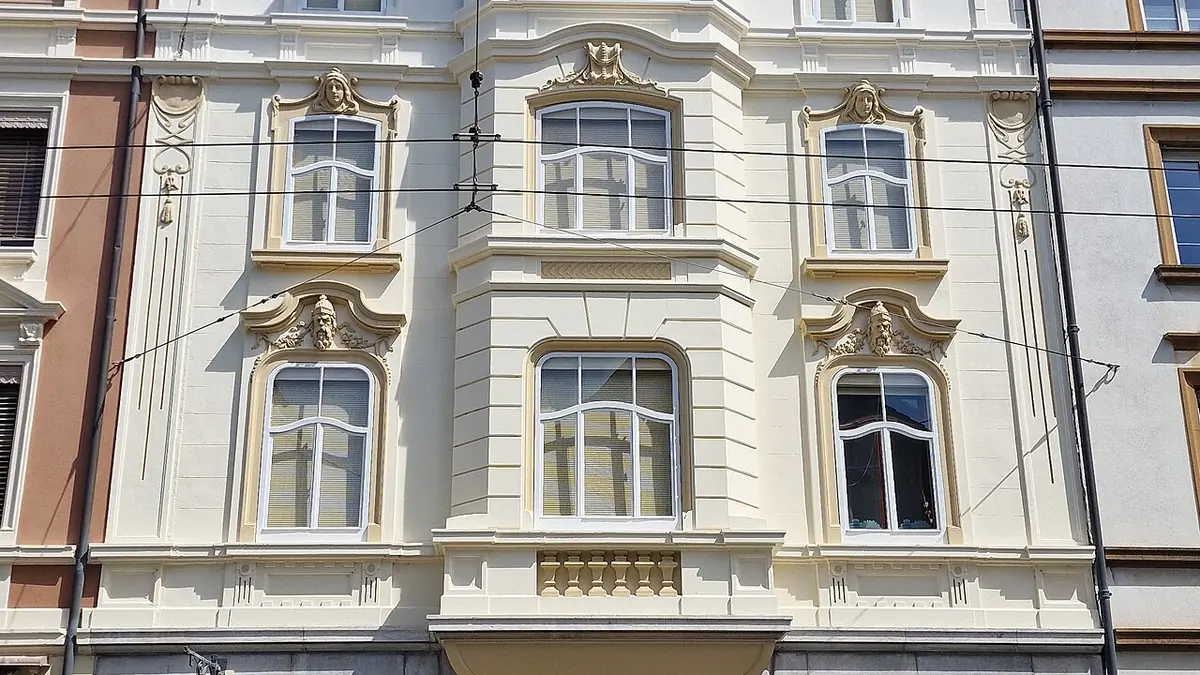
Buying a home in the Canton of Solothurn requires careful financial planning. Learn how mortgage, equity, transfer tax, and notary fees work.
Context
In brief
- Home purchases are governed by federal and cantonal regulations with a notarial procedure
- Mortgage loans and equity (20-30%) are essential for financing
- Property transfer tax and notarial fees represent significant additional costs
- Mortgage affordability is assessed by banks according to conservative standards
Key facts
- What: Real estate purchase in the Canton of Solothurn under federal and cantonal procedures
- Where: Canton of Solothurn, Switzerland, with registration in the cantonal land register
- Who: Buyer, bank, notary, cantonal tax administration
- Equity: Typically 20-30% of the purchase price
- Costs: Property transfer tax (varies by canton), notarial fees 0,5-1,5%, municipal taxes
- Procedure: Offer → Mortgage application → Bank valuation → Notary → Registration
Buying a home in the Canton of Solothurn requires careful financial planning and an understanding of various legal and tax aspects. In the Swiss real estate market, the procedure involves multiple parties: from the lending institution that provides the mortgage loan, to the notary who authenticates the transfer of ownership, to the cantonal authorities that collect the property transfer tax. Switzerland is organized across three levels of taxation — federal, cantonal and municipal — and each applies its own rules to real estate. The main elements to plan are the mortgage loan (the primary financing instrument), the accumulation of equity, the calculation of the property transfer tax and notarial fees. Access to financing depends on the bank's assessment of mortgage affordability: banks analyze gross income (net of AVS/AHV, LPP/BVG and unemployment insurance contributions), employment stability and the ratio between the monthly payment and income.
Legal structure of real estate purchase
In Switzerland, the purchase of real estate is governed by the Swiss Civil Code (uniform federal law). The standard procedure involves precise steps: negotiating and signing the offer, applying for a mortgage with the bank along with a property valuation, involving the notary in drafting the deed of sale, paying the property transfer tax, and finally registering the ownership right in the cantonal land register. Each canton, including Solothurn, maintains its own procedural specificities in terms of registration and administrative requirements. Real estate taxation is distributed across three levels: at the federal level, VAT applies to certain services (such as real estate brokerage); at the cantonal level, the property transfer tax represents the main burden; at the municipal level, annual property taxes and other local taxes apply. It is essential to consult the cantonal tax authorities to understand the specific rates applied in your municipality of interest in the Canton of Solothurn.
Mortgage fundamentals
The mortgage loan is the main real estate financing instrument in Switzerland. Banks assess affordability by applying conservative rules: the monthly payment must typically not exceed 33% of the buyer's gross monthly income. Equity (down payment) is usually between 20% and 30% of the purchase price, although this percentage may vary depending on the bank's policy and the buyer's risk profile. The Swiss National Bank (BNS/SNB) sets the benchmark rates that directly influence the interest rates on mortgages offered by the Swiss banking market. If you are employed, your salary is subject to mandatory social security contributions (AVS/AHV, LPP/BVG for occupational pension provision, unemployment insurance AD/AC): these contributions reduce net income and influence the bank's assessment of your repayment capacity.
Operational details
Real Estate Transfer Tax and Notary Fees: Additional Costs
The transfer tax (also known as real estate transfer tax, depending on cantonal terminology) is a cantonal tax applied to the transfer of real estate between private individuals. It varies significantly from canton to canton: some cantons apply rates ranging from 1% to 3% of the purchase price, while others reach 4-5%. In the Canton of Solothurn, as in other Swiss cantons, this tax is calculated based on the purchase price or the cadastral value, according to local regulations. It is essential to contact the Cantonal Finance Administration of the Canton of Solothurn (or the competent tax office) to obtain precise and up-to-date figures, since rates may vary and are sometimes differentiated based on the relationship between the parties (spouse, direct descendants, third parties). The municipalities of Solothurn may also apply additional local taxes on the purchase.
Notary fees are the fees payable to the notary for drafting, notarizing and registering the deed of sale with the land register. In Switzerland, notarial services are regulated at cantonal level, which means that notary fees vary from canton to canton and sometimes even between municipalities. Generally, notary fees range from 0.5% to 1.5% of the purchase price, although this estimate should be verified directly with the competent notary in your canton and municipality. These costs are supplemented by municipal real estate taxes (municipal property taxes applied annually), any real estate agent’s commissions (usually 1-2% of the price), and land-register registration fees. The sum of all these costs represents a non-negligible percentage of the purchase price and must be taken into account when assessing the overall affordability of the mortgage.
Mortgage Affordability Assessment
A bank’s assessment of mortgage affordability takes into account ALL additional costs associated with the purchase of real estate. A mortgage payment is considered affordable when it does not exceed a specific ratio of income; the calculation also includes the expected annual property taxes (municipal and cantonal), estimated maintenance costs, interest expenses, and a scenario involving an increase in SNB/BNS interest rates (stress test). When applying for a mortgage, inform your bank advisor of the total expected amount of transfer tax, notary fees, brokerage commissions and other taxes, so that they can be correctly included in the assessment of your long-term repayment capacity. Banks also analyze your tax return (federal IFD, cantonal and municipal tax returns) to verify the stability of your declared income.
Bank and Administrative Checks
Banks carry out detailed checks on the property (searches for land-register entries, existing mortgages and third-party rights) and on the buyer’s financial situation. Regarding the required documentation: contact the bank in advance for a complete list, but it typically includes the last 2 years of payslips, tax returns (federal, cantonal and municipal IFD), bank statements, employment certificates, and statements for any other source of income. If you are an employee, the bank will also verify your employment contract and the history of payments of AVS/AHV, LPP/BVG and unemployment insurance contributions. If you are self-employed or a freelancer, the bank will require certified accounting statements for the last 3 years. The bank may also request a certificate of good conduct and will check for any existing mortgage charges or debts.
Useful tools for your case
To practically check your scenario within/beyond 20 km, use calcolatore stipendio netto and guida dichiarazione redditi.
Key points
Step-by-step procedure for buying a home in Solothurn
Phase 1 — Bank prequalification: Before beginning the active search, consult a bank or mortgage broker for a free prequalification. Bring your payslips from the last year, your bank statement (which demonstrates your available own funds), and your tax return (federal IFD form, cantonal tax return for the Canton of Solothurn or canton of residence). The bank will communicate the maximum mortgage amount you can obtain and the estimated monthly payments based on current BNS/SNB rates and your personal circumstances.
Phase 2 — Search and offer: Once you have identified the property, negotiate the price with the seller or real estate agent. Sign a binding offer (called a “promise of sale” or “purchase offer” in some cantons), specifying the price, conditions and deadlines.
Phase 3 — Formal mortgage application: Submit the official mortgage application to the bank, attaching the appraisal of the chosen property. The bank orders a professional valuation to ensure that the property’s value adequately covers the loan (typically at least 80% of the appraised value).
Phase 4 — Involvement of the notary: Once the mortgage has been approved, the notary draws up the deed of sale (or “purchase and sale contract”). It is at this stage that the property transfer tax and notarial fees are calculated and paid. The notary registers the transfer with the land register of the Canton of Solothurn and handles payments to the seller and the tax authorities.
Phase 5 — Mortgage disbursement and registration: After completing the final checks, the bank disburses the mortgage by paying the notary or directly into the account. The mortgage is registered in the land register of the Canton of Solothurn, securing the bank’s lien on the property if the borrower fails to pay the installments.
Essential documents to prepare
Prepare a folder right away with:
- Last 2 years of payslips and tax returns (federal and cantonal)
- Recent bank statements (proof of savings for own funds)
- Certificate of good conduct (required by some banks)
- Letter of employment or employment contract (indicating duration and stability)
- Declaration of activity and income (if self-employed or a freelance professional)
- Proof of supplementary financing (if receiving help from family members — banks often require a “gift” declaration with no repayment obligation)
- Documentation of ownership of other properties (if applicable)
Practical tools and resources
Consult the official website of the Cantonal Finance Administration of the Canton of Solothurn for updated property transfer tax rates and specific municipal taxes for the municipality of interest. Contact a notary operating in the Canton of Solothurn directly to receive a written estimate of the specific notarial fees based on the price of your property. Use a calcolatore di mutuo to estimate the monthly payments based on declared income, current interest rates and the requested loan amount. Consult the websites of the major Swiss banks (UBS, Credit Suisse, Raiffeisen, Migros Bank, PostFinance) or mortgage brokers such as Comparis to compare mortgage interest rates and find the best conditions. Regularly monitor BNS/SNB decisions on policy rates, as they directly affect the future costs of your mortgage interest.
Final action
The next concrete step: contact a bank today for a free, no-obligation prequalification. Also ask the municipal administration of your municipality of interest in the Canton of Solothurn for information regarding municipal property taxes and any other local taxes. This data will allow you to plan the purchase accurately and assess the long-term financial sustainability of the mortgage, ensuring that the mortgage payment remains affordable even in a scenario of rising interest rates.
Frequently Asked Questions
- How is transfer tax calculated in the canton of Solothurn?
- Transfer tax is a cantonal tax levied on the transfer of real estate. The rate and tax base vary according to local cantonal regulations. In the canton of Solothurn, as in the other Swiss cantons, the tax is typically calculated on the purchase price or cadastral value. The relationship between the parties (spouse, descendants, third parties) may affect the applicable rate. Please contact the Solothurn Cantonal Finance Administration for accurate and up-to-date figures for your municipality.
- What is the minimum capital requirement for a mortgage loan in Switzerland?
- Swiss banks typically require equity of between 20% and 30% of the purchase price. However, some banks may accept lower percentages (10-15%) in specific cases, or require higher percentages for high-risk profiles. The exact percentage depends on your financial situation, employment stability, mortgage amount, and bank credit policy. A higher proportion of equity reduces banking risk and allows you to negotiate more favorable interest rates.
- How do banks assess the affordability of the mortgage loan?
- Swiss banks apply conservative rules: the monthly payment must typically not exceed 33% of the gross monthly income. In the calculation, banks consider net income (after deductions from AHV/AHV, LPP/BVG, unemployment insurance, KVG), job stability, and other verified sources of income. In addition, the valuation includes annual real estate taxes, estimated maintenance costs and a stress test of SNB/SNB rate hikes to ensure sustainability even in a higher interest rate environment.
- What are notary fees and how are they calculated?
- Notary fees are the notary's fees for drafting and authenticating the deed of sale. Regulated at cantonal level, the tariffs vary from canton to canton. They generally range between 0.5% and 1.5% of the purchase price. In addition, there are land registration fees and any minor administrative fees. Ask for a written quote from the notary before proceeding to understand the exact amount in your case.
- Can I deduct mortgage interest from my tax return?
- Yes, in many Swiss cantons, mortgage interest is deductible from taxable income in the tax return (federal and/or cantonal IFD). However, the rules vary slightly from canton to canton, and some regions have narrowed deductions in recent years. Check with your tax advisor or directly with the Cantonal Finance Administration of the Canton of Solothurn to fully understand the tax deductions applicable to your specific case.
Related articles
- All articles: Housing and rent
- Comprare casa Grigioni: mutuo e imposte
- Comprare casa Appenzello Esterno: guida al mutuo ipotecario
- Comprare casa Vallese: prezzi, mutuo e costi
- Comprare casa a Zugo: mutuo e fiscalità
- Comprare casa nel Cantone di Soletta: prezzi, fondi propri, mutuo ipotecario, imposta sui trapassi e spese notarili