Buying a house in Glarus: mortgage and taxes
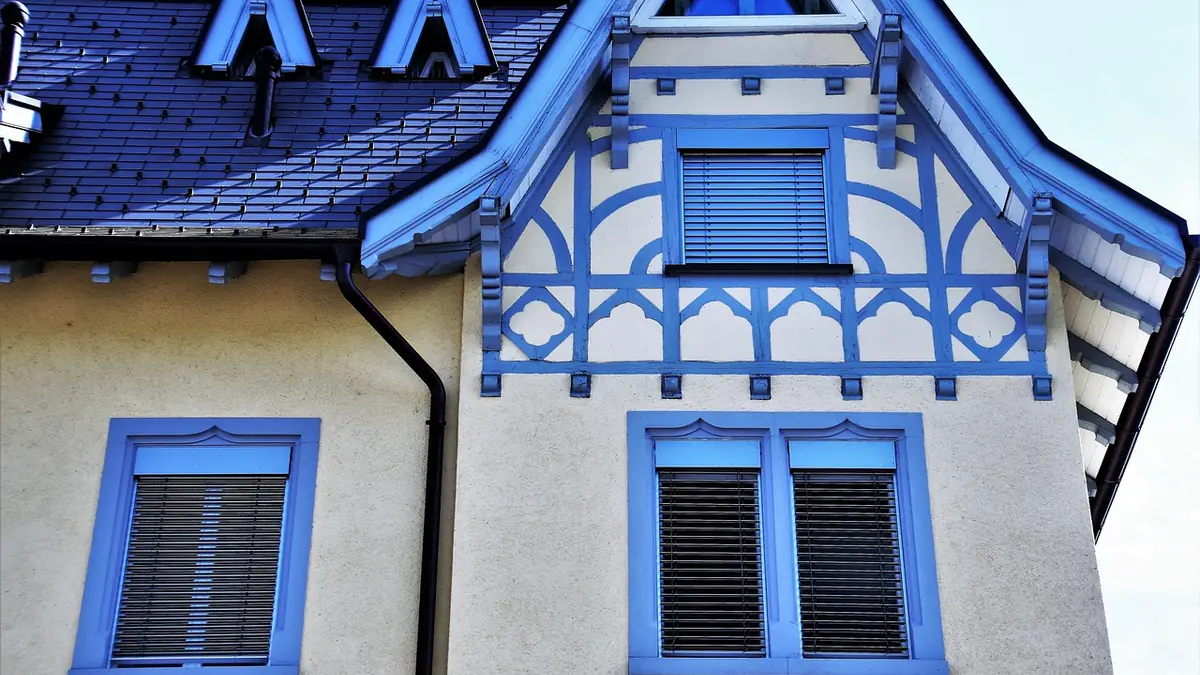
Guide to buying real estate in Glarus: own funds, mortgage, federal and cantonal taxes, transfer tax and notary fees.
Context
In a nutshell
- Own funds: on average 20-30% of the purchase price requested by Swiss banks
- Mortgage loan: fixed or variable rate, duration up to 35 years, verified monthly installment
- Taxes: three levels (federal, cantonal, municipal) on real estate property
- Transfer tax: cantonal property transfer tax, variable per canton
Key facts
- What: Purchase of real estate in Switzerland with bank financing
- Who: Individuals, couples, investors, Swiss banks, cantonal offices, notaries
- Where: Swiss federal territory; uniform procedures at national level, cantonal/municipal rates and taxes
- When: At any time of the year, subject to bank assessment times (typically 4-8 weeks)
- Amount: Variable by canton, municipality and location; reference data at UST/BFS
- Mortgage rate: Determined by Swiss National Bank policy; varies by institution, type of rate, duration
Buying a house in Switzerland involves a sequence of regulatory, financial and tax steps that vary slightly by canton. In the Glarus Canton, as throughout the Confederation, the process follows a national structure controlled by federal institutions (for general building regulations) and by cantonal authorities (for taxes, local permits, surface rights).
The financial pillar of the purchase remains the mortgage loan, provided by Swiss banks that assess the merit
Operational details
The Swiss Mortgage: Mechanism and Interest Rates
The Swiss mortgage is a loan secured by the property itself. Unlike other countries, Switzerland has a mature and highly regulated mortgage market, indirectly controlled by the Swiss National Bank (SNB) through interest rate policy.
When a Swiss bank grants a mortgage, it sets two fundamental parameters: interest rate and term (duration). The interest rate can be fixed (remaining unchanged throughout the term) or variable (adjusted periodically, usually annually, based on market rates managed by the SNB). Variable interest rates tend to be slightly lower than fixed rates, as the borrower accepts the risk of future increases. Fixed interest rates offer certainty of monthly costs, ideal for those who want to plan their budget with rigor.
The term of the mortgage typically varies between 5 and 35 years. Shorter terms (5-10 years) result in higher monthly payments but lower total interest; longer terms (20-35 years) reduce monthly payments but significantly increase the interest paid over the life of the mortgage.
Repayment Capacity and Bank Criteria
Swiss banks evaluate the borrower's repayment capacity using a standard formula: the monthly payment (capital + interest + any insurance costs) must not exceed 33% of the borrower's gross monthly income (sometimes 40% for borrowers with high net worth). This is a sector guideline, almost universally adopted by Swiss banks.
In addition to income, the bank verifies credit behavior (account balance, timely payments of other debts, current debts), requires employment documentation (employment certificates, last three salary slips), and sometimes an additional guarantee if the Loan-to-Value (LTV) exceeds 80%. This guarantee is usually a mortgage insurance product that protects the bank in case of the borrower's insolvency; the cost of this insurance is borne by the borrower and increases the total cost of the mortgage.
Each Swiss bank sets its own daily rates, differentiated by type of borrower (salaried vs. independent), LTV, and term. A recommended practice is to request offers from at least three institutions before signing, as a variation of just 0.25% in the interest rate can result in a savings or additional cost of tens of thousands of francs over the life of the mortgage. A mortgage calculator helps to compare scenarios and visualize the impact of interest rate, term, and amount on the monthly payment.
Recommended tools
For an updated estimate, use the net salary calculator and the CHF-EUR exchange comparator.
Key points
Taxes, Notary Fees and Operational Procedure
In addition to the cost of the mortgage and interest, the buyer of a house in Switzerland must set aside resources for taxes, notary fees, and other legal expenses. These costs are often overlooked in the overall budget calculation. Their magnitude varies significantly depending on the canton, municipality, and value of the property.
Transfer Tax and Property Taxes
Transfer tax (registration tax or transfer tax) is calculated at the time of registration of the new owner at the cantonal land registry. It is entirely cantonal: there is no federal transfer tax. The rate varies from canton to canton; some cantons have fixed rates, while others have progressive percentages (increasing with the value of the property), and some cantons do not apply any transfer tax between private individuals.
For the Canton of Glarus, the cantonal office of property tax or finance provides specific details on rates, taxable base, and payment methods. This tax is not negotiable; it is a legal obligation.
Annual property tax (annual tax on property) begins to be due the year after the purchase. It is calculated based on the taxable value of the property, established by the municipal administration or the office of estimates. It varies strongly from canton to canton and municipality: a municipality with high services may have higher rates than a rural municipality. This tax is paid annually to the municipality of residence of the property.
Notary Fees and Registration Fees
The notary draws up and authenticates the deed of sale (sales contract), ensuring the legality of the transaction and correct registration at the cantonal land registries. Notary fees in Switzerland are usually fixed by cantonal law; they are not negotiable. For an accurate quote, contact a local notary in the Canton of Glarus directly.
Some cantons also apply a registration fee for registration in the cantonal land register. This is a separate administrative cost from notary fees and varies by canton. In the Canton of Glarus, check with the land registry office (Grundbuchamt) for the current fees and processing times.
Operational Procedure for Purchase
Once the property has been found, the price agreed, and a winning mortgage offer obtained, the procedure begins with a preliminary purchase and sale agreement. In many cantons, before the definitive contract, a non-binding agreement is signed that sets the price, conditions, and delivery date, protecting both parties. We recommend having the house examined by an independent engineer or expert to check the structural state, installations, and potential hidden defects, although this is not always mandatory.
The notary then draws up the deed of sale, which must contain the data of both parties, a description of the property, price, payment conditions, and delivery terms. Both parties sign it in the presence of the notary, who authenticates it. The buyer pays the purchase price (through bank transfer, deposit with the notary, or with the seller's bank) according to the times set in the contract.
The notary then registers the property in the name of the new owner at the cantonal land registry office (Grundbuchamt). This step makes the transfer legally perfect. At the same time, the notary or the cantonal administration notifies the transfer tax to the canton. The buyer receives a payment notice and must pay it within the specified term. Finally, the municipal administration registers the new owner and calculates the annual property tax for the following year.
Before signing, consult a tax advisor or a lawyer specializing in real estate law to check that the contract does not contain unfavorable clauses and to fully understand the personal tax implications (capital gains, deductibility of mortgage interest from income tax, etc., which vary by canton). Consult the tax calculator to estimate the annual tax impact of the property.
The purchase of a house is the most important financial decision for most Swiss people. Spending time understanding the total costs, including taxes and fees, and comparing mortgage offers can result in significant savings in the medium to long term. Use the mortgage calculator to estimate monthly payments and total costs in different scenarios.
Frequently Asked Questions
- What are the minimum own funds required to buy a house in Switzerland?
- Swiss banks typically require own funds between 20% and 30% of the purchase price. Some banks accept shares of less than 20%, but apply additional mortgage insurance that increases the total cost of the mortgage. For a property of CHF 500'000, minimum own funds of CHF 100'000 (20%). There is no federal obligation, but it is a near-universal industry standard.
- How does the pass-through tax work in the Glarus Canton?
- Transfer tax is a cantonal tax levied at the time of the transfer of real estate property from the seller to the buyer. It is completely cantonal; there is no federal pass-through tax. In the Canton of Glarus, the rate, the tax base and the methods of payment are established by Glarus cantonal law. Please consult the Glarus Canton Finance or Land Tax Office for specific details and exact calculation.
- How much does a Swiss mortgage cost? What factors determine the interest rate?
- The interest rate of a Swiss mortgage loan depends on: monetary policy of the Swiss National Bank (SNB), type of rate (fixed or variable), duration of the loan (5-35 years), loan-to-value (percentage of financing), creditworthiness of the borrower, and credit institution (each bank shares its own rates). Fixed rates are generally higher than floating rates. A change of 0.25% in the rate results in differences of tens of thousands of francs in the overall duration. Request offers from at least three banks.
- What additional expenses should I expect in addition to the mortgage and purchase price?
- Typical expenses include: transfer tax (cantonal, variable), annual property tax (set by the municipality), notary fees (set by cantonal law), registration tax at the land registry office (cantonal), mortgage insurance (if loan-to-value is above 80%), and technical inspection of the property (recommended). The total varies significantly by canton and municipality. Consult a tax advisor for a personalized estimate.
- Can I deduct mortgage interest from my tax return?
- The deductibility of mortgage interest varies greatly by canton. Some cantons allow full deduction of interest from cantonal taxable income; other cantons restrict or prohibit it. In the Glarus Canton, check the current cantonal tax legislation at the cantonal tax office. If the property generates rental income, interest may be deductible as operating cost. Consult a cantonal tax advisor.