When it is worth exchanging francs for euros
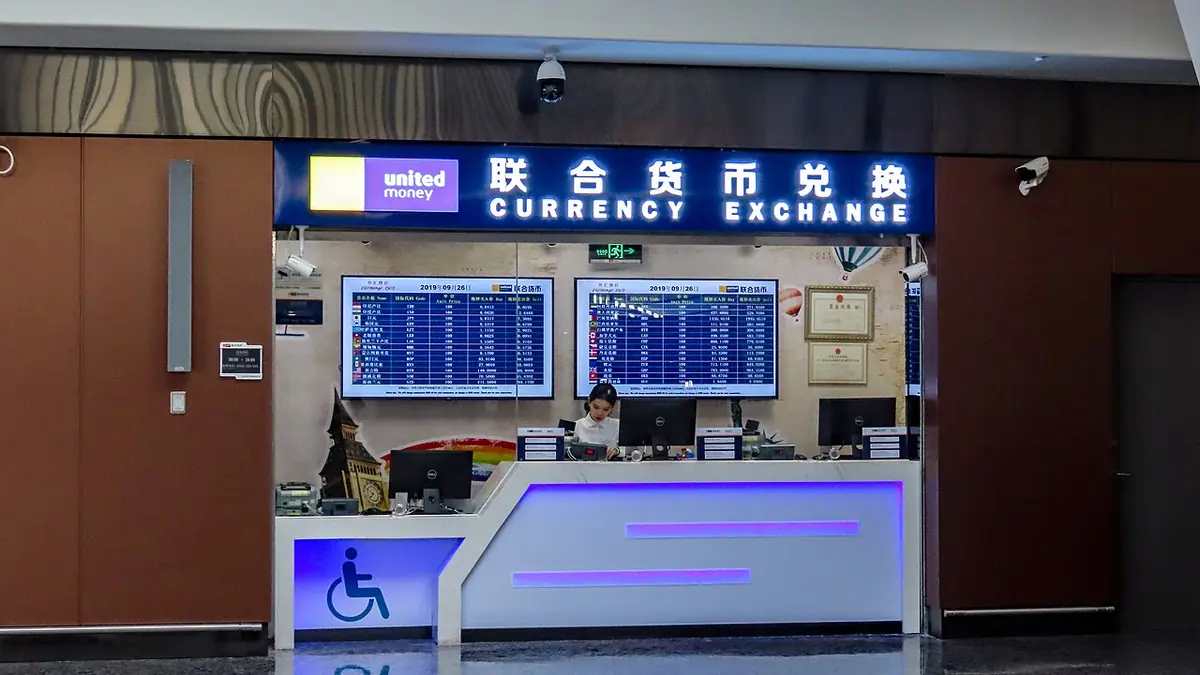
The CHF-EUR exchange rate has a direct impact on the border salary. Strategies, platforms, multi-currency accounts: how to maximize the value of the Swiss paycheck.
Context
In brief
- The CHF-EUR rate fluctuates between 0.92 and 1.08: variations that mean hundreds of francs per month
- The Italy-Switzerland Convention of 1976 provides for withholding tax only in Switzerland, but the exchange rate remains a border risk
- Online platforms reduce exchange fees by 50-70% compared to traditional banks
Key facts
- What: CHF-EUR exchange strategies for border workers and multi-currency accounts
- When: Recurring monthly decision, with weekly monitoring of the rate
- Where: Canton Ticino and border municipalities CH-IT (Chiasso, Mendrisio, Gaggiolo, Brogeda)
- Who: Border workers with a G permit who receive their salary in Swiss francs
- Legal basis: Italy-Switzerland Convention of 9 March 1976; New Border Workers Agreement effective from 1 January 2024
The gross salary paid by a Swiss company is expressed in francs. For the border worker residing in Italy who spends in euros, the real value depends on the CHF-EUR exchange rate at the time of conversion. A variation of a few cents per franc means tens of euros more or less each month. The issue is not speculative: the border worker accumulates significant savings and regularly converts francs into euros for domestic expenses, Italian taxes, rent, and mortgages.
According to the Convention between Italy and Switzerland of 9 March 1976, the withholding tax is withheld only in Switzerland, while Italy recognizes a tax credit (CE box of the 730 model) to avoid double taxation. This arrangement has been maintained with the New Border Workers Agreement signed on 23 December 2020 and effective from 1 January 2024. However, the tax coordination does not eliminate the exchange rate risk for those who convert recurring salaries.
The border worker who receives a gross salary sees approximately 5.3% of AVS/AI/IPG contributions already withheld from Switzerland (Swiss dependent regime). The net is calculated in francs. At the time of conversion to euros, the rate applied by the bank or exchange platform determines the real value in euros. If the exchange rate drops from 1.05 to 1.00 CHF per euro, the same amount in francs is worth less in euros.
Exchange rate volatility: what does it cost to ignore it?
In recent years, the Swiss franc has fluctuated between 0.92 and 1.08 euros per franc. These seem like minimal variations, but calculated on a monthly border worker's salary (on average between CHF 3,500 and CHF 6,000 net after AVS/contribution deductions), they mean up to CHF 200–300 difference per month, or about EUR 190–290 with an average rate of 1.05. On an annual basis, the difference between "choosing well" and "choosing poorly" the time of exchange can exceed CHF 2,000.
For those who work in Switzerland from Monday to Friday and reside in Italian Ticino, currency management is not optional. The paycheck arrives in francs, Italian taxes require calculations in euros (730 declaration), rent, and current expenses are denominated in euros. The most common mistake is to convert the entire paycheck on the day of the salary without monitoring the historical rate. A conscious approach involves diversifying the times and platforms of exchange and knowing the fees applied.
Operational details
Where and how to exchange: platforms and strategies
The cross-border worker has several options. The most common are: traditional banks (both Swiss and Italian), specialized online exchange platforms, multi-currency accounts with fintech and digital Swiss banks.
Traditional banks (UBS, Raiffeisen, Postfinance, or Italian equivalents) offer exchange at the market rate plus a commission ranging from 0.5% to 1.5%, depending on the bank and the volume. For a conversion of CHF 5,000, a 1% commission means CHF 50 (approximately EUR 48) in fixed costs. Exchange at a physical counter is even more expensive (1.0–1.2% commission). Online platforms significantly reduce costs: Wise, Revolut, and other international fintech companies apply commissions ranging from 0.3% to 0.7%, about half of traditional banks. Many cross-border workers prefer them for recurring exchange.
An often underestimated option is the multi-currency bank account with a Swiss bank (UBS, Postfinance, Raiffeisen). These accounts allow you to maintain balances in both CHF and EUR and convert as needed, without a time obligation. The commission for online conversion is typically lower (0.3–0.5% vs. 0.8–1.2% at the counter). For cross-border workers with recurring exchange, the economic value is significant.
The 'cost averaging' strategy applied to CHF-EUR exchange
Instead of converting the entire paycheck on the first day of the month, the conversion is divided into 2-3 tranches in the first two weeks of the pay period. If the rate varies during the period, the average of the conversions reduces the risk of 'taking the maximum' of volatility.
Example: instead of exchanging CHF 5,000 on day 1 at 1.03, exchange CHF 1,600 on day 1 at 1.03, CHF 1,700 on day 7 at 1.02, CHF 1,700 on day 14 at 1.04. The resulting average is approximately 1.03, but the risk of concentrating everything on a negative rate fluctuation decreases. For those who do not have an immediate liquidity urgency, monitoring the bank's app and waiting for simple technical signals (e.g., 'the franc is weak this week') allows capturing favorable variations of a few days.
Tax implications: minimal but not non-existent
Ordinary exchange of the paycheck does not generate additional taxable income. However, any gains or losses from frequent and significant exchange operations (e.g., weekly speculative exchange) could constitute arbitrage activity subject to taxation in Italy according to the ordinary regime (IRPEF 23–43% depending on the income bracket). For the cross-border worker who exchanges the paycheck only once a month, the risk is minimal. It is advisable to keep bank statements and exchange receipts for the 730 tax return, in order to prove the ordinary (non-speculative) nature of your operations.
Useful tools for your case
To verify your within/over 20 km tax scenario, use the net salary calculator and the tax return guide.
Key points
The practical checklist: how to get started right away
1. Choose a platform: Compare commissions on an amount close to your net monthly salary. Use il comparatore di cambio CHF-EUR to view actual costs.
2. Open or activate the account: If you use a Swiss bank, ask if it offers online exchange with a reduced commission. If not, consider a fintech (Wise is regulated by FINMA as a Swiss payment institution; Revolut by EU authorities). Time needed: 1–5 days.
3. Track historical rate: For 2–3 weeks, record the daily CHF-EUR exchange rate. You will understand the typical volatility in your period.
4. Decide on the strategy: (a) Do I change everything on the first day of the month? (b) 2-3 tranches in the month (cost averaging)? (c) Exchange "as needed" keeping liquid CHF in the account?
5. Set reminders: Many banking apps offer notifications on exchange rate changes. Activate them.
When to review the strategy
Reassess every 6 months. Spreads and commissions change: a platform that is convenient today may not be convenient in a year if it reduces services or increases fees. If you receive bonuses, bonuses, Swiss tax refunds or other exceptional liquidity, spread the conversion over several days to reduce the risk of catching a concentrated unfavorable rate.
Common mistakes to avoid
- Exchange without planning: Convert your entire payday without checking the historical weekly rate.
- Fees ignored: Compare only the rate, forgetting that a 1.2% fee wipes out months of gains on favorable volatility.
- Platforms without research: Open an online exchange account without checking whether it is covered by deposit insurance (FINMA for Swiss banks, ISVAP for Italian banks). Wise is regulated by FINMA; Revolut is covered by EU guarantees of up to EUR 100,000.
- Concentration risk: Keep all savings in the same institution. Some cross-border commuters keep CHF at the Swiss bank and EUR at the Italian one to diversify sudden exchange rate risks.
Support tool
Frontaliere Ticino provides un calcolatore per ottimizzare busta paga e trattenute which also includes estimates of the impact of the CHF-EUR exchange rate on gross salary. Enter your monthly income and your Swiss contribution rates (AVS 5.3%, unemployment contributions 1.1% up to CHF 148,200 tax base, accident insurance 0.7–1.5% depending on the sector) to view the net and calculate how rate changes affect the value in euros.
Recommended action: Log in to comparatore di cambio, enter your average salary and compare 3 platforms (Swiss bank, fintech, Italian bank). You'll find that frequent changes at a low-fee platform cost less than a single monthly change at a traditional bank. You will save at least CHF 50–100 per month in fees, equivalent to EUR 48–96.
Frequently Asked Questions
- What is the CHF-EUR exchange rate for cross-border commuters?
- There is no single 'fixed average rate'. The exchange rate varies daily according to the global forex markets, fluctuating in recent years between 0.92 and 1.08. The Swiss National Bank (SNB) does not set the rate: it is determined by market supply and demand. For your personal exchange, contact your bank or exchange platform which will apply the market rate of the day plus a commission. Monitoring the weekly historical rate helps you understand if it is favorable in your case.
- Does paying Italian taxes in euros protect me from CHF-EUR volatility?
- No. Swiss withholding tax (withheld from the paycheck in Switzerland, as provided for by the 1976 Italy-Switzerland Convention) is calculated on gross income in Swiss francs. In Italy, the cross-border commuter submits the 730 form with credit for the Swiss taxes paid. However, the net salary in euros depends on the exchange rate at the time of personal conversion. Italian taxes must be paid in euros, so the exchange rate risk still exists.
- Does opening a multi-currency account with a Swiss bank have any hidden fees?
- It depends on the bank. UBS, Postfinance and Raiffeisen offer multi-currency accounts with transparent fees (0.3–0.5% per online conversion). Check your bank's fee document: it may require a minimum balance or annual processing fee (CHF 10–20). For cross-border commuters with a recurring exchange rate (monthly), the value is almost always positive compared to the exchange rate at the physical counter (1.0–1.2% fee).
- If I frequently change francs to euros, do I have to declare capital gains in the 730?
- If the conversions are ordinary and recurring (payroll change once a month), they do not constitute speculative activity and do not generate additional taxes. If you become very frequent (weekly, with hundreds of transactions per year) and significant in volume, it could be arbitrage activity subject to taxation in Italy according to ordinary IRPEF (23–43% depending on the bracket). Consult your accountant before structuring a complex exchange plan; keep bank statements to prove the ordinary nature.
- Are Wise and Revolut safe for the cross-border commuter?
- Wise is regulated by FINMA as a Swiss payment institution and is covered by deposit insurance of up to CHF 100,000 per depositor. Revolut is regulated by EU authorities (Lithuania) and covered by EU deposit insurance of up to EUR 100,000. Both offer competitive rates (0.3–0.7% fees). For ordinary amounts (monthly salaries